Fibrillated Mesh & Monofilament Polypropylene Fibers: Enhancing Fatigue Life, Abrasion Resistance, and Crack Control in Infrastructure and Hydraulic Engineering by huabang
Time : 2026-10-14
Resolving Pavement Fatigue, Reflection Cracking, and High-Velocity Hydraulic Abrasion
In the construction and maintenance of highway pavements, bridge deck overlays, airport taxiways, and hydraulic infrastructure (dams, spillways, and flood discharge tunnels), municipal engineers and project contractors encounter severe material degradation challenges:
Pavement Fatigue & Reflection Cracking: Heavy axle rolling loads and cyclic thermal fluctuations induce fatigue cracking, reflective cracking, and rutting in concrete pavements and asphalt overlays, leading to frequent surface repairs and traffic disruptions.
De-icing Salt & Freeze-Thaw Scaling on Bridge Decks: Concrete bridge decks and expansion joint transitions suffer from micro-crack formation. Moisture and de-icing chemicals (NaCl,CaCl2) penetrate these fissures, causing freeze-thaw spalling and reinforcing steel corrosion.
High-Velocity Cavitation & Abrasion in Hydraulic Works: Dam spillways, stilling basins, and sewage culverts endure intense hydrodynamic shear, sediment scouring, and cavitation impacts, which rapidly erode unprotected concrete surfaces.
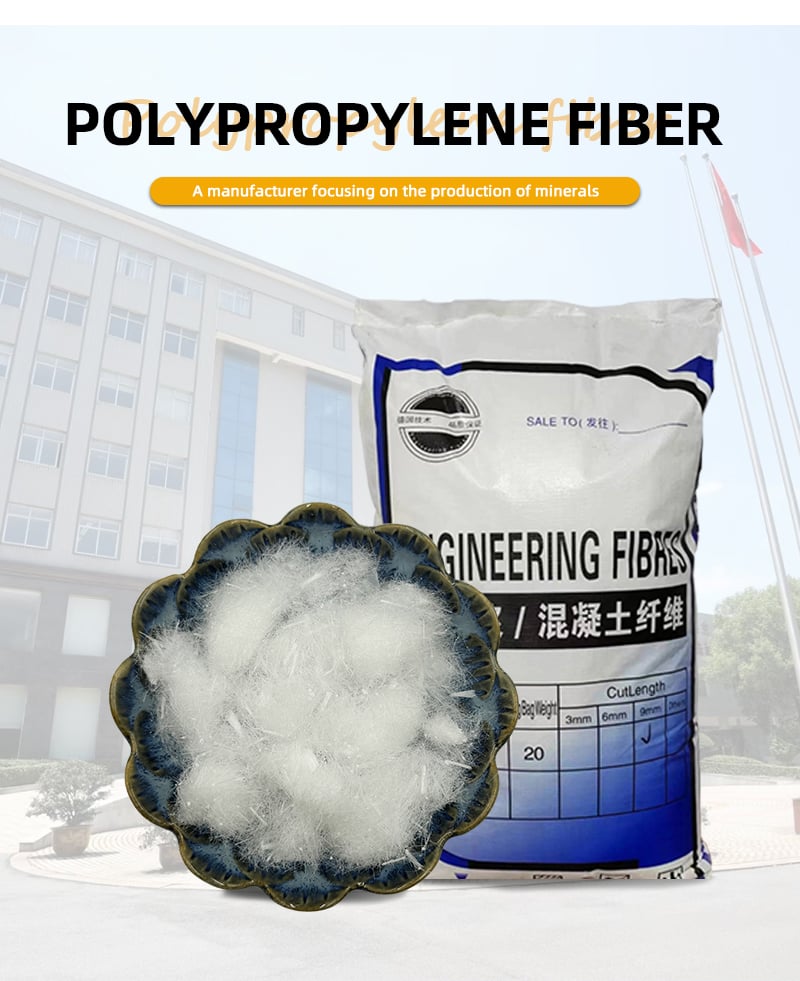
huabang high-tenacity fibrillated mesh and monofilament polypropylene fibers deliver an engineered, cost-effective reinforcement solution. Sourced from high-purity virgin isotactic polypropylene resin (iPP) and produced via automated continuous melt extrusion, directional drafting, mechanical splitting, and hydrophilic surface treatment, huabang fibers provide balanced reinforcement across fresh and hardened concrete. Designed for large-scale infrastructure projects, these fibers form an interconnected mechanical network that increases pavement fatigue life, boosts hydraulic abrasion resistance, and reduces life-cycle maintenance costs.
Tree-Like Network Opening During Mixing: Unlike smooth individual fibers, huabang fibrillated polypropylene fiber begins as slit-film tape bundles with longitudinal micro-slits. Under the mechanical shear of concrete mixing, the tapes open into an interconnected, tree-like three-dimensional mesh. The cement paste infiltrates these open geometric cells during hydration, creating strong mechanical interlock and high pull-out resistance.
Dynamic Energy Dissipation & Enhanced Fatigue Resistance: In highway pavements and bridge decks subjected to millions of cyclic wheel passes, the opened fibrillated network absorbs dynamic tensile stresses, blunting micro-crack propagation at the aggregate interface. This mechanism increases flexural fatigue life and mitigates reflective cracking in asphalt-over-concrete (whitetopping) composite pavements.
Hydraulic Impact & Cavitation-Erosion Resistance: In high-velocity hydraulic structures (such as dam spillways and plunge pools), incorporating huabang polypropylene fibers enhances surface cohesion, reduces bleeding channels, and increases concrete toughness. The fiber network resists cavitation impact and water-borne sediment scouring, reducing surface mass loss under high-speed water flow.
100% Corrosion Resistance in Saline and Aggressive Environments: Being chemically inert, polypropylene does not corrode when exposed to marine splash zones, de-icing salts, or acidic industrial runoff, ensuring consistent performance throughout the structure's design life.
Comparative Performance Analysis
Performance Metric
huabang Fibrillated Mesh PP Fiber
huabang Monofilament PP Fiber
Unreinforced Plain Concrete
Traditional Steel Wire Mesh
Primary Reinforcement Mode
3D Tree-Like Network Interlock
Dense Micro-Filament Mesh
None (Brittle Matrix)
Planar 2D Steel Grid
Plastic Shrinkage Crack Reduction
>75% Reduction
>80% Reduction
Baseline (High Cracking)
Moderate Crack Control
Flexural Fatigue Resistance
High Dynamic Absorption
Moderate Dynamic Absorption
Poor (Rapid Brittle Fatigue)
Moderate Fatigue Resistance
Corrosion & Rust Susceptibility
Zero Corrosion (100% Inert)
Zero Corrosion (100% Inert)
Dependent on Rebar Cover
Prone to Rusting & Expansion
Handling & Site Labor
Direct Batch Mixer Addition
Direct Batch Mixer Addition
Standard Pouring
Manual Cutting, Placing & Tying
Hydraulic Abrasion Resistance
Significantly Improved
Improved Cohesion
Low Abrasion Resistance
Standard Matrix
Overall Cost-Performance
High (Low Cost / Long Life)
High (Cost-Effective)
High Maintenance Costs
High Material & Labor Costs
Technical Specifications: huabang Infrastructure Grade Series
huabang manufactures standardized and customized polypropylene fiber grades with high tensile strength, uniform length, and clean dispersion:
1. Concrete Highways, Intersections, and Whitetopping Overlays
Adding 0.9–1.8 kg/m3 of huabang fibrillated mesh fiber (HB-F19) to highway concrete pavements increases flexural fatigue life, prevents corner cracking, and provides structural bridging over expansive subgrades. In asphalt-over-concrete whitetopping projects, it inhibits reflection cracks from migrating upward to the surface wear course.
2. Bridge Decks and Elevated Highway Overlays
For bridge deck pavements subjected to dynamic vibrations and winter de-icing salts, incorporating huabang fibers reduces surface micro-cracking and permeability. This blocks moisture and chloride ingress, protecting embedded structural steel girders and extending maintenance intervals.
3. Hydraulic Dam Spillways, Stilling Basins, and Flood Culverts
In high-velocity water conveyance structures, adding 1.2–2.0 kg/m3 of fibrillated mesh fiber enhances concrete tensile strain capacity and energy absorption. The reinforced matrix withstands high-velocity sediment abrasion and cavitation erosion during seasonal flood discharges.
4. Municipal Road Infrastructure, Curbs, and Industrial Yards
In municipal bus stops, port container terminals, and precast curbs, huabang fibers provide multi-directional reinforcement that prevents impact chipping, improves edge durability, and reduces early shrinkage cracking during hot-weather concreting.
Supply Chain Strength, Packaging Options, and Global Logistics
To support multi-thousand-ton monthly requirements for international infrastructure projects across Southeast Asia, the Middle East, Africa, Europe, and Latin America:
Large-Scale Production Capacity: Backed by automated melt-spinning and high-speed drawing production lines, huabang maintains an annual manufacturing capacity exceeding 15,000 metric tons, ensuring stable pricing and continuous batch consistency.
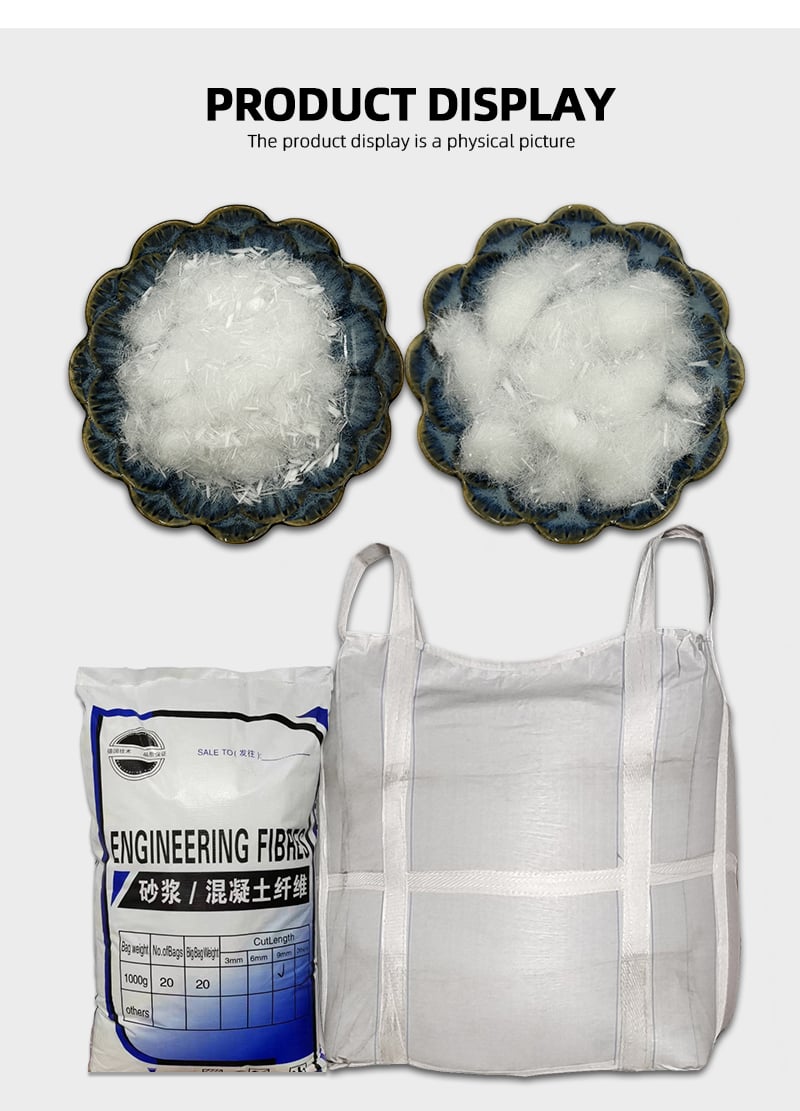
Convenient Water-Soluble Batch Packaging: Pre-packaged in 0.9 kg and 1.0 kg water-soluble kraft paper bags. Batch operators can add the unopened bags directly into the concrete mixer truck hopper or central batching pan, where the packaging dissolves within 60 seconds without leaving pulp residue.
Export Packaging & Shipping Specifications:
Standard Master Packaging: 15 to 20 water-soluble bags packed inside 15 kg / 20 kg heavy-duty plastic woven outer bags or corrugated master cartons.
Bulk Master Packaging:500 kg and 1000 kg FIBC bulk jumbo bags with lifting loops for automated batching plant silos.
Direct Port Shipments: Direct container loading from primary Chinese shipping ports (Tianjin, Qingdao, Shanghai), ensuring rapid vessel departure and reliable delivery schedules.
Partner with huabang
Reducing concrete cracking while improving infrastructure durability requires reliable, large-scale synthetic fiber solutions. huabang is your direct manufacturing partner for consistent, high-performance fibrillated mesh and monofilament polypropylene fibers.
Contact our international civil engineering sales team today to request product data sheets (TDS), customized dosage recommendations, competitive bulk quotations, and trial sample packages.
Disclaimer: Recommended fiber dosage rates and mixing sequences depend on aggregate size distribution, concrete slump, placement method (slipform paving vs. manual screeding), and project specifications. Batch-specific physical and mechanical properties are verified on each delivery via our official Certificate of Analysis (COA).
 ×
×
 Microstructural Reinforcement: Fibrillated Network Mechanical Interlock
 Applications Across Key Infrastructure Sectors


