×
×
Kaolin is a fine, plate-like aluminosilicate clay used as a ceramic raw material, paper pigment, paint extender and functional filler in plastics, rubber, refractories and fiberglass. This buyer-focused guide from [Company Name] explains the differences among washed, calcined and surface-treated kaolin, identifies the specifications that affect processing and finished-product performance, and outlines the documents purchasing teams should review. For importers, distributors and manufacturers, selecting the right grade requires application testing rather than comparison by whiteness, mesh size or price alone.
Kaolin is a clay material dominated by kaolinite, a hydrated aluminium silicate mineral commonly represented by the formula Al₂Si₂O₅(OH)₄. It forms through the alteration of feldspar-rich rocks by weathering or hydrothermal processes. Commercial deposits may also contain varying amounts of mica, feldspar, quartz, organic matter and heavy minerals.
The Essential Minerals Association describes kaolin as a soft, white and plastic clay made mainly of fine plate-like particles. Its commercial value comes from a useful combination of whiteness, chemical inertness across a relatively wide pH range, low abrasiveness, low thermal and electrical conductivity, and controllable particle properties.
No two deposits or processing routes are identical. Mineral composition, crystallinity, particle shape, brightness, viscosity, firing behaviour and impurity levels influence end use. Buyers should therefore compare a defined kaolin grade and batch certificate rather than treating all china clay as interchangeable.
Hydrous kaolin retains the hydroxyl groups present in the natural kaolinite structure. Washed kaolin is refined through wet processing to remove coarse impurities and control particle-size distribution. Depending on the grade, additional steps may include classification, magnetic separation, bleaching, filtration, drying and milling.
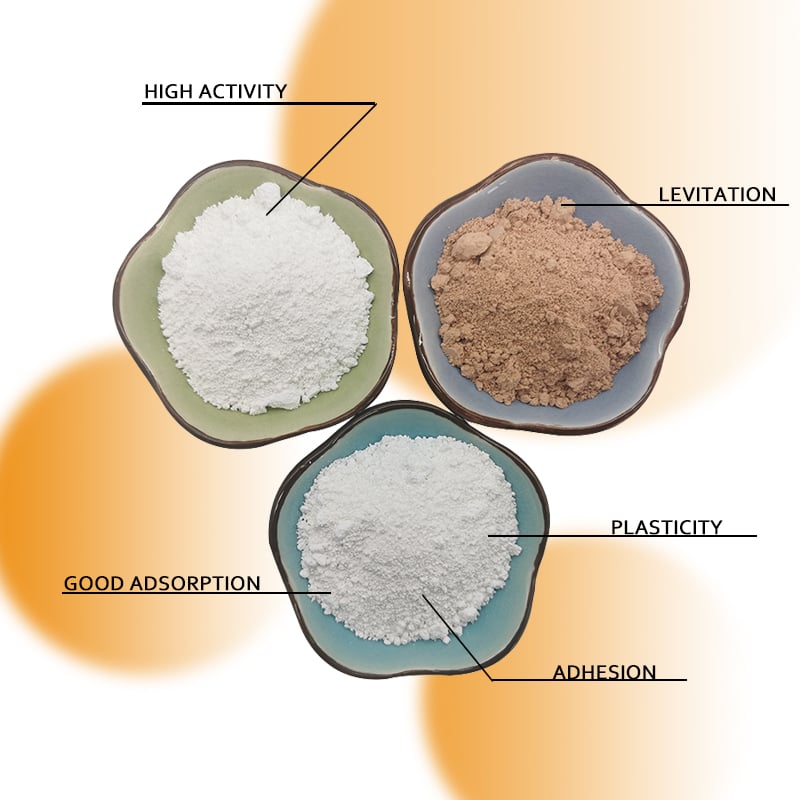
Washed kaolin is widely evaluated for paper, ceramics, coatings, rubber and other filler applications. Fine particle size can support smoothness and dispersion, while brightness and viscosity influence paper coating and paint behaviour. Ceramic grades may instead prioritize plasticity, green strength, iron content and fired color.
Calcined kaolin is produced by heating selected clay under controlled conditions. Thermal treatment removes structural water and changes the mineral structure, particle aggregation and optical properties. The resulting product is less plastic than hydrous clay and can provide different opacity, whiteness, electrical and reinforcement characteristics.
The Essential Minerals Association notes that calcined grades are widely used in satin and matte paints, where they can contribute opacity, whiteness and scrub resistance. Calcined kaolin is also evaluated in paper, rubber, plastics, cable compounds, refractories and specialty construction materials.
Calcined products are not one universal grade. Calcination temperature, feed quality, particle size and milling determine performance. Buyers should compare the supplier's technical data and test the proposed material in the actual formulation.
Surface-treated kaolin receives a chemical treatment intended to improve compatibility with polymers or other organic matrices. Silane and related treatments can change wetting, dispersion and interfacial bonding in rubber, thermoplastic elastomers, wire and cable compounds and engineering plastics.
A surface treatment should be selected for the specific polymer and process. Buyers should request the treatment type, loading, moisture level and compatibility evidence. A treated grade that works in one resin may not produce the same result in another.
Metakaolin is a thermally activated kaolinitic material used as a pozzolanic component in selected cementitious formulations. Other specialty products may be engineered for catalysts, fiberglass, refractories, electrical insulation or high-purity applications.
These grades have different quality targets from conventional ceramic or coating clay. Buyers should define the required reactivity, chemistry, fineness, impurity profile and applicable standard before comparing offers.
Brightness is measured under a defined optical method, while perceived whiteness depends on the full spectral response and viewing conditions. Both are influenced by iron- and titanium-bearing minerals, organic matter, particle size and processing.
High kaolin brightness is important in paper, white paint, plastics and some ceramic products, but it should not be used as the only quality indicator. A bright grade may have unsuitable viscosity, particle distribution or firing behaviour for the customer's process.
Plate-like kaolin particles can contribute coverage, smoothness, barrier properties and reinforcement. Particle-size distribution influences gloss, opacity, viscosity, dispersion, abrasion and surface finish. A nominal mesh designation does not adequately describe a micronized product.
Buyers should request a distribution such as d10, d50 and d90 or the percentage below a stated size, together with the measurement method. Paper coating, paint and plastics can require different balances between fineness and processability.
Al₂O₃ and SiO₂ help characterize the clay, while Fe₂O₃ and TiO₂ can influence raw and fired color. Quartz, mica, alkali compounds and other associated minerals may affect abrasion, firing, electrical behaviour or end-product purity.
Kaolin chemical limits should be tied to the application. White ceramic bodies may focus on color-forming impurities, while fiberglass, refractory or catalyst uses may require a different chemistry profile.
In ceramics, kaolin contributes workability, green strength and fired properties. Shrinkage, vitrification, fired color and mullite formation depend on mineralogy, particle size, body composition and kiln cycle.
A ceramic buyer should evaluate the clay in the complete body recipe. Laboratory chemical results cannot replace firing trials under the customer's actual temperature and atmosphere.
Kaolin slurry viscosity and solids loading are important in paper coating, paint, ceramic slips and other wet processes. Particle interactions, soluble salts, pH and dispersant demand influence flow behaviour.
Viscosity data should include solids content, dispersant, test temperature and method. Results obtained under different conditions cannot be compared directly.
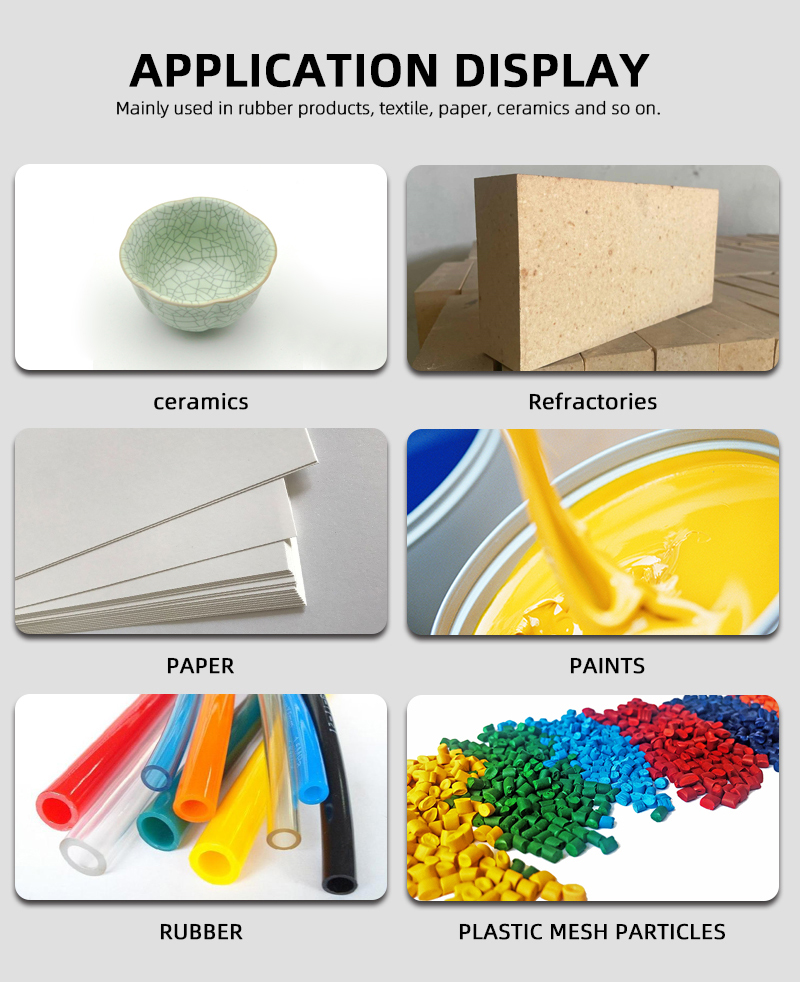
Kaolin for ceramics is used in tableware, sanitary ware, tiles, electrical porcelain and related whiteware products. It contributes plasticity during forming and develops strength and fired phases during heating. Refractory products also use kaolinitic materials where high-temperature performance is required.
Ceramic buyers should compare chemistry, plasticity, particle size, moisture, LOI, drying shrinkage and fired color. A representative body trial is necessary before changing an approved source.
Kaolin is used as a filler within paper and as a coating pigment on the surface. Its whiteness, opacity, particle shape and low abrasiveness can improve brightness, smoothness, printability and ink receptivity. Paper and refractory markets are identified by the U.S. Geological Survey as major markets for this clay.
Paper buyers should pay close attention to particle distribution, brightness, abrasion, viscosity, solids loading and coating response. Hydrous and calcined grades serve different formulation objectives.
Hydrous or calcined kaolin can function as an extender and rheological or optical additive in decorative and industrial coatings. Depending on the grade, it may contribute opacity, matting, scrub resistance, suspension, barrier properties and control of gloss.
Paint formulators should test oil absorption, pH, particle size, brightness, viscosity and compatibility with the binder. Any replacement of titanium dioxide or another extender must be validated in the complete paint formula.
Kaolin can provide dimensional stability, surface smoothness, reinforcement and control of shrinkage in plastics. Calcined or surface-treated grades are used in rubber and thermoplastic elastomers, while cable compounds may use selected products to support electrical properties.
Buyers should identify the polymer, processing temperature, target mechanical or electrical result, surface treatment and moisture limit. Dispersion and compound trials are essential.
Kaolin supplies alumina and silica to fiberglass and supports selected catalyst, cement and refractory processes. Each application has its own chemistry, impurity, particle-size and consistency requirements.
Cosmetic, pharmaceutical, agricultural or food-related applications are regulated and require grade-specific purity and compliance documentation. A general industrial product should not be assumed suitable.