 ×
White carbon black is the trade name for synthetic amorphous silica: a white, low-density powder made from sodium silicate or silicon tetrachloride, sold into tyres, general rubber, silicone, coatings, inks, oral care, food and feed. The name is a historical accident: in a mixer white carbon black looks and behaves like carbon black, and there the resemblance ends — one is carbon, the other silicon dioxide.
The name describes an appearance, not a chemistry, which is the root of most bad purchasing decisions in this material. Two suppliers can both quote white carbon black at 99% purity and be selling powders that differ fortyfold in surface area, one of which will reinforce a tyre tread and one of which will not.
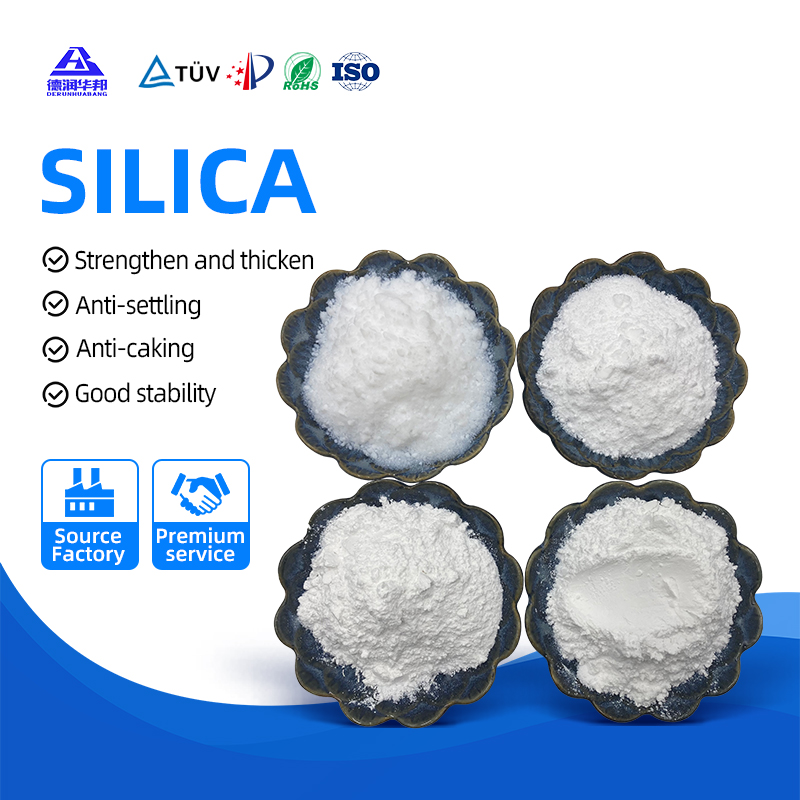
White carbon black does not exist in the ground: no ore, no beneficiation step. It is precipitated from sodium silicate or hydrolysed from a chlorosilane in a flame, and its properties are set by how that reaction runs and how the product is dried.
Two white powders are routinely confused with it. Ground quartz is crystalline and carries roughly 1 to 5 m²/g of surface; silica fume is a furnace by-product at 15 to 25 m²/g that belongs in concrete, not in a rubber compound. Purity does not separate either from white carbon black: a 99.5% ground quartz and a 99.5% precipitated silica report the same assay and behave nothing alike.
| Line | How it is made | Primary particle | BET surface | What the buyer specifies | Main use |
|---|---|---|---|---|---|
| Precipitated | Sodium silicate neutralised with acid, filtered, washed, dried, milled | 5–40 nm, aggregated | 80–300 m²/g | DBP absorption, CTAB, BET, 45 µm residue | Tyres, general rubber, footwear, oral care, anti-caking |
| Fumed | Silicon tetrachloride hydrolysed in an oxy-hydrogen flame | 7–40 nm | 100–400 m²/g | BET, surface treatment, carbon content, loss on ignition | Silicone rubber, coatings and adhesives, electronic potting |
| Gel | Sodium silicate gelled, washed, dried | Pore structure, not particle size | 300–800 m²/g | Pore volume, pore diameter, oil absorption | Matting agents, desiccants, catalyst supports |
| Dental | Precipitated, in abrasive and thickening grades | Two distinct size classes | Low for abrasive, high for thickening | RDA value, refractive index match | Toothpaste |
These four are not interchangeable, and the spec that identifies one does not identify another.
BET surface area is the number every data sheet carries, and alone it does not predict performance: it counts the inside of the particle as well as the outside.
CTAB measures the external surface only; the gap between the two is micropore volume. Reinforcement comes from the external surface and the aggregate, so a highly porous grade can post a large BET number and a modest effect. Two grades can both read 180 m²/g and differ by half in the way they behave in a mixer.
For a rubber buyer, white carbon black specified by BET alone is under-specified. For a coatings buyer the question shifts to whether the powder disperses and builds a network, which depends on the aggregate and the treatment.
DBP absorption, in millilitres per 100 grams, measures how much of the aggregate's internal volume oil can fill. It proxies structure and moves several properties at once: high structure raises viscosity, occludes more rubber, reinforces more per unit weight and disperses less easily. Low structure disperses well and reinforces less.
Neither is better; they suit different processes and hardness targets, which is why two white carbon black grades of the same BET can be priced differently and both be right.
The surface of an untreated particle is covered with silanol groups that hydrogen-bond to each other. That is the source of the thixotropy buyers want, and of the handling problems they do not.
Treatment replaces those groups with organic ones — hexamethyldisilazane, polydimethylsiloxane or a silane — and the result is read as carbon content, typically 0.5% to 5%. A treated grade disperses in non-polar systems, resists moisture, and stops the network formation that makes untreated fumed silica stiffen a silicone compound in storage until it can no longer be milled.
Hydrophilic suits water-borne systems and most rubber; hydrophobic suits silicone, solvent-borne coatings and any application where the powder sits in a non-polar medium for months.
Rubber. Reinforcement, and it does not happen unaided. The silanol surface bonds to a sulfur-functional silane at roughly 6% to 10% on the silica weight, and the silane bonds to the polymer during vulcanisation. The reaction needs a window in the mixer, around 140 to 150 °C. Below it the coupling is incomplete; well above it sulfur is released early and the compound scorches. White carbon black without correct silanisation is not a cheaper carbon black; it is a defective compound.
Coatings and inks. Rheology. It builds a network at rest and breaks it under shear, controlling sag and settling. Matting, the second job, works through surface roughness rather than refractive contrast — silica sits at about 1.43 to 1.46, too close to most binders to contribute opacity. Buyers seeking hiding power want a different material.
Oral care. Two products under one heading: abrasive grades clean and polish, specified by dentine abrasivity; thickening grades build the paste, specified by structure and refractive index match, which allows a clear gel.
Food and feed. Anti-caking at 0.5% to 2%, by particle-on-particle interference on a very high specific surface, not bulk moisture absorption.
Crystalline content. Amorphous and crystalline silica share a formula and differ in hazard classification and regulation. A purity figure of 99.5% fits either. Where the application touches food, oral care, cosmetics or a dust-generating process, the certificate should carry the crystalline silica result and its method, not the total assay alone.
Particle size. A mesh figure is a sieve aperture, not a particle diameter. White carbon black is sold as aggregates of nanometre-scale primary particles assembled into micrometre-scale agglomerates; 1,250 mesh tells you what did not pass, not how fine the product is. Specify D50 and the aggregate distribution, and name the dispersion method, because the same white carbon black can measure differently in different media.
Send the application, the process, the property you want to move and any constraint you cannot break — cost, viscosity, dispersion, transparency or dust. The Huabang team will recommend a white carbon black line and grade, state the BET, CTAB, DBP and residue values it will be supplied against, and say plainly when a different line is the correct answer even if you did not ask for it.


