



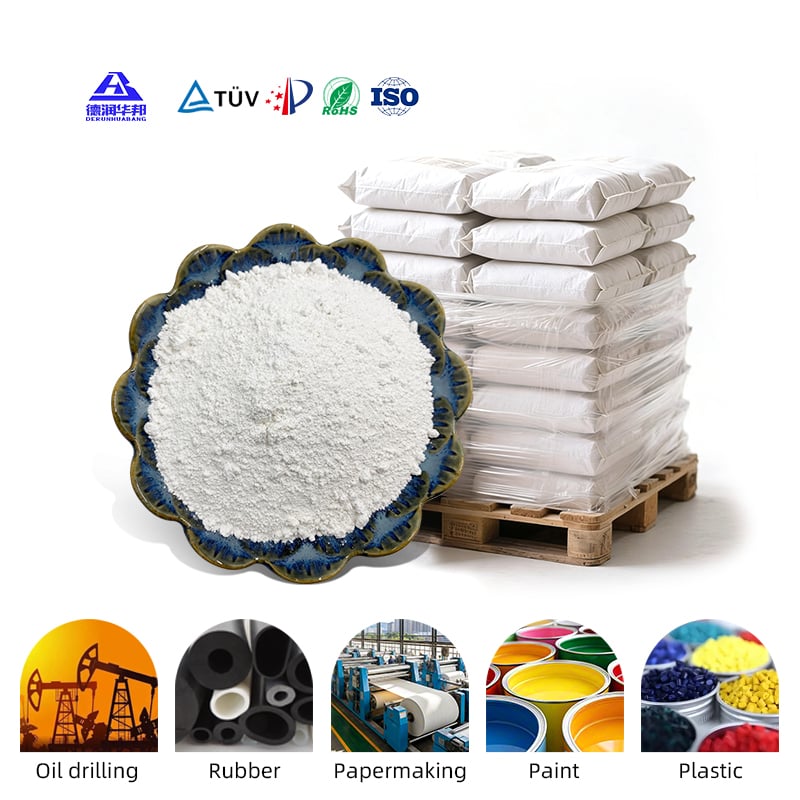
Against the global backdrop of carbon neutrality agendas, tightened environmental control on heavy metal raw materials, bans on toxic lead-based pigments, and growing demand for high-stability, ultra-fine mineral additives, precipitated barium sulfate (also known as blanc fixe)—manufactured via precise liquid-phase chemical synthesis, impurity removal, surface coating and closed-loop crystallization technology from barium ore and clean industrial sulfate raw materials—has evolved from a basic auxiliary industrial raw material into a high-performance core functional mineral filler. Far more than a simple white pigment extender, precipitated barium sulfate integrates advanced nanoscale precipitation, silane/aluminate surface modification and intelligent automatic filtration classification processes, combining ultra-high whiteness, chemical inertness, radiation shielding, weather resistance and low oil absorption, while cutting production costs and lowering the carbon footprint of downstream finished goods. Hailed as “the high-purity inert backbone of high-end coatings, plastics, inks and chemical composites”, precipitated barium sulfate boasts unparalleled advantages in uniform particle size, light scattering capacity, acid-alkali corrosion resistance and long-term color stability. It facilitates industrial product quality upgrading across multiple sectors and solves long-standing industry pain points such as poor gloss, insufficient weather resistance, unstable filling performance and toxic heavy metal residues brought by traditional cheap fillers like ground calcium carbonate and talc.
The core competitiveness of premium surface-modified precipitated barium sulfate originates from standardized raw material purification and full-process closed-loop precision synthesis workflows. Qualified precipitated barium sulfate raw materials are sourced from high-grade barite concentrate and desalted industrial sodium sulfate solution, with multi-stage sedimentation, membrane filtration and deironing procedures to strip silicon, lead, arsenic, iron and other harmful impurities, controlling total heavy metal content below 10 ppm and ensuring BaSO₄ purity above 99.6% for top industrial and food-contact grades. High-end customized products adopt low-temperature controlled crystallization and continuous organic surface coating processes, delivering customizable particle sizes ranging from 2–10 μm coarse powder for general architectural coatings to 1250–8000 mesh nano ultra-fine powder for high-gloss ink, automotive paint and electronic plastic components. Its particle size distribution uniformity reaches 99.4%, and batch-to-batch performance fluctuation is controlled below 0.7% to guarantee consistent filling effects for mass production. Physically, precipitated barium sulfate features a high refractive index close to titanium dioxide, significantly enhancing gloss, hiding power and color rendering of pigment systems; its dense crystal structure provides strong shielding against ultraviolet rays and ionizing radiation. Chemically inert, it does not react with acids, alkalis, solvents or plastic monomers, with non-toxic, non-radioactive formulations fully compliant with REACH, RoHS, FDA food contact standards, EU architectural material regulations and toy safety certification. It has become a benchmark non-toxic white functional filler for global precision manufacturing.
Supported by its inherent ultra-high whiteness, chemical stability and cost-saving filling advantages, precipitated barium sulfate exhibits wide-ranging cross-industry applicability, addressing persistent technical bottlenecks in coatings & paints, printing inks, polymer manufacturing, medical radiation shielding, construction and electronic material sectors.
In high-end coating and paint manufacturing, surface-treated ultra-fine precipitated barium sulfate acts as a core synergistic filler matched with titanium dioxide for automotive topcoat, industrial anti-corrosion paint, exterior architectural coatings, marine anti-rust coatings and powder coatings. When mixed into coating formulas at a 15%–40% filling ratio, its uniform microcrystalline structure optimizes pigment dispersion, reduces TiO₂ consumption by 20%–30%, and forms a compact UV-shielding coating film. It raises the film surface gloss by over 30%, improves scratch resistance, and effectively inhibits long-term outdoor fading, yellowing and chalking. Coatings filled with precipitated barium sulfate deliver outstanding salt spray resistance and weather stability, extending the service life of exterior coating projects from 8 years for ordinary carbonate-filled coatings to more than 20 years for high-performance paint systems. Large-scale national projects including high-speed rail exterior anti-corrosion coatings, new energy vehicle finish paint and large vessel marine protective paint widely adopt this material; each ton of high-gloss paint consumes roughly 0.4 tons of precipitated barium sulfate, greatly easing the supply pressure of high-priced titanium dioxide in the global coating industry chain.
In printing ink and cosmetic raw material production, high-whiteness nano precipitated barium sulfate serves as the foundational functional substrate for offset ink, gravure ink, water-based environmental ink and cosmetic powder formulas. Standard 3000-mesh graded precipitated barium sulfate features low oil absorption and smooth particle surface, endowing ink layers with fine printing dots, high definition and uniform color saturation without blocking printing rollers. Surface-coated grades with anti-yellowing modifiers maintain bright white color and stable texture for over 12 years under continuous outdoor UV exposure, never pulverizing or discoloring, satisfying customized high-gloss printing and cosmetic raw material safety demands. Compared with expensive synthetic silica fillers, precipitated barium sulfate-based ink and cosmetic raw materials cut comprehensive production costs by 38% while reducing carbon emissions by over 58% during manufacturing, fully conforming to global green printing and cosmetic non-toxic ingredient standards.
In rubber, plastic and composite material processing, fine activated precipitated barium sulfate works as a multi-functional gloss improver, wear-resistant filler and dimensional stabilizer modifier. In automotive plastic parts, plastic film, PVC profiles and EPDM rubber sealing strips production, properly surface-modified precipitated barium sulfate can replace up to 35% of high-cost titanium white and transparent reinforcing fillers without weakening tensile strength, surface smoothness and anti-aging performance. It improves the surface finish of plastic and rubber products by two grades, reduces shrinkage deformation during molding, and lowers overall production costs by nearly 36% amid continuous global fluctuations in the price of white functional fillers. For plastic packaging films and food contact plastic products, ultra-low heavy metal precipitated barium sulfate meets strict food safety standards, avoiding harmful substance precipitation during long-term contact with food and beverages. It is also widely deployed in machinery shock-absorbing rubber parts and electronic insulating plastic shells, leveraging its high-density shielding property to isolate electromagnetic interference and improve product stability.
In medical radiation shielding, environmental protection and high-end special material sectors, precipitated barium sulfate expands its sustainable application boundaries to realize high-value differentiated utilization. Medical-grade high-purity precipitated barium sulfate is the core raw material for gastrointestinal contrast agents, non-toxic and harmless to the human body, with excellent X-ray absorption capacity to ensure clear imaging during medical examinations. In radiation protection engineering, high-density precipitated barium sulfate powder is mixed into shielding concrete and radiation-proof wall coatings, effectively blocking X-rays and gamma rays for hospitals, laboratories and nuclear industrial facilities, serving as a low-cost substitute for lead plates to eliminate lead pollution risks. In new energy industries, ultra-fine precipitated barium sulfate is compounded into composite materials to produce photovoltaic module weather-resistant backsheet coatings and energy storage battery insulating plastic shells. It is also applied in ceramic glaze brighteners, optical paper coating raw materials and oil well anti-radiation weighting agents, stretching the material’s value from ordinary industrial fillers to high-end medical, new energy and precision optical manufacturing fields.
Driven by global toxic raw material restriction policies and continuous downstream demand for low-carbon high-gloss products, the precipitated barium sulfate synthesis industry has entered an era of high-value, standardized and customized development. Technological breakthroughs in low-temperature nano precipitation, low-energy surface coating and fully closed intelligent impurity removal have transformed precipitated barium sulfate from low-cost bulk industrial chemicals into high-value customized functional mineral fillers, satisfying stringent industry requirements for particle size accuracy, batch consistency, system compatibility and non-toxic environmental compliance. Modern automated enclosed production lines adopt zero-discharge wastewater recycling systems, low-energy circulation crystallization equipment and full-process dust recovery devices, achieving zero heavy metal wastewater discharge and over 97% comprehensive utilization efficiency of barite ore raw materials. As the world’s largest barite ore reserve and precipitated barium sulfate finished product manufacturing base, China owns a complete industrial chain covering clean ore beneficiation, liquid-phase precision synthesis, deep surface modification and global cross-border export supply. High-purity surface-modified precipitated barium sulfate produced domestically is exported to more than 75 countries and regions across Europe, North America, Southeast Asia, Oceania and the Middle East, accelerating global substitution of expensive titanium dioxide and toxic lead-based fillers, and advancing the rollout of circular low-carbon manufacturing worldwide.
Amid the global wave of industrial green transformation and non-toxic filler upgrading, the strategic value of precipitated barium sulfate rises year after year. It provides a low-carbon, cost-effective, non-toxic mineral alternative to high-priced titanium dioxide and harmful lead-containing pigments, perfectly aligning with industrial development goals of improving product surface performance, reducing manufacturing costs and realizing clean raw material circulation. Industry research statistics indicate the global precipitated barium sulfate market scale exceeded USD 2.1 billion in 2025, while China’s domestic market size surpassed RMB 76 billion, fueled by mandatory restrictions on toxic heavy metal fillers, growth in infrastructure coating investment and expanding demand for medical and new energy shielding materials worldwide. Market analysts predict that the market volume of high-purity surface-modified nano precipitated barium sulfate will exceed RMB 510 billion by 2030, as downstream industries including automotive coatings, printing ink, medical protection, new energy plastics and architectural engineering continuously raise standards for filler purity, weather resistance, low carbon footprint and batch stability.
From a simple chemical precipitation auxiliary material solving the pollution hazards of lead-based pigments to a core high-gloss inert functional mineral supporting modern low-carbon precision manufacturing, precipitated barium sulfate illustrates how deep chemical synthesis and surface modification technology can unlock long-term industrial, environmental and economic triple benefits from natural barite mineral resources. No longer a low-value byproduct of barite processing, precipitated barium sulfate acts as an indispensable sustainable pillar for building a non-toxic, low-carbon, circular and high-gloss global industrial system, guiding coating, plastic, medical and construction industries worldwide toward more resource-efficient, eco-friendly and high-quality long-term development.

