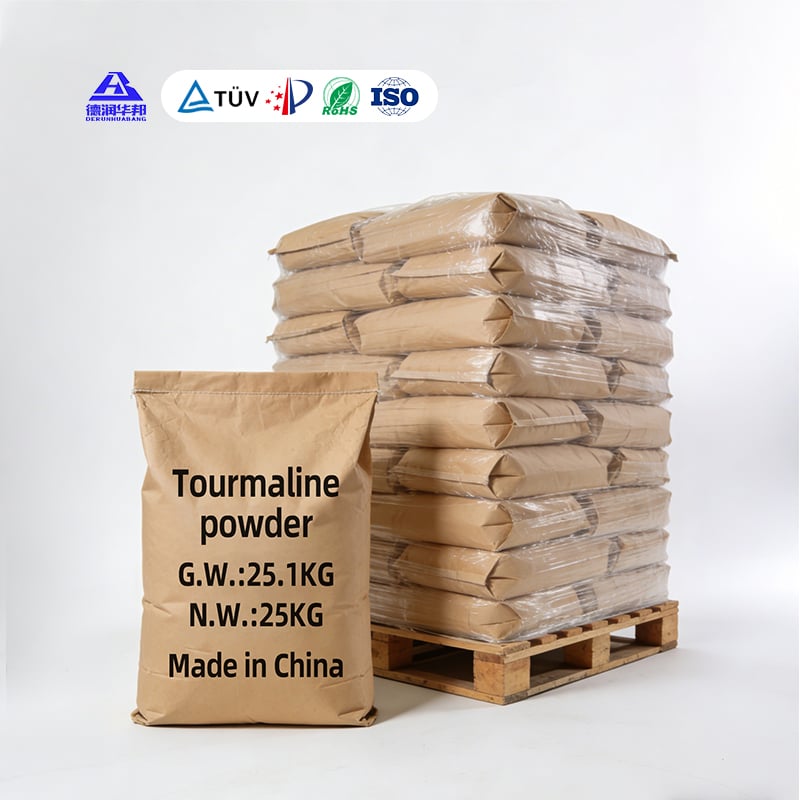
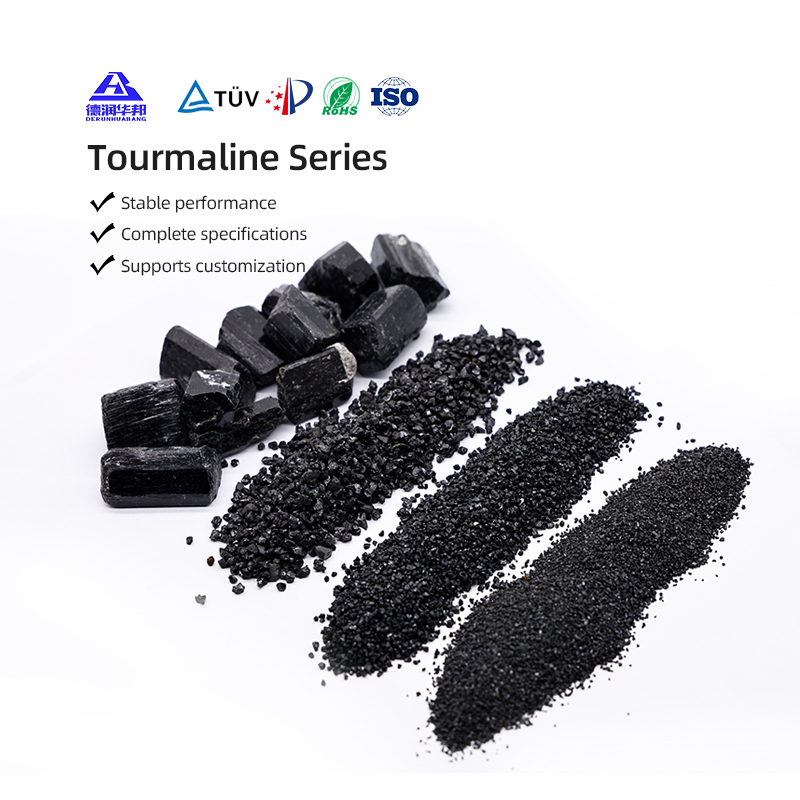
As of April 2026, the global tourmaline powder market is experiencing strong growth, driven by increasing demand for functional, health-enhancing, and eco-friendly materials in consumer goods, construction, and wellness industries. Latest data shows a 6.5% year-on-year increase in market volume during the first quarter, with projections indicating it will surpass $2.1 billion by 2030, fueled by technological innovation and rising consumer awareness of indoor environmental quality.
The wellness and home textile sector remains the largest end-user, accounting for over 44% of total demand, where tourmaline powder is valued for its negative ion emission, far-infrared radiation, and natural mineral stability. It is widely used in functional bedding, health garments, and air-purifying wall coatings to improve sleep quality, enhance blood circulation, and reduce airborne pollutants. Growing health consciousness in North America, Europe, and East Asia has significantly accelerated adoption, especially in premium lifestyle and elderly care products.
In the construction and interior design industry, developers are increasingly incorporating tourmaline powder into eco-friendly paints, ceramic tiles, and flooring systems due to its non-toxic composition, humidity regulation, and odor-eliminating properties. Its ability to passively release negative ions makes it ideal for creating healthier indoor environments in residential buildings, schools, and hospitals, aligning with green building standards such as WELL and China’s Healthy Building Label.
Technological innovation is reshaping the product landscape. A new generation of nano-activated tourmaline powder has emerged, featuring D50 particle sizes below 1 micron, enhanced surface energy, and composite formulations with titanium dioxide or graphene for synergistic effects. These advanced materials are gaining traction in high-performance applications, including smart home systems with air quality feedback, self-cleaning surfaces, and radiation-shielding materials for electronic environments, where health and functionality are paramount.
Sustainability is a key driver. Unlike synthetic functional additives, tourmaline powder is a naturally occurring silicate mineral with abundant reserves, particularly in China, Brazil, and Madagascar. Over 75% of leading processors have adopted dry grinding technologies and zero-waste sorting systems, minimizing water consumption and environmental impact. Products are increasingly certified under ISO 14001 and Cradle-to-Cradle standards, reinforcing their green credentials.
Supply chain resilience has improved, with key players expanding upstream mining operations and establishing integrated processing hubs in resource-rich regions. However, challenges persist, including fluctuating mineral purity, geopolitical risks in mining areas, and transportation costs for fine powders. In response, companies are investing in AI-driven mineral sorting, real-time quality monitoring, and regional formulation centers to ensure consistency and reduce lead times.
Industry experts emphasize that closer collaboration between material scientists, healthcare professionals, and smart home engineers will be essential for unlocking next-generation applications. Wearable health monitors with embedded tourmaline sensors, ion-balanced HVAC systems, and AI-optimized indoor climate zones are paving the way into emerging domains, such as preventive health architecture, elderly-friendly living spaces, and regenerative building design.
With its natural functionality, health benefits, and environmental compatibility, the tourmaline powder market is positioned for sustained expansion, becoming an increasingly vital component in the global shift toward health-integrated, intelligent, and sustainable living environments.