×
×
Colored sand is a decorative mineral aggregate used in epoxy flooring, terrazzo, wall coatings, pool finishes, architectural surfaces, landscaping and craft products. This buyer-focused guide from [Company Name] explains the difference between natural colored sand and coated colored quartz sand, the performance factors that matter in industrial projects, and the specifications purchasing teams should verify before ordering. For importers, flooring-system manufacturers, contractors and building-material distributors, matching the base mineral, particle size, color system and surface treatment to the application is essential for consistent appearance and reliable processing.
Colored sand is a broad commercial term rather than a single mineral classification. It usually refers to mineral particles selected or processed to provide a controlled color, grain size and decorative effect. Depending on the product, the base material may be quartz, marble, granite or another mineral aggregate.
Two main categories appear in international trade. Natural colored sand obtains its appearance from the original stone and is commonly produced by crushing, washing, drying and screening mineral material. Manufactured colored sand generally starts with a selected mineral substrate, often quartz sand, and receives a pigmented coating or thermal-bonding treatment.
This distinction matters because natural color and coated color behave differently in resin systems, exterior exposure and decorative mixes. The correct product is not simply the most vivid sample. Buyers should evaluate substrate quality, grading, color consistency, coating adhesion, compatibility and the conditions in which the finished surface will be used.
Natural colored sand is made from naturally colored stone without relying on a synthetic colored sand surface pigment for its primary appearance. Its visual character comes from the mineral itself, producing earthy or stone-like tones that can suit exterior walls, stone-texture coatings, landscaping, terrazzo and decorative mortar.
Because natural stone varies, color tolerance must be defined clearly. A single showroom sample may not represent every production lot. For projects requiring a continuous facade or a large floor area, buyers should approve a representative batch and agree on a practical color range before shipment.
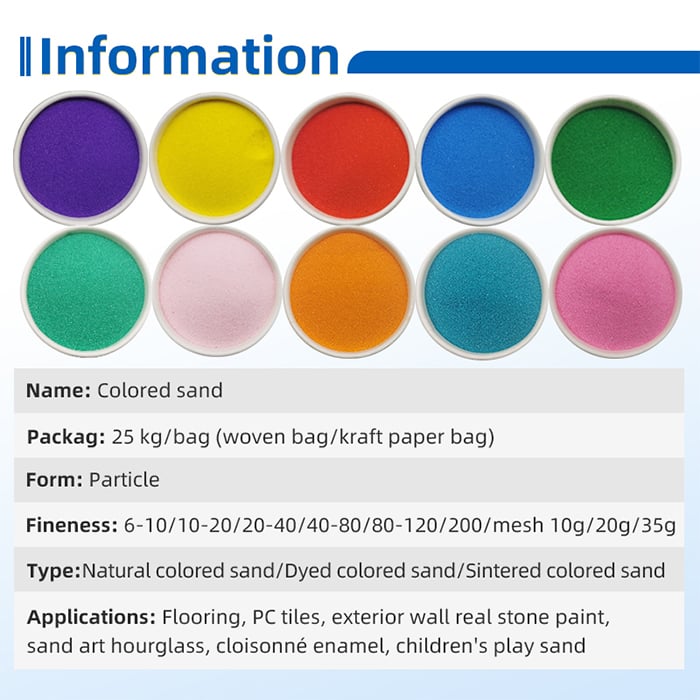
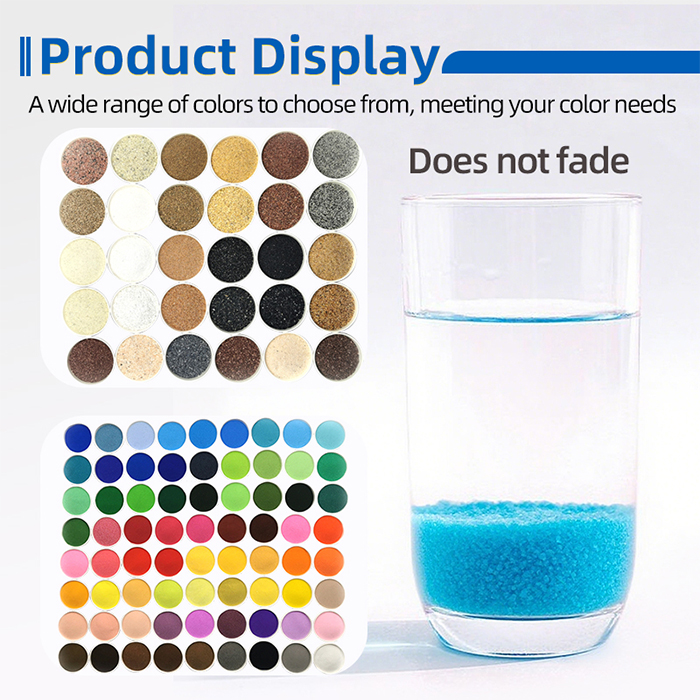
Coated colored quartz sand uses quartz as the base aggregate and applies pigment with a resin, ceramic or thermal-bonding process. This category offers a wider color palette and allows suppliers to create standard or custom blends. Commercial products are widely marketed for epoxy flooring, pool plaster, grout and decorative finishes.
Quartz is selected for colored sand because it provides a hard, abrasion-resistant mineral base. However, overall performance also depends on the quality of the coating and the complete flooring or coating system. Color retention, resin compatibility, chemical resistance and wear behaviour should be verified with the supplier's data and a representative sample.
A colored sand blend combines multiple colors and sometimes different particle sizes to create a specified visual pattern. Blends are common in decorative epoxy floors, terrazzo-like finishes and architectural coatings. Repeatability is important: a blend that looks balanced in one bag should maintain the same visual ratio across later batches.
Buyers should therefore confirm the blend formula, color tolerance and mixing controls. For a large project, ordering the full quantity from one approved production batch can help reduce visible variation.
Colored sand gives designers and installers a practical way to introduce color, texture and visual depth into a surface. Single colored sand tones can support clean architectural schemes, while multi-color blends can create granite-like, terrazzo-like or custom branded effects.
For commercial spaces, color can also support functional zoning, walkways or visual guidance. The final result depends on aggregate distribution, binder clarity, application method and topcoat selection as well as the sand itself.
Broadcasting colored quartz sand into a resin coating creates surface texture. In an appropriately designed flooring system, this texture can contribute to traction and slip resistance. Particle size and broadcast rate influence the final profile: coarser grains generally produce a more pronounced texture, while finer grains support a smoother decorative appearance.
Slip resistance is a property of the completed system, not the aggregate alone. Resin selection, installation, sealing, surface contamination and maintenance all affect actual performance. Project owners should test the finished flooring system against the applicable requirement.
A hard colored sand quartz base can contribute abrasion and impact resistance to an epoxy or urethane flooring system. Industry suppliers describe colored quartz aggregates as suitable for high-wear decorative applications, while established flooring manufacturers use quartz and other aggregates in seamless commercial and industrial systems.
The colored sand must still be compatible with the selected binder. Poor wetting, weak coating adhesion or unsuitable grading can affect appearance and long-term performance. A system trial is more reliable than evaluating loose aggregate in isolation.
Controlled colored sand particle-size distribution helps the aggregate spread more evenly during broadcast, trowel or premix installation. Consistent color and grading are especially important on large areas, where small batch differences may become visible after application.
A professional colored sand supplier should provide an approved color reference and grade specification. Buyers can then establish incoming inspection criteria for color, sieve distribution, moisture and contamination.
Colored sand for epoxy flooring is used in broadcast, trowelled and decorative resin systems. The aggregate can add color, texture and mechanical body while supporting the visual design of factories, warehouses, retail areas, schools, healthcare facilities and other commercial spaces.
Application methods vary. In a broadcast system, colored quartz sand is distributed onto wet resin and sealed after curing. In a trowelled system, aggregate and resin are mixed and placed as a mortar. The selected particle size should match the installation method, required thickness and desired texture.
Colored sand can be blended into resin or cementitious matrices to create terrazzo-like effects. Designers may combine several colored sand tones to produce subtle stone patterns or stronger visual contrast. Grain size, binder transparency and polishing method all affect the final appearance.
Before approving a bulk order, buyers should prepare a representative sample panel using the actual binder and finishing process. Digital color charts are useful for initial selection but cannot fully reproduce the appearance of mineral particles in a finished surface.
Natural and coated colored sand are used in stone-texture wall coatings, decorative plaster and mortar systems. They add mineral texture and can reduce dependence on liquid pigment alone. For exterior use, weather exposure, water resistance and color stability should be considered as part of the complete coating system.
Wall-coating manufacturers should evaluate particle size, color consistency, dust content and binder demand. The aggregate must disperse evenly without causing unacceptable sagging, roughness or application difficulty.
Selected colored quartz products are marketed for pool plaster and grout, where color, reflectivity, grain uniformity and resistance to the service environment are important. Compatibility with the plaster or binder formulation must be confirmed, particularly where the material will remain exposed to water and treatment chemicals.
Natural colored sand can be used in garden features, planters, model displays, art products and other decorative applications. These markets may prioritize visual appearance and packaging flexibility, while industrial flooring and coating customers generally require tighter controls on grading, moisture and batch consistency.