 ×
Published: October 29, 2026 | Last Updated: October 29, 2026
SEO Title Tag: Kaolin Clay Supplier Guide: Grades, Specs, QC | Huabang Meta Description: How to buy kaolin clay: compare washed, calcined, surface-treated and metakaolin grades, read the right specifications, and verify a supplier before the first container.
Kaolin clay is a white, plate-like aluminosilicate mineral built on kaolinite, and it reaches buyers in five commercial forms that behave nothing alike: raw ground powder, washed hydrous clay, calcined clay, surface-treated clay and metakaolin. Choosing between them, and between suppliers, decides whether a formulation runs smoothly or fails at the plant trial stage. This guide from Shijiazhuang Huabang Mineral Products Co., Ltd sets out what each grade is for, which specifications actually predict performance, how to read a batch certificate, and what to verify before placing a bulk order.
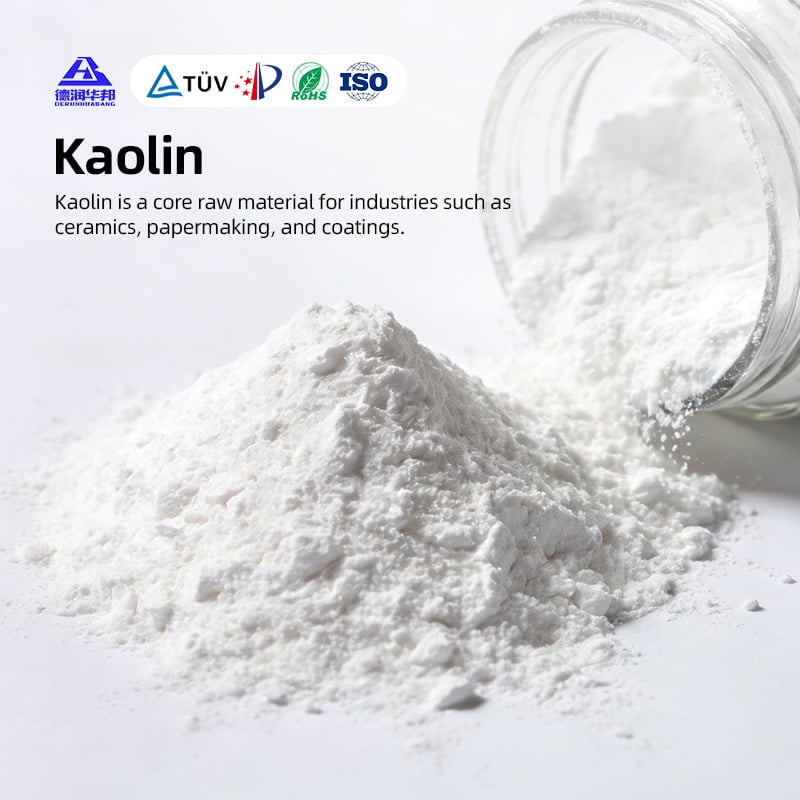
Ore is crushed, dried and milled without deep purification. Cost is low and impurity control is basic, which suits mortar filler, low-grade putty and common pottery bodies where whiteness is not critical. Buyers who need predictable colour or firing behaviour should move up a grade rather than compensate in the formula.
Water processing removes sand, mica and coarse fractions, and magnetic separation reduces iron-bearing minerals. The hydrous grade keeps the hydroxyl groups of the natural kaolinite structure, so it retains plasticity, green strength and workability. It is the usual starting point for ceramics, paper filling and coating, rubber and general fillers. Typical values: whiteness 92–95%, Fe₂O₃ 0.3% or below, Al₂O₃ 38–45%, SiO₂ 45–52%, D50 0.8–2 μm, loss on ignition 10–12%, moisture 1.0% or below.
Heating at roughly 650–1100 °C drives off structural water and collapses the ordered lattice. Brightness, opacity, oil absorption and electrical resistivity rise, while plasticity largely disappears. Calcined clay works as a titanium dioxide extender in decorative and industrial coatings, as a coating pigment in paper, as an insulation filler in wire and cable compounds, and in refractories. Huabang's calcined grade is specified at ISO brightness 90–92%, D50 1.8–2.5 μm, Al₂O₃ 42–44%, SiO₂ 52–54%, Fe₂O₃ 0.3% or below, loss on ignition 0.5% or below, pH 5.5–7.0 at 10% suspension, moisture 0.4% or below and 325 mesh residue 0.1% or below.
Silane or titanate coupling changes how the mineral wets out in a polymer, improving dispersion and interfacial bonding. Treated grades are chosen for rubber, thermoplastic elastomers, cable compounds and engineering plastics. Because the treatment is polymer-specific, the buyer should ask which coupling agent was used, at what loading, and what compatibility data supports the recommendation.
Calcining high-purity kaolin at about 650–800 °C produces an amorphous aluminosilicate with pozzolanic reactivity. It is used as a supplementary cementitious material at 5–20% of binder weight, with 8–12% the usual optimum, and in LC3 and geopolymer systems; further calcination converts it towards mullite for refractories. Quality is judged by reactivity under the customer's mix design, not by whiteness alone.
| Parameter | Washed kaolin | Calcined kaolin | Why it matters |
|---|---|---|---|
| Whiteness / ISO brightness | 92–95% | 90–92% | Colour and TiO₂ replacement potential |
| Fe₂O₃ | ≤0.3% | ≤0.3% | Discoloration after firing or exposure |
| D50 | 0.8–2 μm | 1.8–2.5 μm | Gloss, opacity, dispersion, abrasion |
| Loss on ignition | 10–12% | ≤0.5% | Confirms full calcination and structural water removal |
| pH (10% suspension) | 6–8 | 5.5–7.0 | Binder and dispersant compatibility |
| Moisture | ≤1.0% | ≤0.4% | Caking, dosing accuracy, polymer processing |
| Residue / coarse fraction | 325 mesh sieve | 325 mesh ≤0.1% | Surface defects, screen and nozzle wear |
Four readings cause most disputes. Brightness is not quality: a bright clay with poor particle distribution can still wreck gloss or viscosity. Mesh is not a particle size: a nominal 1250 mesh tells you nothing about the d10, d50 and d90 spread, so ask for a laser-diffraction distribution. Loss on ignition reveals process honesty: 10–12% is normal for hydrous clay, while a calcined grade above 1% suggests incomplete calcination. Moisture and pH are process parameters, not footnotes; both shift dosing, dispersion and cure behaviour.
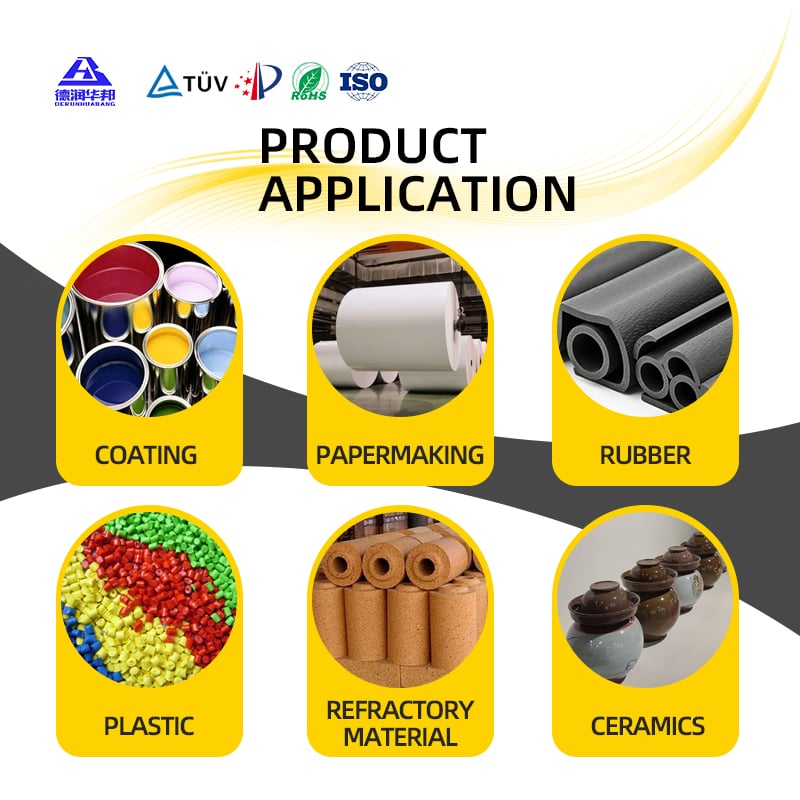
Quality in kaolin is a processing discipline, not an ore grade. A supplier worth qualifying can show all six of the following.
1. Washed or calcined kaolin — which should I start with? Washed clay if you need plasticity, green strength and controlled firing, as in ceramics and paper filling. Calcined clay if you need brightness, opacity, insulation or reinforcement, as in paints, cable compounds and refractories. Many formulations use both.
2. How much titanium dioxide can calcined kaolin replace? Commonly 10–30% of the TiO₂ weight in matte and satin systems, with hiding power maintained when dispersant dosage is adjusted. High-gloss systems need their own trial, because extender loading changes gloss.
3. What is the usual metakaolin dosage? 5–20% of binder weight, with 8–12% the typical optimum. Replacing 12.5–15% of Portland cement is a common starting point for strength and durability work.
4. What packaging and terms do you offer? 25 kg multilayer kraft bags as standard, jumbo bags for bulk, FOB or CIF terms, with COA and MSDS supplied per batch for customs clearance.
5. Can I get a sample and a custom particle size? Yes. Custom d50 and surface treatment are available on request, and samples are supplied for laboratory or plant trials so the grade can be confirmed in your own formulation.
Send your application, target brightness, required d50, binder or polymer system and the standard you must meet. The Huabang technical team will match a grade from the raw, washed, calcined, surface-treated or metakaolin range, confirm the lot certificate against your specification, and arrange a sample for plant trial before the first order is scheduled.


