 ×
Published: November 3, 2026 | Last Updated: November 3, 2026
SEO Title Tag: Sepiolite Fiber for Hot, Humid and Saline Sites | Huabang Meta Description: Why sepiolite fiber is specified in tropical and desert projects: thixotropy, water retention, thermal behaviour and salt tolerance, and how to select a grade.
Most additives are chosen for what they add. Sepiolite fiber is chosen for what it survives. In Southeast Asia it goes into coatings and mortars applied onto damp, warm substrates and then baked by an afternoon sun; in the Gulf it goes into systems that must hold their shape in sustained heat, and into duties where the water is too salty for the swelling clays normally used. In both regions the question is not whether it works in a laboratory, but whether it still works in the third year on site.
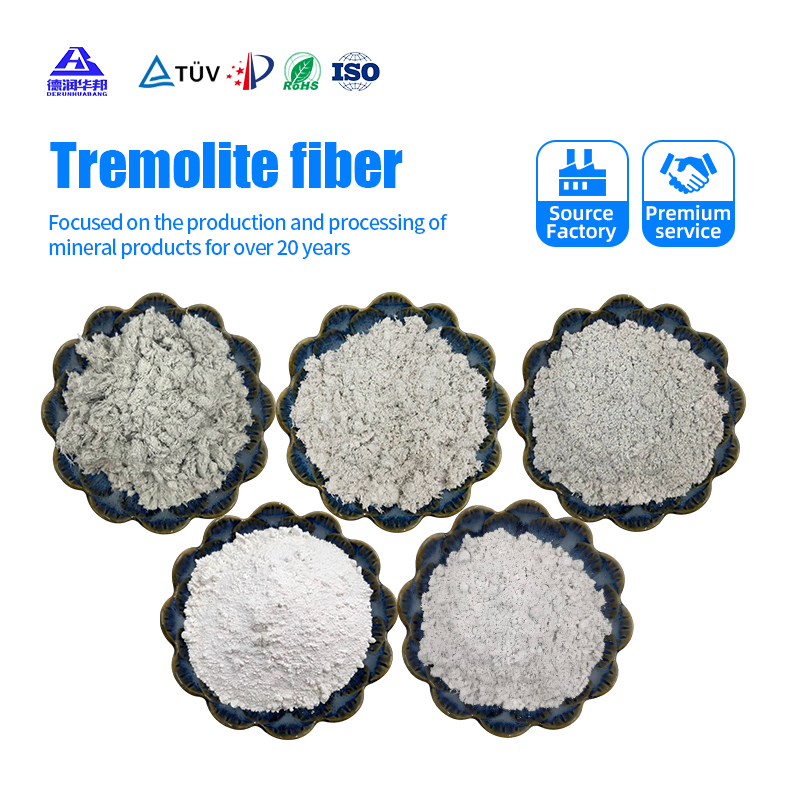
Sepiolite is a natural hydrated magnesium silicate with an unusual habit: instead of plates or blocks it grows as fine needle-like fibres, each carrying internal channels along its length. Every commercial property follows from that structure.
The needles interlock in a liquid rather than settling, forming a three-dimensional network at very low loading. That network is thixotropic — it holds still when undisturbed and flows when sheared — which is the basis of its use as an anti-sagging and anti-settling additive. The channels give a large internal surface, which is why the same material adsorbs odours, ammonia and organic vapours. Being an inorganic oxide, it also does not soften where polymer additives have already failed.
What it is not matters as much. It is not asbestos — a different family of fibrous silicates with its own regulatory history, and sepiolite is not classified alongside it, which is why it became the standard replacement in friction linings, gaskets and fire-resistant board. But it is still a fibrous mineral, and respirable dust must be controlled.
It is also confused with attapulgite, its closest relative. Both are fibrous magnesium silicates with similar rheology, but sepiolite carries more magnesium and a more open channel structure, favouring adsorption and high-temperature work. Treat a substitution as a formulation change, not a purchasing decision.
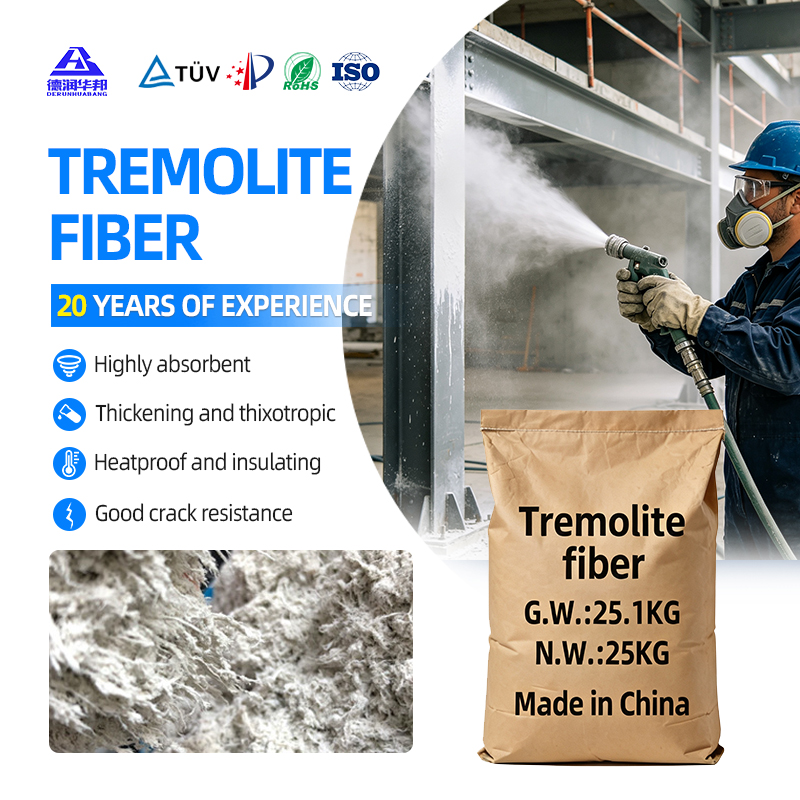
Thixotropy and anti-sagging. In a coating or tile adhesive the failure that matters is sag — material sliding down a vertical face before it sets. Heat widens that window, because the binder thins as the substrate warms. A thixotropic network restores structure as soon as movement stops. The same property keeps heavy filler suspended through a sea voyage, where coatings most often fail in transit.
Water retention. Cementitious and gypsum systems need water available long enough to hydrate. On a hot, breezy site the surface dries from the outside in, giving short open time, poor adhesion and shrinkage cracking. A fibre with internal channels holds water in a way a simple filler cannot, releasing it gradually — often the difference between a finish that cures evenly and one that needs rework.
Thermal and fire behaviour. Being inorganic, sepiolite adds no fuel to a fire and does not melt away as a thermoplastic fibre does. In fire-resistant board and intumescent coating it acts as a skeleton that holds the char in place — not as a flame retardant in the chemical sense. It improves fire performance by remaining present, and should never be sold as a flame-retardant package on its own.
This is the least advertised and most useful difference from the swelling clays. Bentonite builds viscosity by drawing water into its layered structure — effective in fresh water, lost in the presence of dissolved salts, which is why bentonite fluids are blended or abandoned when a well crosses a salt section or the mixing water is brackish. Sepiolite does not depend on swelling: its viscosity comes from interlocking needles, so it builds structure in salt water as in fresh, and holds it where bentonite has already flocculated.
Where a project has saline groundwater, a salt formation, a marine environment or a brackish supply, sepiolite is not a premium alternative to bentonite — it is the material that works at all. The same logic carries into coastal waterproofing and salt-spray service.
Two applications carry most regional volume. The first is coatings and mortars on damp substrates: tropical walls are often damp when the finish goes on and then exposed to strong sun, and a thixotropic, water-retaining additive answers both ends of that problem, including on porous blockwork that would otherwise pull water out of the mix at the interface.
The second is friction material. Southeast Asia is the largest two-wheeler market in the world, and scooter brake linings are a continuous consumable rather than a project item. Sepiolite replaced asbestos in these formulations not only for regulatory reasons but because it holds a stable friction coefficient as the lining heats. Buyers here ask about fibre length distribution and lot consistency, because a lining that behaves differently in the wet season is a warranty claim.
Gulf conditions attack from a different direction. Ambient and surface temperatures leave any organic additive near its limit before the material is installed, and sun exposure is relentless; inorganic sepiolite is indifferent to both, which is why it appears in exterior-grade coatings, insulation, fire-stop systems and hot-service seals.
Fire performance deserves care because it is regulated and because it is where suppliers overreach. The defensible claim is narrow: the fibre is inorganic, adds no fuel load, and keeps a char layer intact so the system behind stays insulated. That survives a consultant's review. A claim that a fibre additive delivers a particular fire rating on its own does not, because the rating belongs to the tested assembly.
Most offers arrive with a short description and little else. Selection still works, because commercial grades differ along a few axes rather than many.
1. Is sepiolite fiber a replacement for asbestos? In friction linings, gaskets and fire-resistant board, yes. It is a different mineral and is not regulated as asbestos, but it is still fibrous and dust must be controlled.
2. Can it replace bentonite in drilling fluids? In salt water and at high temperature, yes — viscosity comes from fibre interlocking rather than swelling, so it does not collapse in brine. In fresh water bentonite remains the cheaper choice.
3. How much should be added? Dosage depends on target viscosity, binder system and grade. It is normally fixed on a trial batch rather than taken from a data sheet, and a supplier should support that trial.
Tell us the application, the binder system, the service temperature and whether the mixing water is fresh, brackish or saline. The Huabang technical team will identify the grade and fibre length class, confirm the lot certificate and the asbestos-free statement against your specification, and supply a trial quantity so the dosage can be established on your own formulation.


