×
×
Carbon black is an engineered form of elemental carbon used to reinforce rubber, create deep black color, protect polymers from ultraviolet exposure and provide electrical conductivity. This buyer-focused guide from [Company Name] explains the differences among rubber, pigment and conductive carbon black, shows how surface area, structure, porosity and surface chemistry influence performance, and outlines the technical documents purchasing teams should review. For rubber compounders, plastics manufacturers, ink and coating formulators, cable producers and battery-material buyers, selecting the right grade requires application testing rather than comparison by price or grade name alone.
Carbon black is a fine industrial material produced under controlled conditions through partial combustion or thermal decomposition of hydrocarbon feedstocks. Primary particles fuse into aggregates, which can form larger agglomerates during storage and handling. The dimensions, branching and surface characteristics of these structures determine how the product behaves in rubber, resin, ink, paint and electrode formulations.
Manufactured carbon black is different from soot, atmospheric black carbon, charcoal, coal dust and graphite. Although these materials contain carbon, their production, morphology, purity and intended functions differ. Commercial grades are engineered to deliver defined reinforcement, pigmentation, UV protection, conductivity or processing behaviour.
A carbon black grade suitable for tire tread may not deliver the required jetness in an automotive coating. A high-color pigment may create excessive viscosity in a masterbatch, while a conductive grade may need specialized dispersion. Buyers should start with the function and formulation, then compare technical properties.
Rubber carbon black is used in tires, hoses, belts, seals, gaskets, anti-vibration parts and other elastomer products. When its grade and loading match the compound, it can improve reinforcement, tensile performance, abrasion resistance, durability and processing.
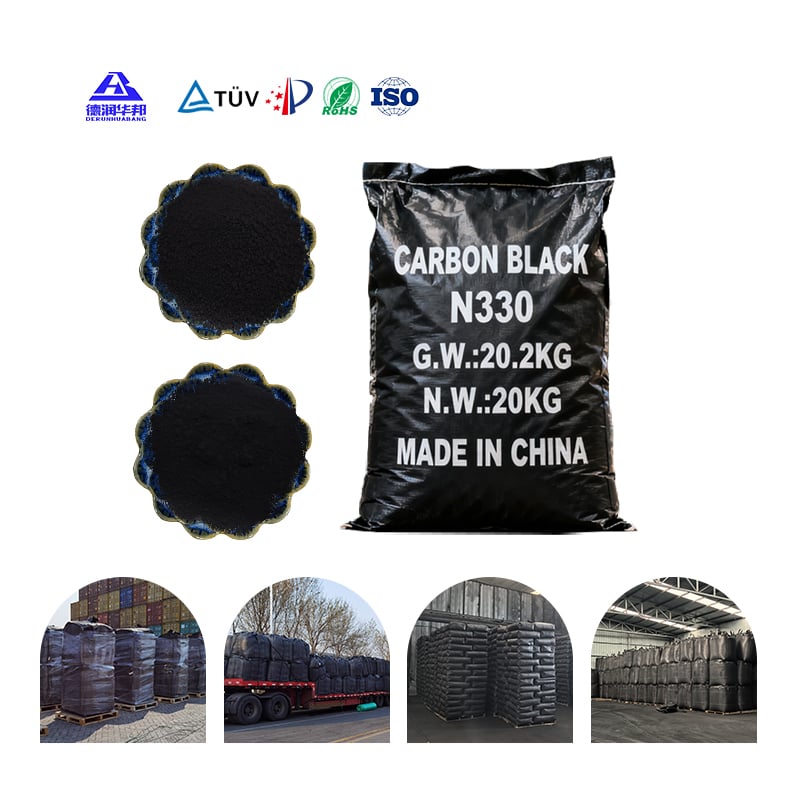
Commercial rubber grades often use ASTM-style N-series designations such as N220, N330, N550 or N660. These names organize common performance families, but they do not replace supplier specifications or compound trials. Feedstock, production control and property distributions can influence processing and final results.
Finer carbon black with higher surface area generally provides stronger reinforcement and abrasion resistance but can require more mixing energy. Lower-surface-area grades may support easier processing and lower compound viscosity. Aggregate structure also influences modulus, hardness, conductivity and dispersibility.
Pigment carbon black is selected for inks, coatings, plastics, toners and related color applications. Key objectives can include jetness, undertone, tinting strength, gloss, dispersion stability and compatibility with the binder or resin.
Smaller primary particles and higher surface area can support greater jetness and tint strength, but they can also increase viscosity and dispersion demand. Surface oxidation may change wetting, rheology and compatibility in waterborne or solvent-borne systems. The optimum pigment carbon black therefore depends on the complete formulation and production equipment.
Conductive carbon black is designed to form conductive pathways in plastics, elastomers, coatings, cable compounds and battery electrodes. High structure and porosity can support conductivity at a lower loading than conventional grades, although actual percolation behaviour depends on dispersion, polymer type and processing history.
A conductivity claim should be connected to a test method and formulation. Volume resistivity measured in one resin or electrode system cannot automatically predict performance in another. Buyers should test conductive carbon black at several loading levels in the target matrix.
Specialty carbon black may combine pigmentation, UV protection, conductivity, cleanliness or surface-treatment properties for demanding applications. These grades are used in engineering plastics, wire and cable, high-performance coatings, printing systems, electronic components and selected battery technologies.
Food-contact, skin-contact, medical, electronics or battery uses may require additional purity, regulatory or traceability documentation. A general industrial carbon black grade should not be assumed suitable for a regulated application.
Primary particle size strongly influences reinforcement and color. Industry technical guidance states that smaller particle diameter generally corresponds to higher surface area. In rubber, finer carbon black can increase reinforcement, abrasion resistance and tensile strength. In specialty applications, high surface area can increase tinting strength, jetness, conductivity and weathering performance.
These benefits involve processing trade-offs. High-surface-area carbon black often requires more mixing energy and can increase compound or coating viscosity. Buyers should compare surface-area data together with dispersion capability and production conditions.
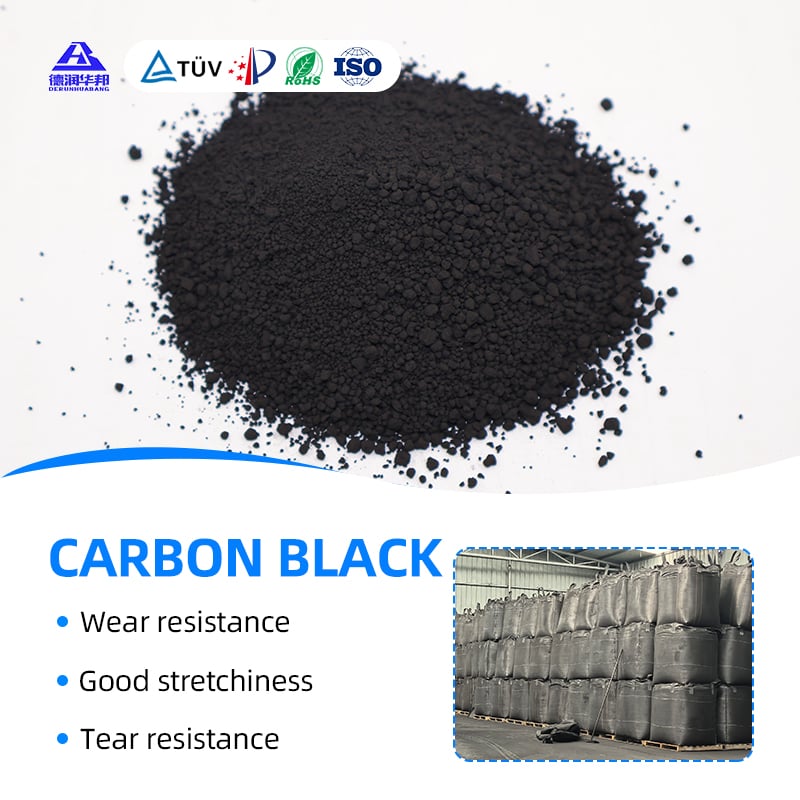
Structure describes the degree of branching and three-dimensional fusion within carbon black aggregates. Oil absorption number, including OAN or DBP absorption, is commonly used as an indicator of aggregate structure.
Higher-structure carbon black can increase compound viscosity, modulus, hardness and electrical conductivity. It may also improve dispersibility in selected specialty systems. The required structure depends on whether the formulation prioritizes reinforcement, flow, surface finish or conductivity.
Porosity affects the relationship between total and external surface area. Highly porous conductive carbon black can provide substantial internal surface and contribute to conductive network formation. Porosity may also influence loading, viscosity and adsorption of formulation components.
One surface-area result may not fully describe a porous carbon black grade. Buyers should review the complete property set and confirm performance in their intended matrix.
Oxygen-containing groups on the carbon black surface influence wetting, polarity, pH, dispersion and binder interaction. Oxidized pigment grades may improve wetting or rheological behaviour in selected inks and coatings, while surface chemistry can also affect electrical resistivity and rubber cure characteristics.
Surface treatment should be evaluated against the resin, solvent, dispersant and process. A carbon black grade optimized for one formulation may perform differently in another.
Carbon black is supplied in powder, pellet or bead-like forms. Powder may disperse efficiently in some low-shear or three-roll processes but can create greater dust and handling challenges. Pelletized carbon black supports bulk handling, cleaner transfer and higher bulk density, but sufficient mixing energy is needed to break down pellets and distribute aggregates.
Dispersion is critical to final performance. Poorly dispersed carbon black can reduce color strength, create surface defects, weaken mechanical properties and prevent a conductive network from forming efficiently.
Carbon black is one of the most important reinforcing fillers in tire compounds and technical rubber goods. It supports strength, durability, abrasion resistance and processing in treads, sidewalls, hoses, conveyor belts, seals and molded components.
Rubber buyers should identify the polymer system, target hardness, tensile and abrasion requirements, loading, mixing equipment and cure system. Trial compounds should be evaluated before replacing an established carbon black grade because small property changes can affect processing and finished performance.
In plastics, carbon black provides black color, UV protection and, with appropriate grades and loading, electrical conductivity or electrostatic dissipation. Common uses include pipe, film, molded parts, cable compounds and engineering plastics.
Masterbatch producers should compare carbon black dispersion, jetness, tint strength, filter pressure, moisture, ash and carrier-resin compatibility. For UV protection, pigment distribution and concentration in the finished polymer are as important as the grade name.
Pigment carbon black gives inks and coatings color, undertone and optical density. It can also contribute UV protection or conductivity. Formulators must balance jetness with viscosity, gloss, dispersion energy and storage stability.
A meaningful carbon black trial should use the actual binder, solvent or water system, dispersant, mill and application method. Drawdowns or printed samples provide stronger evidence than loose-powder appearance.
Carbon black is used in cable insulation, conductor shielding and jacketing to support conductivity, smoothness and UV resistance. Conductive performance is sensitive to structure, loading and dispersion. Contamination and oversize particles may also matter in thin or electrically sensitive layers.
Cable compounders should specify resistivity, surface quality, purity and processing requirements, then confirm the carbon black performance in the finished compound.
Conductive carbon black is used as an additive in selected battery electrodes to improve electronic conductivity and support charging performance. Battery applications can require tight control of surface area, structure, impurities, moisture and consistency.
The appropriate conductive carbon black depends on battery chemistry, electrode formulation, active material and mixing process. Performance data from one chemistry should not be transferred to another without validation.