 ×
Published: November 6, 2026 | Last Updated: November 6, 2026
SEO Title Tag: Mica Flakes in Epoxy Floor Coating: What They Do | Huabang Meta Description: Mica flakes make an epoxy floor coating a better barrier, not a tougher surface. Where the flakes belong in the system, what to specify, and the one property they reduce.
Mica flakes are added to epoxy floor coatings for one reason: their shape is flat. A flake 45 µm across and a micrometre thick lies parallel to the substrate as the film flows out, and thousands of them stack into a layer that water vapour, oxygen and chloride must travel around rather than through. The anti-settling effect, the reduced shrinkage stress and the smoother film all follow from that geometry.
What does not follow from it is hardness. Muscovite sits at Mohs 2–2.5, compared with 7 for quartz. A coating built on mica resists permeation better than the same coating built on silica flour, but it wears away faster under forklift traffic. Both statements are true at the same time, and the second one is why a mica-filled floor must be specified as a system rather than as a product.
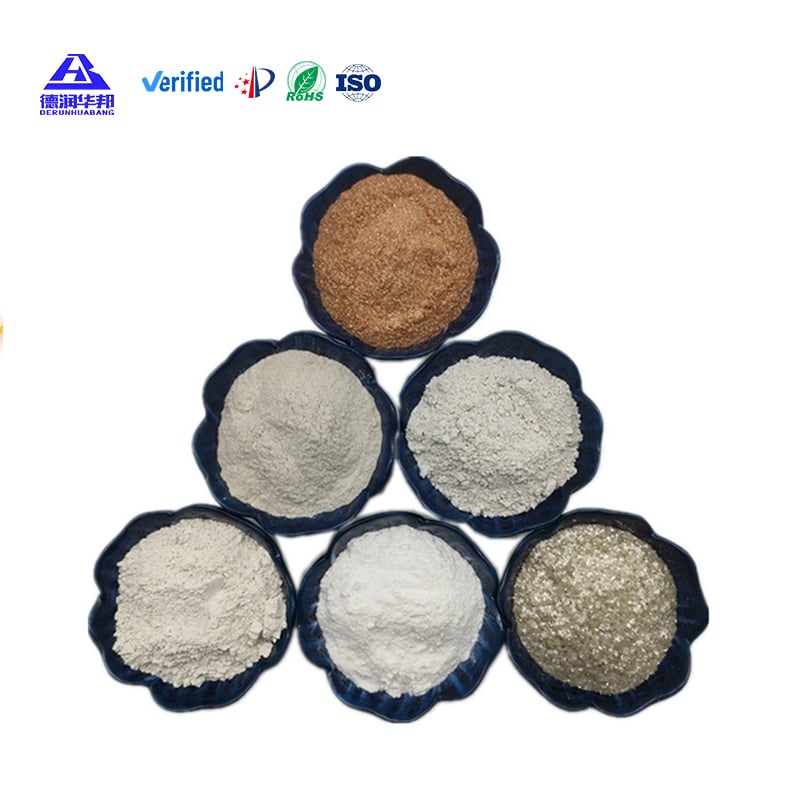
Three materials are often confused in floor specifications, and buying the wrong one is expensive.
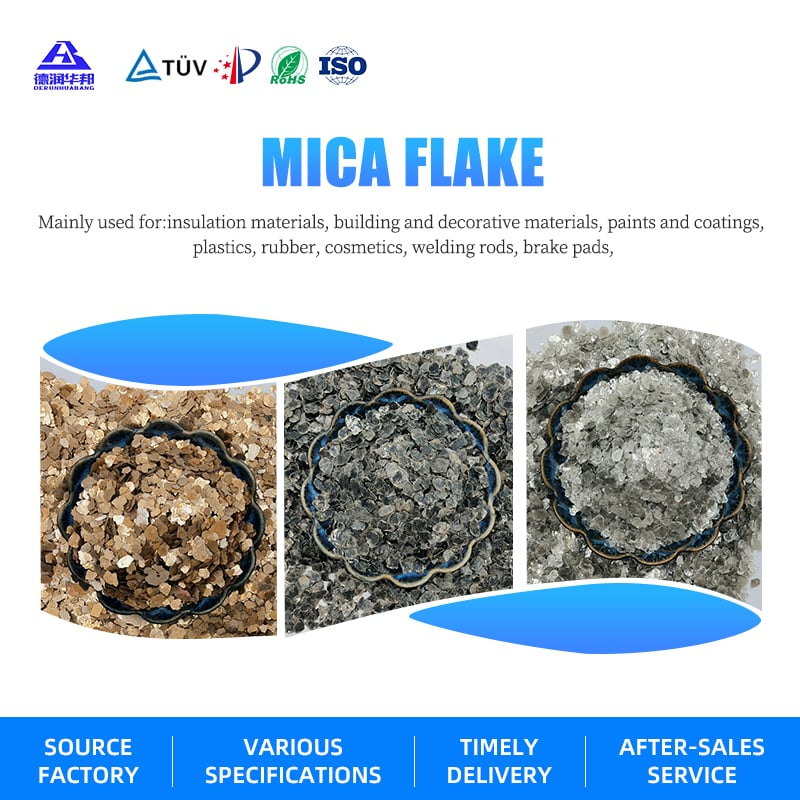
Muscovite mica is a layered potassium aluminosilicate. As a flake, it is a translucent white extender with a true specific gravity of 2.8–3.0 and a Mohs hardness of 2–2.5. Its value is barrier performance, anti-settling and shrinkage control.
Micaceous iron oxide (MIO) is not mica. It is a lamellar iron oxide, grey, and it is a pigment rather than an extender — the standard barrier pigment in anti-corrosion primers under ISO 12944. Mica can extend an MIO primer by partial replacement, but it does not reproduce its opacity. A note that says "mica replaces MIO" records a cost decision, not an equivalent substitution.
Decorative colour flakes for terrazzo effects are normally vinyl chips, 0.2–2 mm, broadcast into a base coat and sealed. Natural mica cannot do that at that scale: mica flakes are a filler, while decorative flakes are an aggregate.
Barrier. A flake with an aspect ratio of 30:1 to 80:1 forces a diffusing molecule onto a zigzag path. In a 200 µm primer at 10–15% loading, the effective diffusion distance can be several times the film thickness. That is why mica belongs in the primer, where the failure mode is permeation rather than wear.
Anti-settling and sag control. Flakes raise low-shear viscosity sharply without raising application viscosity as much. Barytes stops settling hard in the can, and a 300 µm coat holds on a vertical face without sagging. This is the least-written and most practical benefit: mica is often added because the pigment package will not stay suspended.
Shrinkage stress and cracking. Epoxy cures with shrinkage, and a rigid filler of low thermal expansion — mica is roughly 9–11 ×10⁻⁶/K in plane — reduces the stress that opens hairline cracks in thick films and at edges. It does not replace movement joints and does not bridge a live crack.
Abrasion resistance goes down.
Mica is softer than the resin it sits in and far softer than silica. On a Taber test — CS-17 wheel, 1,000 g load, 1,000 cycles — a mica-heavy topcoat will generally show higher mass loss than the same formulation filled with quartz or calcined alumina. For a warehouse aisle, a loading bay, or anywhere with steel-wheeled traffic, that matters more than a permeability figure.
The answer is not to remove mica but to place it correctly. Mica belongs in the primer and mid-coat, where the job is keeping water and chloride out of the substrate. The wear layer belongs to silica flour, quartz, corundum or a broadcast aggregate. A three-coat system that uses each filler where it works beats any single coat trying to do both jobs.
Two further side effects also matter. Above roughly 20% flake loading, elongation falls and a coating over a flexible or green substrate cracks more easily. Untreated mica is also hydrophilic: in a solvent-free epoxy it pulls moisture into the film, which is why silane-treated grades are specified for immersion and high-humidity service.
| Layer | Filler role | Mica flake grade | Typical loading |
|---|---|---|---|
| Primer over concrete or steel | Barrier, anti-settling | 200–325 mesh, silane-treated | 5–15% by weight |
| Mid-coat / build coat | Build, barrier, sag control | 100–325 mesh | 10–20% by weight |
| Wear layer / topcoat | Abrasion, slip, colour | Silica or corundum; mica only as minor extender | 0–5% by weight |
| Decorative broadcast | Terrazzo effect | Not mica — vinyl colour flake 0.2–2 mm | Broadcast, not mixed |
The chemistry of the floor does not change in the tropics. The failure modes do.
Amine blush. Above roughly 80–85% relative humidity, an amine-cured epoxy reacts with carbon dioxide and water at the surface and forms a greasy carbamate layer, so the next coat bonds to blush rather than to epoxy. Coastal Southeast Asia and the Gulf live in that range. Apply the next coat inside the recoat window, and sand or wash any film that has stood overnight.
Dew point. Gulf steel and concrete can sit below ambient dew point in the early morning, so a surface that looks dry is wet. The requirement is a substrate at least 3 °C above dew point, measured rather than judged.
Concrete moisture. A slab must be dry before a barrier primer goes on — commonly 4% or less by the calcium chloride method, or 75–80% relative humidity by in-situ probe. Mica improves the cured film; it cannot stop osmotic blistering driven by a green slab.
Sun. Aromatic epoxy chalks and yellows under ultraviolet. Mica is a mineral filler, not a UV absorber, and no loading of it substitutes for an aliphatic topcoat on an exposed floor.
Thermal movement. A Gulf floor in direct sun reaches 60–70 °C and drops sharply at night. Mica reduces shrinkage stress; it does not absorb that movement, and joints still have to be cut and sealed.
Instead of "mica flakes, high quality", specify the numbers that decide performance:
| Claim | Why it fails |
|---|---|
| "Withstands 800 °C, so the floor keeps its integrity" | Mica survives; the epoxy binder decomposes at roughly 200–250 °C |
| "Mica provides UV protection" | It is a mineral filler, not a UV absorber; exposed floors need an aliphatic topcoat |
| "Improves abrasion resistance" | Mohs 2–2.5 against silica's 7; it usually reduces wear resistance |
| "Food-safe / certified food contact" | Requires migration testing on the finished system, not a filler certificate |
| "Conductive mica gives an anti-static floor" | Conductive grades exist, but they are coated flakes sold to a surface-resistance spec — natural mica is an insulator |
1. How much mica flake can I add before the film becomes brittle? Above roughly 20% by weight of the formulation, elongation falls and cracking risk rises on flexible or green substrates. Most barrier primers sit at 5–15%.
2. Can mica replace barytes to control settling? Partly. Mica controls settling through flake geometry rather than density, so it works alongside barytes rather than instead of it, and it shifts the viscosity profile, which has to be re-checked.
3. Does a mica-filled primer let me skip the mid-coat? No. Mica raises barrier performance of a film of a given thickness; it does not add thickness. A three-coat system at the specified film build is still the specification for C4 and C5 environments.
4. Is golden mica the same as muscovite? No. Golden mica is phlogopite — amber, harder, and stable to a higher temperature than muscovite. It is chosen for heat and colour, not as a like-for-like substitute.
Send the system you are building — substrate, service environment, film build and the filler now in the formula — and the Huabang technical team will recommend the flake grade, mesh, aspect ratio and surface treatment, and supply samples with particle size distribution, whiteness, Fe₂O₃ and moisture data for qualification on your own line.


