


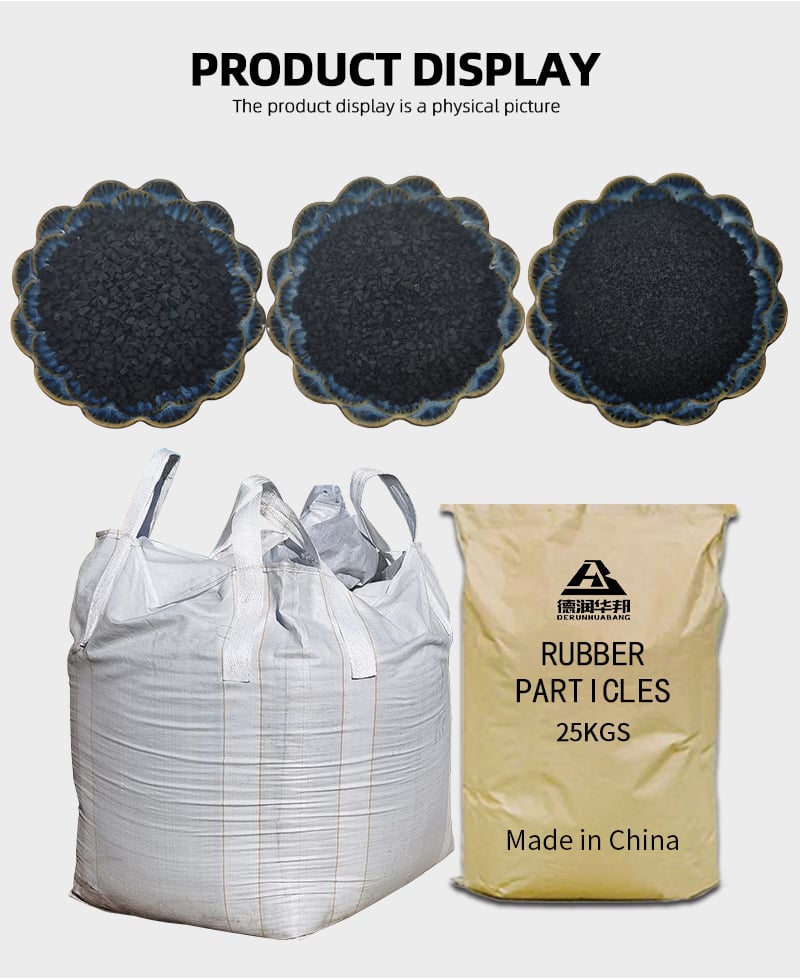
Against the global backdrop of carbon neutrality targets, stricter waste governance regulations and surging demand for low-cost, high-performance recycled raw materials, rubber particles—refined from end-of-life tires, industrial rubber scraps and EPDM feedstock—have evolved from a simple waste disposal solution into a multi-functional core recycled material. Far beyond a basic waste recycling product, rubber particles integrate advanced cold crushing, surface activation and intelligent sorting technologies, balancing environmental remediation, mechanical performance optimization and full-cycle cost reduction. Hailed as “the green circular backbone of modern infrastructure and manufacturing”, rubber particles deliver unmatched strengths in shock absorption, noise reduction, weather resistance, elastic recovery and recyclability, empowering cross-industry quality upgrading while resolving the global “black pollution” crisis posed by waste rubber stockpiles.
The core competitiveness of premium rubber particles stems from optimized raw material control and precision closed-loop processing workflows. Qualified recycled rubber particles are mainly sourced from standardized post-consumer vehicle tires, conveyor belt scraps and non-toxic EPDM waste, with strict multi-stage separation to remove steel wires, textile fibers and inorganic impurities, controlling total foreign matter content below 0.8% to guarantee consistent purity. High-grade products adopt cryogenic low-temperature crushing and atmospheric continuous surface modification technologies, producing customizable particle sizes ranging from 1–5 mm coarse particles for construction paving to 80–500 mesh fine rubber powder for polymer blending, with particle size uniformity reaching 99.2% and batch performance deviation limited to less than 1.0% across production runs. Mechanically, the finished rubber particles retain stable cross-linked elastic structures, featuring outstanding impact buffering, anti-fatigue deformation and low-temperature flexibility—maintaining intact elastic performance under -35 ℃ harsh cold environments without cracking or pulverization. Chemically inert, they resist oxidation, UV aging, acid and alkali corrosion, with non-toxic, heavy-metal-free formulations fully compliant with REACH, RoHS, EU Waste Framework Directive and global playground safety standards, making them a benchmark eco-friendly recycled mineral and polymer additive material.
Built on inherent elastic and sustainable advantages, rubber particles exhibit extraordinary cross-industry applicability, addressing long-standing technical pain points across infrastructure, sports construction, polymer manufacturing, transportation and green building sectors.
In road engineering and highway construction, rubber particles serve as the core modifier for rubber asphalt mixtures. When mixed into base asphalt at a 15%–20% dosage, they form a stable three-dimensional interpenetrating network with asphalt binders, lifting elastic recovery rate by over 220%, quadrupling anti-fatigue performance and drastically cutting road surface vehicle driving noise by 2–5 decibels. Modified asphalt pavements mixed with rubber particles deliver superior anti-rutting, anti-cracking and anti-aging capacity, extending design service life from 15 years for ordinary asphalt roads to over 40 years for rubber asphalt pavements. Major national infrastructure projects including Xiong’an New District expressways and domestic high-speed rail sound insulation road sections have widely adopted this material, with each kilometer of rubber asphalt consuming approximately 3,000 waste tires to massively reduce solid waste accumulation pressure.
In sports and recreational venue construction, black recycled rubber particles and color EPDM rubber particles are the foundational raw material for plastic runways, multi-functional sports courts, kindergarten safety flooring and fitness trails. Standard 1–3 mm graded rubber particles feature moderate elasticity, anti-slip surface texture and excellent water permeability, effectively cushioning falls to lower sports injury risks while resisting long-term outdoor UV discoloration and abrasion. Colored modified rubber particles integrated with anti-weathering color masterbatches maintain vivid color stability for over 8 years under direct sunlight without powdering or fading, catering to customized landscape and sports facility aesthetic demands. Compared with all-new synthetic plastic flooring, rubber particle paving materials slash raw material costs by 35% while cutting carbon emissions by more than 60% during production, fully aligning with green public facility construction standards worldwide.
In rubber, plastic and composite manufacturing, fine activated rubber particles act as high-performance reinforcing fillers and toughening modifiers. In tire, hose and conveyor belt production, properly surface-activated rubber particles can replace up to 30% virgin natural rubber without compromising tensile strength and wear resistance, boosting finished product abrasion performance by 25% and slashing overall production costs by nearly 40% amid persistent global virgin rubber price volatility. For plastic processing, rubber particles serve as low-cost tougheners for PP, PVC and PE products, resolving inherent brittleness defects of rigid plastics and improving impact resistance for plastic pipes, automotive interior trim and electronic housing components. They are also widely formulated into waterproof coiled materials, shock-absorbing sealing strips and vibration-damping pads for machinery equipment, leveraging their inherent damping characteristics to reduce industrial equipment operation noise and vibration transmission.
In architecture, new energy and special functional material sectors, rubber particles expand sustainable application boundaries. Mixed into concrete and mortar, they produce lightweight shock-absorbing floor slabs, anti-collision wall panels and sound-insulation partition boards for residential buildings, hospitals and industrial workshops, lowering building dead weight while enhancing noise isolation effects. In new energy industries, ultra-fine rubber particles are compounded with composite materials to manufacture wind turbine vibration-damping gaskets and photovoltaic module anti-shock backing layers. Radiation-proof composite plates, agricultural anti-compression irrigation hoses and marine anti-corrosion buffer components also rely on rubber particles as core functional fillers, stretching the material’s value from basic civil engineering to high-end green manufacturing fields.
Driven by global carbon reduction policies and continuous downstream technological innovation, the rubber particle recycling industry has entered a high-value, standardized development era. Breakthroughs in cryogenic micronization, microwave surface activation and intelligent closed-circuit sorting have transformed rubber particles from low-end bulk waste derivatives into customized high-value functional recycled materials, satisfying stringent industry requirements for particle size precision, batch stability and surface compatibility. Modern automated production lines adopt fully enclosed waste treatment systems, zero-discharge wastewater circulation and low-energy grinding equipment, realizing zero heavy metal contamination and over 95% resource recovery efficiency of waste tire raw materials. As the world’s largest waste rubber resource reserve and recycled particle manufacturing base, China boasts a complete industrial chain covering waste tire collection, intelligent crushing, deep modification and global terminal supply. High-purity activated rubber particle products manufactured in China are exported to more than 70 countries and regions across Europe, North America, Southeast Asia and Oceania, accelerating the global substitution of expensive virgin polymer fillers and advancing worldwide circular economy deployment.
In the wave of global industrial green transformation and circular manufacturing upgrade, the strategic value of rubber particles keeps rising year by year. It provides a renewable, low-carbon and cost-effective alternative to high-consumption virgin synthetic materials, perfectly matching industrial development targets of performance improvement, production cost reduction and waste resource circulation. Industry research data shows the global rubber particle market scale surpassed USD 11.8 billion in 2025, with China’s domestic market exceeding RMB 72 billion, driven by mandatory waste recycling quotas and infrastructure investment growth across regions. Market analysts forecast that the market size of high-purity surface-modified functional rubber particles will exceed RMB 480 billion by 2030, as downstream industries including transportation, sports construction, new energy and polymer composites continuously raise requirements for recycled material stability, safety and low carbon footprint.
From a waste remediation solution tackling the global “black pollution” dilemma to a core functional recycled material supporting modern green manufacturing, rubber particles demonstrate how waste rubber resources can deliver long-term industrial, environmental and economic benefits through refined processing and technical upgrading. No longer a secondary waste byproduct, rubber particles stand as a vital sustainable pillar for constructing a low-carbon, circular and high-performance global industrial system, guiding manufacturing and infrastructure industries worldwide toward more resource-efficient, eco-friendly and reliable long-term development.

