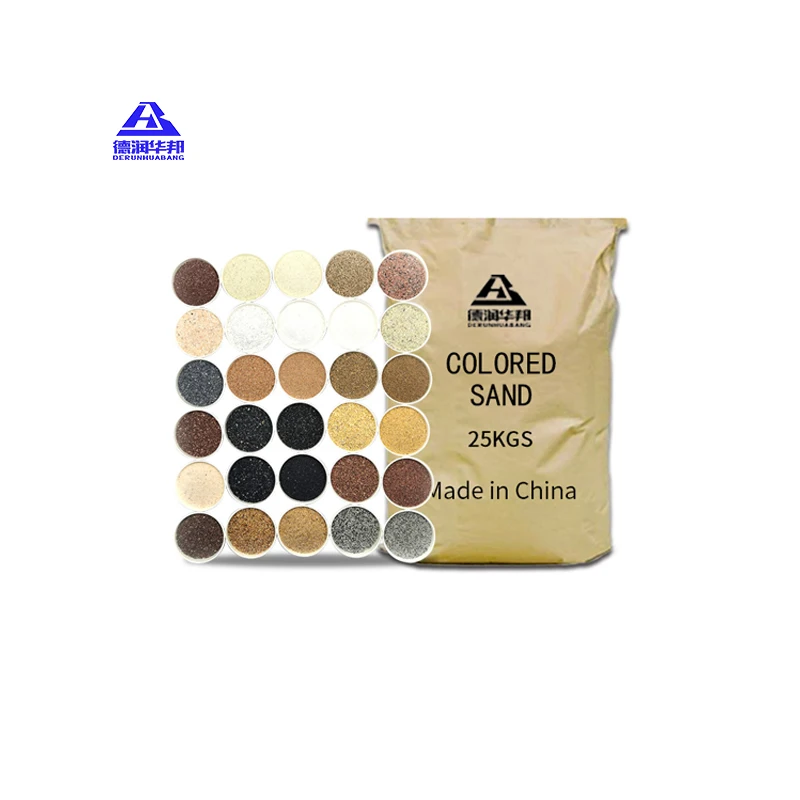
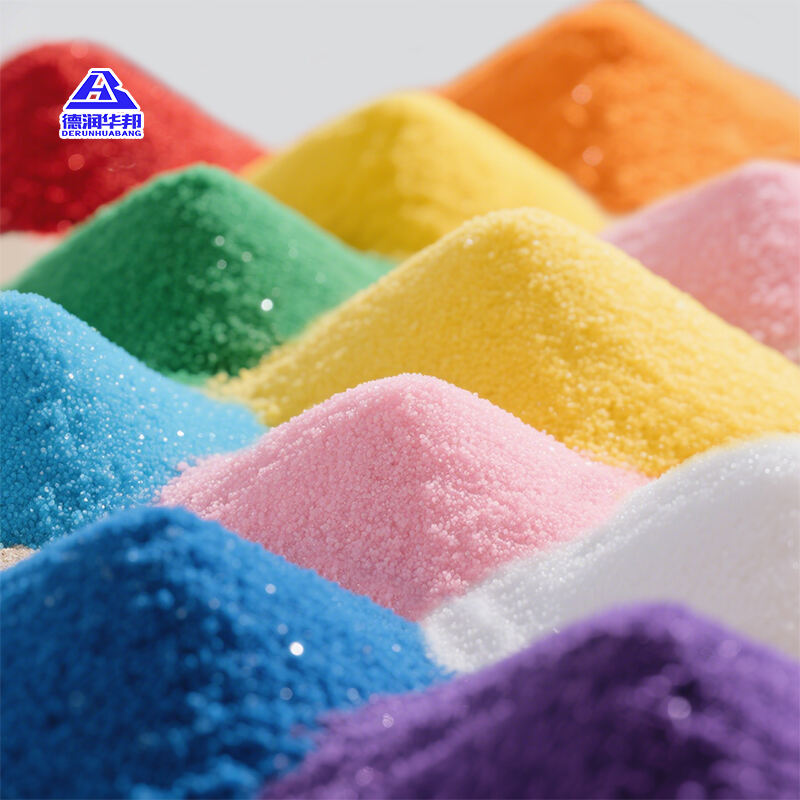
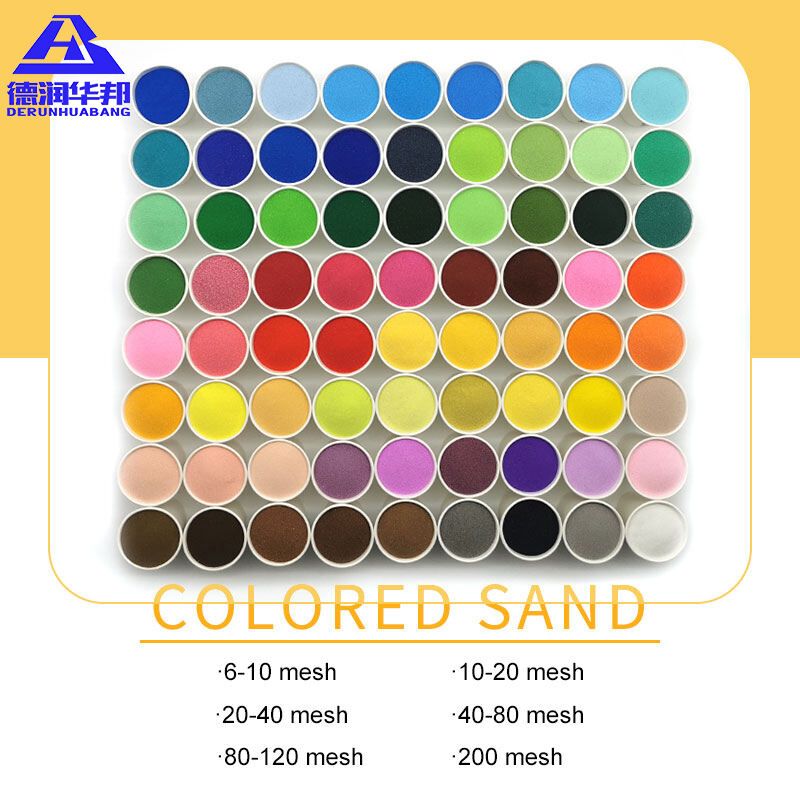
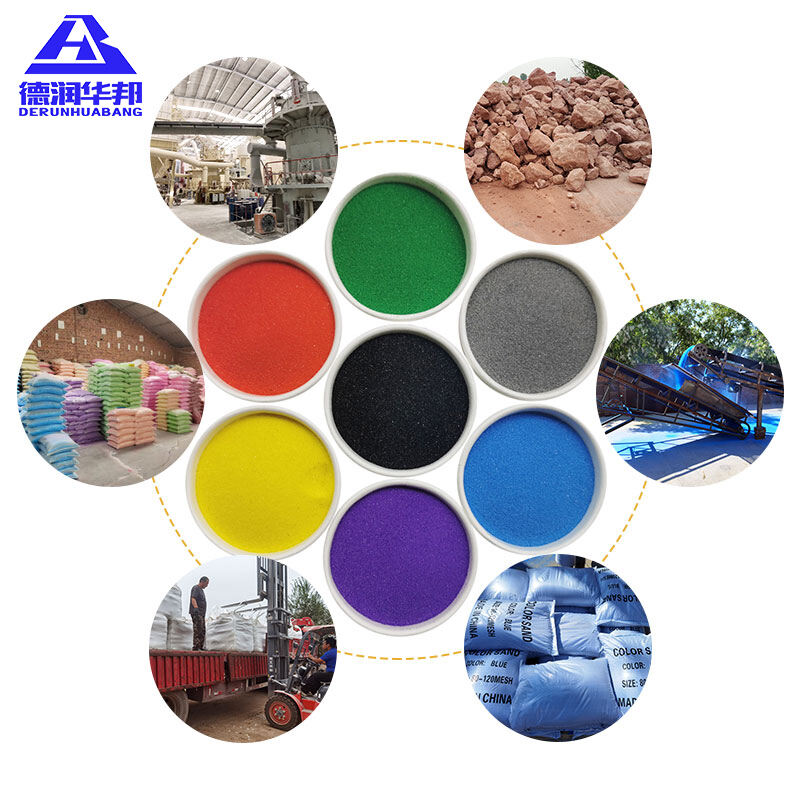
Colored Sand redefines value of mineral materials in modern industries, blending natural texture with innovative functionality to adapt to circular economy and smart design trends. Unlike ordinary decorative materials that rely on temporary colorants or unsustainable processing, colored sand draws vitality from earth’s mineral diversity and industrial waste recycling, forming product system that spans natural deposits and synthetic refinement. Its granular texture and stable hues make it core element in urban renewal, rural aesthetics, smart landscapes, and high-end crafts, breaking traditional boundaries between construction and art. As societies pursue greener living and personalized spaces, colored sand evolves from simple decoration to multi-functional material that enhances durability, conveys culture, and reduces environmental impact, demonstrating unique charm in diverse scenarios.
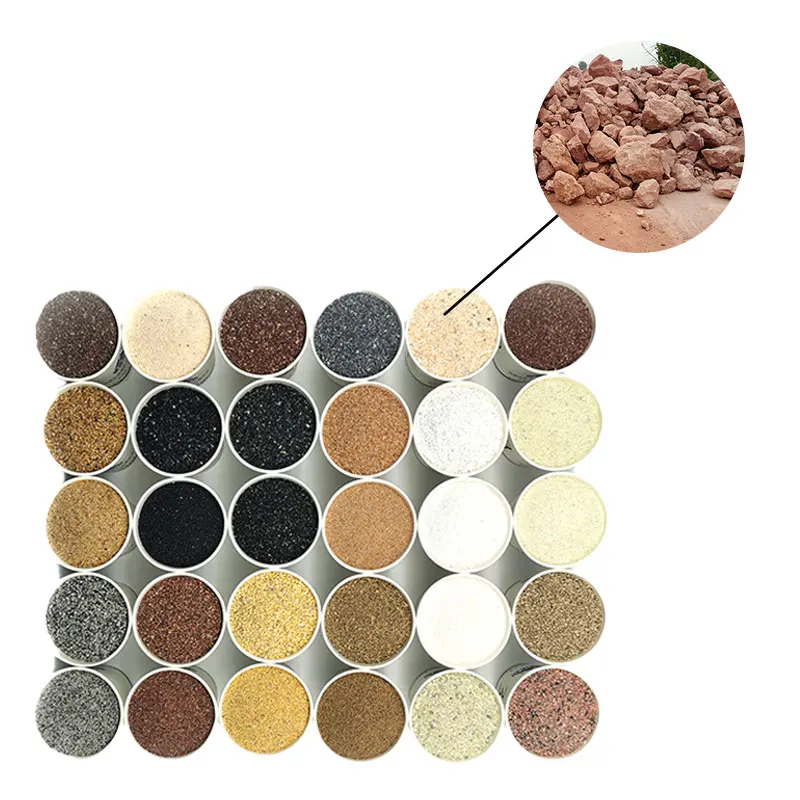
Source diversity of Colored Sand lays foundation for its multi-scene adaptation, with natural deposits and synthetic refinement forming two complementary systems. Natural colored sand originates from specialized mineral formations shaped by volcanic activity, river erosion, and mineral crystallization—each region’s sand carries unique color and texture due to local geological conditions. Scotland’s Isle of Skye produces purple colored sand from feldspar-rich granite weathering, with delicate particles ideal for crafts; Brazil’s coastal areas yield pink colored sand from coral and shell fragments, carrying soft marine tones; China’s Gobi Desert offers orange colored sand stained by iron oxide minerals, with coarse texture suitable for architectural aggregates. Mining of natural colored sand follows strict ecological protocols: in Brazil, coastal sand extraction avoids coral reef damage, with mining areas restored to mangrove habitats; in Scotland, small-scale manual mining replaces heavy machinery to protect fragile mountain ecosystems. Synthetic colored sand, by contrast, repurposes industrial waste—crushed glass, ceramic scraps, and quartz sand from construction waste serve as base materials, coated with inorganic pigments (iron oxide, titanium dioxide) via eco-friendly bonding technology. This recycling model diverts waste from landfills: one ton of synthetic colored sand uses 800 kilograms of industrial scraps, reducing carbon footprint by 40% compared to traditional production. Natural and synthetic variants cater to different needs: natural sand for projects pursuing geological authenticity, synthetic sand for scenarios requiring uniform color and waste reduction.
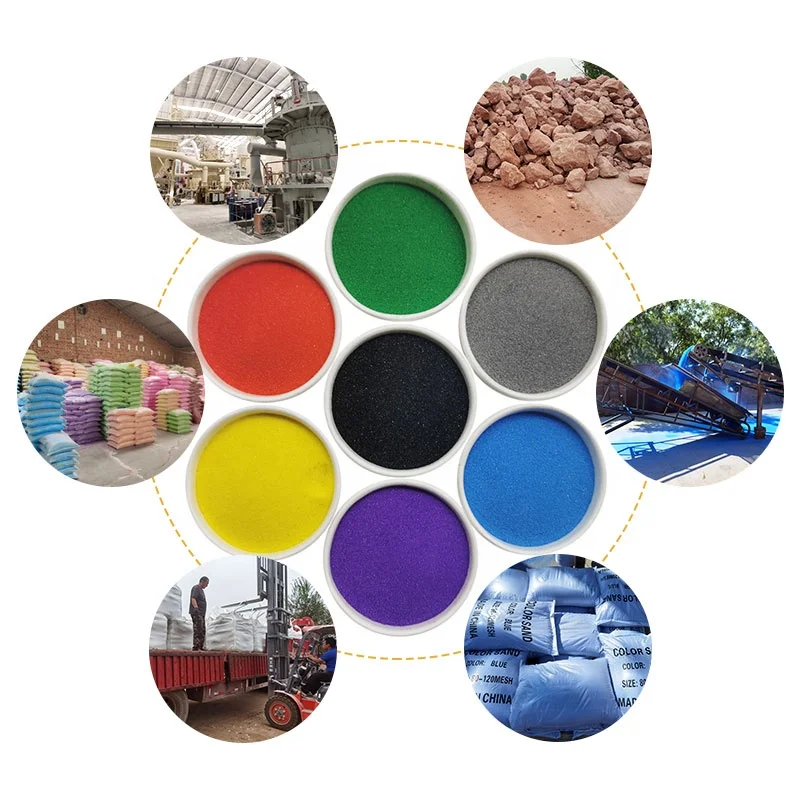
Production technology of Colored Sand emphasizes eco-friendliness and precision, with processes tailored to raw material type. Natural colored sand processing relies on physical refinement to preserve mineral integrity: mined sand is first screened to remove rocks and debris, then washed with recycled water to eliminate dust—water is filtered and reused in closed-loop systems to avoid pollution; drying uses solar-powered chambers instead of fossil fuel heaters, retaining natural mineral luster; final grading sorts particles by size (fine: under 0.2mm for paints, medium: 0.2-0.5mm for landscapes, coarse: over 0.5mm for construction). Key innovation lies in mineral preservation: Scottish purple sand undergoes low-speed grinding to maintain crystal structure, ensuring color depth; Gobi orange sand is treated with natural wax to enhance weather resistance without altering texture. Synthetic colored sand production focuses on pigment adhesion and waste refinement: base waste is crushed into uniform particles, then purified to remove impurities that affect color; inorganic pigments are mixed with water-based binders (derived from plant starches) and sprayed onto sand surfaces in rotating drums, ensuring even coating; curing occurs at ambient temperature, avoiding high-energy heating. Post-production testing includes color fastness (exposure to UV light for 500 hours) and particle strength (abrasion resistance tests), ensuring synthetic sand matches natural variants in durability. Both production systems avoid toxic chemicals, aligning with circular economy and eco-friendly production goals.
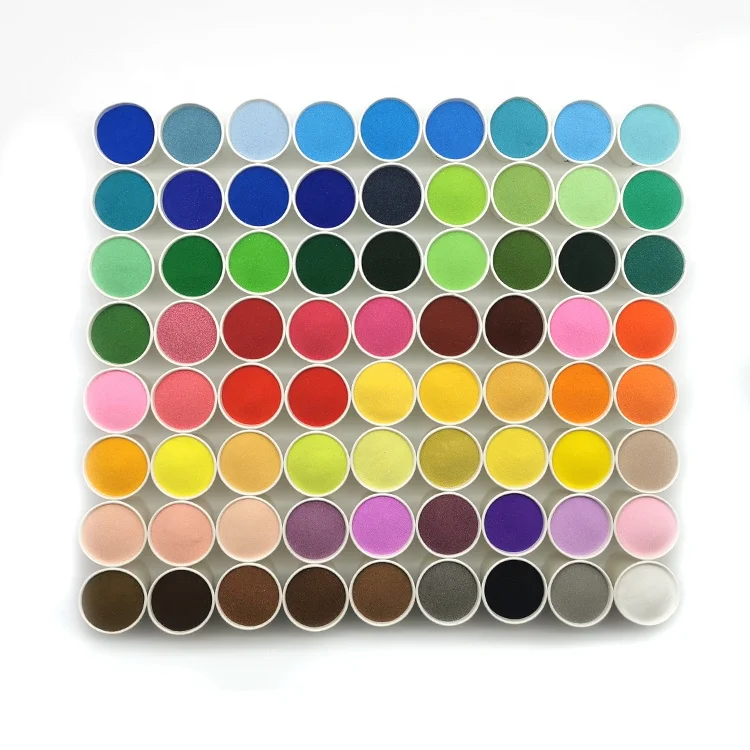
Core properties of Colored Sand—texture diversity, color permanence, environmental compatibility, and functional adaptability—distinguish it from conventional materials. Texture diversity stands out: natural sand particles carry irregular mineral edges, creating matte, tactile surfaces; synthetic sand can be engineered with smooth or rough textures, adapting to specific needs (smooth particles for wall paints, rough particles for anti-slip floors). Color permanence is verified by real-world use: natural pink sand from Brazil, used in coastal promenade paving, retains hue for 12 years despite saltwater spray and sunlight; synthetic blue sand, applied to roof tiles in desert regions, resists UV fading 30% better than organic-pigmented materials. Environmental compatibility is critical: colored sand is non-toxic, biodegradable (natural variants) or recyclable (synthetic variants); when used in soil-covered landscapes, natural sand blends with earth to support plant growth. Functional adaptability shines across industries: mixed with concrete, it increases compressive strength by 25%; added to coatings, it enhances scratch resistance; embedded in plastics, it provides texture without reducing flexibility. These properties make colored sand suitable for contrasting scenarios—from delicate craftworks to heavy-duty industrial floors.
Urban renewal projects leverage Colored Sand to revitalize old spaces, blending history with modern aesthetics. Rotterdam’s old port area, once industrial wasteland, now uses multi-colored sand in comprehensive transformation: coarse orange natural sand mixed into concrete revetments mimics original dock stone; fine purple synthetic sand applied to warehouse walls creates mural backgrounds depicting maritime history; yellow sand paved plazas connect historical and new buildings, forming cohesive color palette. The renewal project attracts tourists and residents, with colored sand elements resisting heavy foot traffic and rain for eight years. Beijing’s hutong renovation uses local yellow natural sand: mixed into mortar for wall repairs, it matches traditional earthen wall texture; sprinkled into floor tiles of community centers, it adds warmth to modern interiors. Smart city initiatives integrate colored sand into functional landscapes: Singapore’s Jurong Lake District uses light-sensitive synthetic sand in park pathways—sand particles reflect light at night, illuminating paths without electric lights; color shifts with ambient light, creating dynamic effects that reduce energy use. Urban planners value colored sand’s ability to balance heritage preservation and innovation, while lowering long-term maintenance costs.

Rural aesthetic improvement projects adopt Colored Sand to enhance local charm without damaging ecological balance. Northern Thailand’s mountain villages use natural brown sand from nearby rivers: mixed into stucco for guesthouse exteriors, it blends with teak wood structures; spread into courtyard patterns, it reflects local rice-farming culture. The villages have seen 50% increase in tourism, with guests praising authentic yet polished aesthetics. Italy’s Tuscany region uses terracotta-colored natural sand in vineyard renovations: sand-lined paths reduce soil compaction around grapevines; sand mixed into decorative low walls marks property boundaries, matching rolling hills. Rural public facilities benefit from colored sand’s durability: Indian village schools use red synthetic sand in playground surfaces—non-toxic and soft, it prevents injuries; sand-painted murals on school walls depict local folktales, engaging children while resisting rain damage. Rural developers highlight that colored sand uses local resources (when available) or recycled materials, reducing transportation costs and carbon footprint, aligning with rural sustainability goals.
Smart landscape design, emerging field in sustainable urban planning, integrates Colored Sand with technology to create adaptive spaces. Copenhagen’s climate-resilient park uses water-absorbent colored sand: blue synthetic sand mixed with porous concrete forms drainage channels that capture rainwater; sand’s color darkens when wet, indicating water levels for maintenance. The park reduces urban flooding by 20% while serving as recreational space. Dubai’s desert botanical garden uses heat-reflective colored sand: white natural sand from Saudi Arabia lines plant beds, reflecting sunlight to lower soil temperature; green synthetic sand outlines cactus gardens, creating visual contrast. Sand’s texture slows wind erosion, protecting delicate desert plants. Residential smart gardens use responsive colored sand: Japanese home gardens install light-sensitive sand in flower bed borders—sand shifts from pale to deep green as sunlight intensity changes, highlighting plant growth stages. Landscape designers note that colored sand’s natural appearance masks technological elements, creating seamless blend of nature and innovation.
Craft and art industries embrace Colored Sand for its expressive potential and durability, moving beyond traditional sand art to high-end creations. Morocco’s Fez medina artisans use natural red and blue sand from Atlas Mountains to create mosaic tiles: sand is mixed into clay, shaped, and fired, resulting in durable tiles with granular texture. These tiles adorn luxury hotels worldwide, commanding premium prices. Japanese contemporary artists use synthetic sand in installations: transparent sand embedded with tiny LED lights forms indoor murals that change pattern with sound; sand’s granularity diffuses light, creating soft, immersive effects. Children’s craft market evolves with safe colored sand: German toy companies produce washable synthetic sand in bright hues—non-toxic and mold-resistant, it can be reused in different projects. Craft educators value that colored sand teaches texture and color theory, with natural variants introducing children to geology and ecology.
Industrial applications of Colored Sand expand beyond decoration to functional enhancements, improving product performance and sustainability. Automotive aftermarket uses black synthetic sand in underbody coatings: sand particles reinforce coating to resist stone chips; texture traps dirt less, reducing cleaning frequency. Aerospace support industries (excluding aviation itself) use heat-resistant colored sand in factory floor coatings: orange sand mixed into high-temperature resin forms non-slip surfaces that withstand equipment heat. Packaging industry innovates with colored sand: luxury cosmetic brands use fine gold-colored sand embedded in cardboard boxes—sand’s texture enhances tactile experience; boxes are recyclable, as sand separates from paper during processing. Manufacturers appreciate that colored sand adds value without complex modifications to production lines, making it cost-effective upgrade for existing products.
Cultural fusion projects use Colored Sand to bridge traditional and modern aesthetics, preserving heritage while appealing to global audiences. Mexico City’s Frida Kahlo museum uses native yellow and red sand in exhibition spaces: sand mixed into wall plaster mimics artist’s childhood home; sand paintings in galleries reinterpret her works, using traditional techniques with synthetic sand for color consistency. The museum reports increased younger visitors drawn to contemporary sand art. South Korea’s Gyeongju historical site uses colored sand in restoration: natural gray sand from nearby rivers repairs ancient stone walls; sand’s mineral composition matches original materials, ensuring authenticity. Temporary cultural festivals use eco-friendly colored sand: Australia’s Sydney Festival creates giant beach murals with biodegradable natural sand—murals last two weeks, then wash away with tides without pollution. Cultural curators emphasize that colored sand’s versatility allows it to honor tradition without being trapped by it.
Quality control systems for Colored Sand adapt to diverse applications, ensuring consistency and safety. For natural sand, mineral analysis verifies color stability and impurity levels—Scottish purple sand is tested for feldspar content to ensure hue consistency; Brazilian pink sand undergoes saltwater resistance testing for coastal use. Synthetic sand testing focuses on pigment adhesion and waste purity—recycled glass sand is checked for lead content; pigmented sand undergoes 1000-hour UV exposure to confirm color fastness. Food-contact crafts (e.g., decorative cookie molds) use food-grade synthetic sand, tested for heavy metal absence. International standards such as ISO 12625 (for mineral aggregates) and ASTM D4216 (for pigmented materials) guide production, with third-party audits ensuring compliance. Manufacturers provide application-specific certificates, e.g., fire-resistant sand for industrial use, child-safe sand for toys.
Technological breakthroughs drive Colored Sand innovation, opening new application frontiers. Biodegradable synthetic sand, developed in Netherlands, uses plant-based binders and natural pigments—sand decomposes into organic matter after three years, ideal for temporary events. Light-emitting sand, created by Japanese researchers, embeds non-toxic phosphorescent particles in natural sand—sand absorbs sunlight by day, glows softly at night, used in park pathways and emergency exits. Self-cleaning sand, coated with titanium dioxide nanoparticles, breaks down dirt when exposed to sunlight—used in high-traffic urban plazas, it reduces cleaning frequency by 60%. 3D printing with colored sand advances rapidly: construction companies print small architectural elements (e.g., garden benches) using sand-concrete mixtures; craft printers create custom sand art by layering different hues with precision. These innovations position colored sand as material of future, adapting to technological and environmental trends.
Global market for Colored Sand grows steadily, driven by urban renewal, rural tourism, and smart design. Asia-Pacific leads demand: China’s urbanization fuels construction use; India’s rural tourism boom increases craft and landscape demand. Europe focuses on high-end applications: Italian mosaic tiles, German children’s crafts, and Scandinavian smart landscapes command premium prices. North America prioritizes sustainability: recycled synthetic sand dominates industrial and construction markets, with government incentives for circular economy materials. Emerging markets in Africa and Southeast Asia grow rapidly: Kenya’s coastal resorts use local colored sand in landscaping; Vietnam’s craft villages export sand art to global markets. Market competition centers on innovation and localization—large companies develop tech-integrated sand (e.g., light-sensitive variants); small enterprises specialize in local natural sand, leveraging regional uniqueness.
 ×
×