Yuhua Stone is natural rock shaped by distinct sedimentary environments in river deltas and bend sections, paired with long-term water polishing and mineral accumulation over thousands of years. It originates from river systems flowing into lakes or seas—river deltas with extremely slow water flow reduce the force of particle movement, allowing fine mineral particles carried by upstream currents to settle gently on rock fragments. These fragments then drift into river bends, where swirling currents create continuous friction between fragments and surrounding gravel, gradually polishing their surfaces. Minerals like quartz (which adds translucent clarity that becomes more obvious under natural light), feldspar (bringing soft ivory or pale pink tones that vary with mineral concentration) and iron oxides (creating rust red, amber or chestnut brown hues that deepen as fragments are exposed to oxygen) dissolve in slightly acidic river water, formed by decaying plant matter along riverbanks. This mineral-rich water seeps into tiny cracks and pores of the fragments. In river deltas, steady, slow deposition makes minerals accumulate in thick, even layers, forming broad, smooth veins on the stones. In river bends, swirling water disrupts mineral deposition, creating twisted, dynamic veins that look like flowing lines. This difference in sedimentary environments makes each Yuhua Stone carry unique marks, with no two pieces having identical vein patterns.
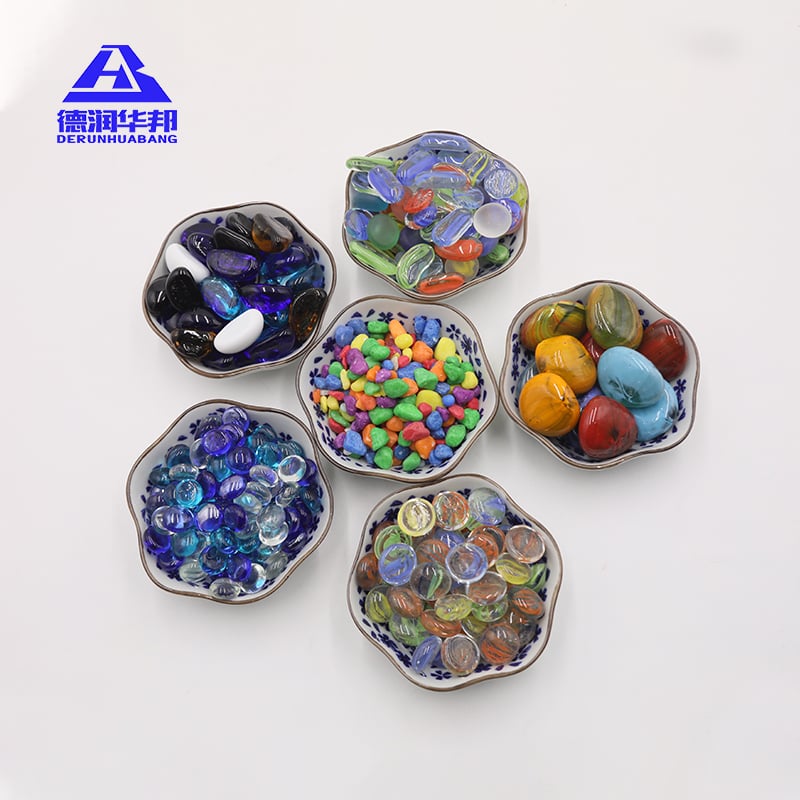
Key characteristics of Yuhua Stone include diverse vein patterns, silky smooth texture and durable organic shapes that adapt to various application scenarios. Veins present rich and unrepeatable variations—some resemble spread-out tree roots extending to the edges of the stone, some like swirling water ripples frozen in time, others like clustered flower buds or wispy clouds floating across the surface. Colors blend from light to dark in seamless gradients, with no abrupt transitions between hues, creating a harmonious visual effect. Years of continuous river polishing erases all rough edges and sharp corners, leaving the surface so smooth that fingers glide over it like touching silk. The stone feels cool and refreshing when held in summer, while its dense mineral structure retains a slight warmth in winter, providing a comfortable tactile experience. Under natural light, it emits a soft, matte luster that does not dazzle, highlighting the depth of its veins; under warm indoor lights, this luster becomes softer, adding a cozy atmosphere to spaces. Shapes vary significantly by sedimentary zone: round, compact stones with uniform contours come from fast-swirling river bends, where constant collision polishes them into dense forms. Flat, slightly curved stones form in calm deltas, where slow water allows them to spread horizontally. All Yuhua Stones possess excellent natural durability—they resist outdoor weather conditions like rain, snow and strong sunlight, tolerate frequent handling and minor impacts, and do not crack or fade easily even after long-term use.
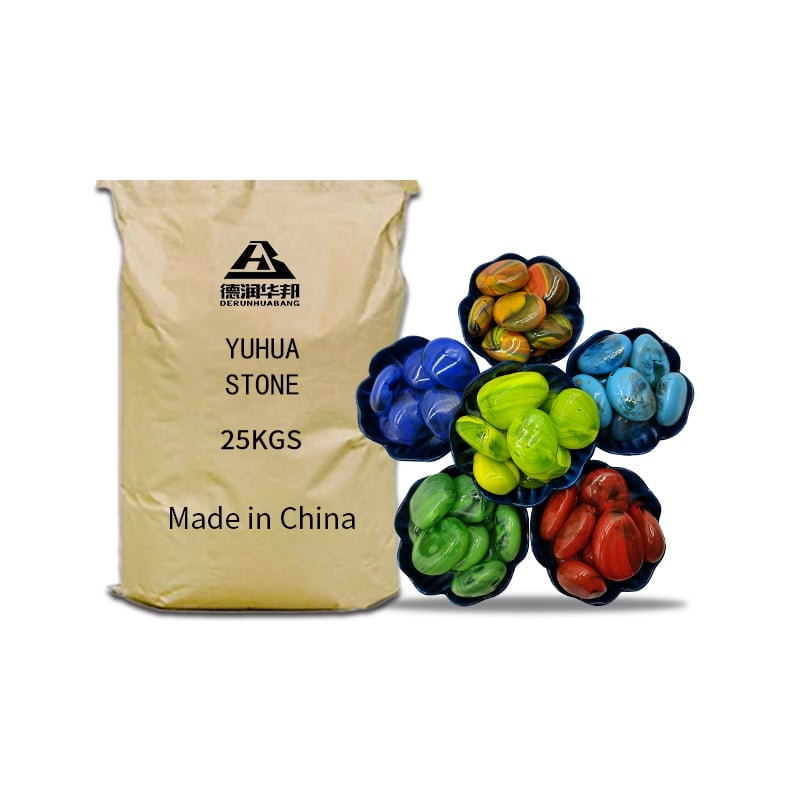
Outdoor vertical garden adornment sector values Yuhua Stone highly for its dual functions of fixing plants and adding natural texture, making it a popular material in modern landscape design. It is widely used in wall-mounted vertical gardens, green screens for dividing spaces and even small vertical planters on balconies. Medium-sized Yuhua Stones with naturally flat sides are carefully embedded into the wooden or metal frames of vertical gardens, acting as stable supports for climbing plants like ivy, morning glory and wisteria. Their slightly rough inner surfaces provide ideal attachment points for plant roots to cling to, promoting healthy growth, while their smooth outer surfaces fully showcase the unique vein patterns. Small Yuhua Stones of different colors are placed in gaps between plants to fill empty spaces, their vivid hues contrasting beautifully with the green foliage and blooming flowers, creating layered visual effects. Some landscape designers use larger, heavier Yuhua Stones as decorative anchors at the bottoms of vertical gardens—these stones not only stabilize the entire structure, preventing it from tilting due to plant weight and wind, but also add visual weight to the lower part of the garden, balancing the overall composition. Unlike artificial decorative materials, Yuhua Stone does not fade under strong sunlight or become brittle in rain. It even develops a more mellow luster over time, ensuring vertical gardens retain their beauty year-round with minimal maintenance.
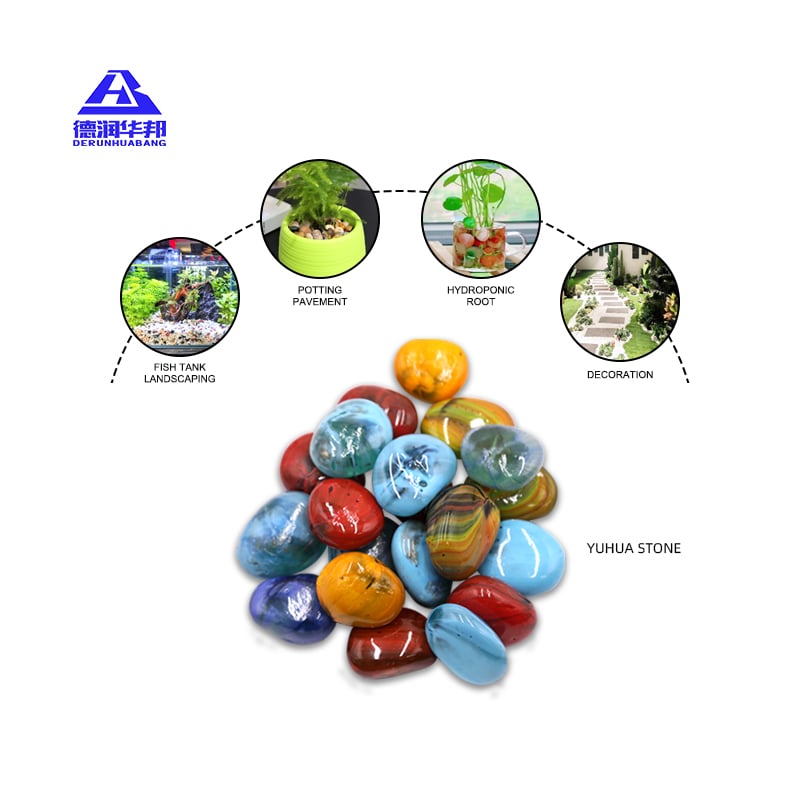
Desktop ornament pieces field embraces Yuhua Stone for its ability to blend natural charm with practicality, making it a favored decoration in various workspaces and living areas. Medium-sized Yuhua Stones with striking vein patterns are placed alone on office desks, living room side tables or bedroom dressers as standalone ornaments—their unique appearance immediately draws attention and becomes a conversation starter. Stones with flat, smooth tops are ideal bases for small potted plants like mini succulents, air plants or tiny cacti. Their substantial weight prevents the pots from tipping over easily, while their natural texture complements the green plants, creating a mini natural scene on the desktop. For calligraphy and painting enthusiasts, large, flat Yuhua Stones serve as excellent auxiliary tools. They can be placed beside paper to hold it steady during writing or painting, especially on windy days, and can also be used as gentle weights for rolled-up scrolls or paintings, preventing them from unrolling accidentally. Yuhua Stone’s versatile style allows it to match various decor themes—paired with traditional wooden furniture, it enhances classical elegance; combined with modern minimalist desks and metal accessories, it adds a touch of natural warmth without appearing abrupt. It also requires almost no maintenance—just a simple wipe with a dry cloth to remove dust, retaining its beauty for a long time.
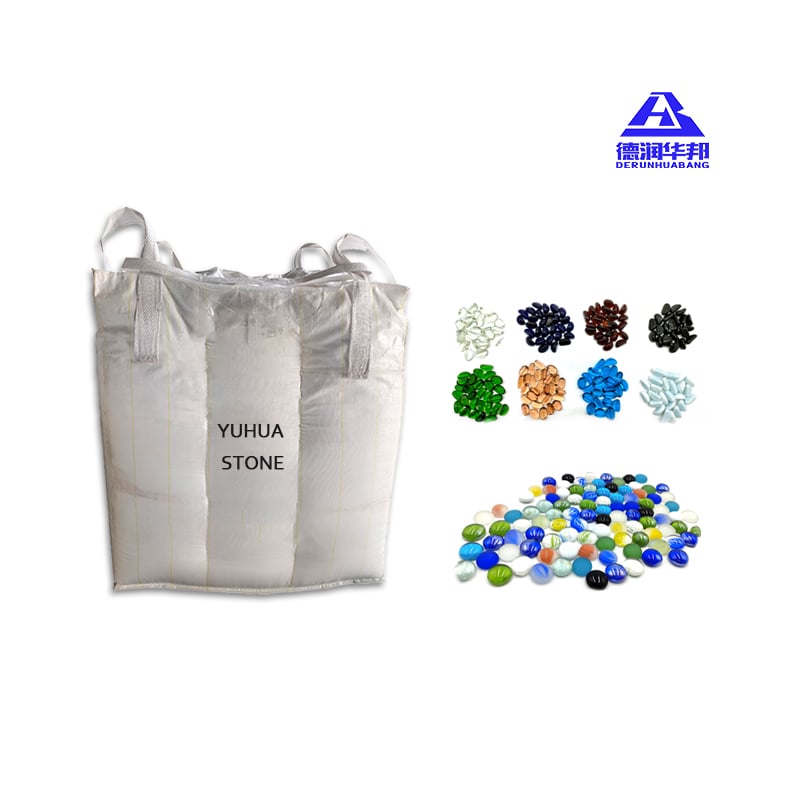
Handmade craft materials field fully leverages Yuhua Stone’s uniqueness and natural beauty, making it a popular choice for DIY enthusiasts and craft lovers. Hobbyists use Yuhua Stones of different sizes and shapes to create a wide range of handmade works. Small, uniformly sized stones are cleaned and polished, then glued onto wooden photo frames in various patterns—their colorful veins form unique decorative borders that make each frame one-of-a-kind. Medium-sized stones with smooth surfaces are drilled with small holes using low-speed tools (to avoid cracking the veins) and strung with hemp ropes, cotton cords or silver chains to make plant hangers. The stones act as weights at the bottom of the hangers, keeping them straight and stable when holding small flower pots. Some creative enthusiasts embed thin slices of Yuhua Stone into clear epoxy resin to make coasters, keychains or even small jewelry pieces. The resin not only preserves the delicate vein details of the stones but also adds water resistance and durability, making the crafts suitable for daily use. Additionally, tiny Yuhua Stones are used in scrapbooking and card making, adding a natural touch to handmade greeting cards. These DIY projects are not only popular in craft workshops but also sell well on online handcraft platforms, as consumers value their natural uniqueness that cannot be replicated by mass-produced products.

Processing of Yuhua Stone focuses on preserving its natural traits, with a series of gentle and eco-friendly steps that avoid altering its original beauty. After being collected by hand from riverbeds (to minimize damage to the natural environment), raw Yuhua Stones are first sorted by size, shape and vein quality to determine their intended use. They are then soaked in clean, room-temperature water for four to six hours to soften the mud and sand embedded in their pores. Next, they are scrubbed gently with soft-bristled brushes (usually made of natural fibers) to remove surface impurities—hard brushes are avoided to prevent scratching the smooth surfaces. Polishing is a key step: stones are polished with sandpaper of gradually finer grits, starting from 400 grit to smooth rough spots and then 1000 grit to achieve a silky finish. For stones used in vertical gardens, they are trimmed slightly with diamond-tipped tools to fit the frames, but the cuts are designed to follow the natural contours of the stones to avoid damaging the veins. For craft use, small holes are drilled with diamond-tipped bits at a slow speed, and water is used to cool the stones during drilling to prevent overheating. Throughout the entire processing process, no chemicals, dyes or artificial coatings are used. For stones intended for outdoor use, a thin layer of natural beeswax may be applied to enhance water resistance, but this does not change the original color or texture of the stones, ensuring all their natural characteristics remain intact.
 ×
×


