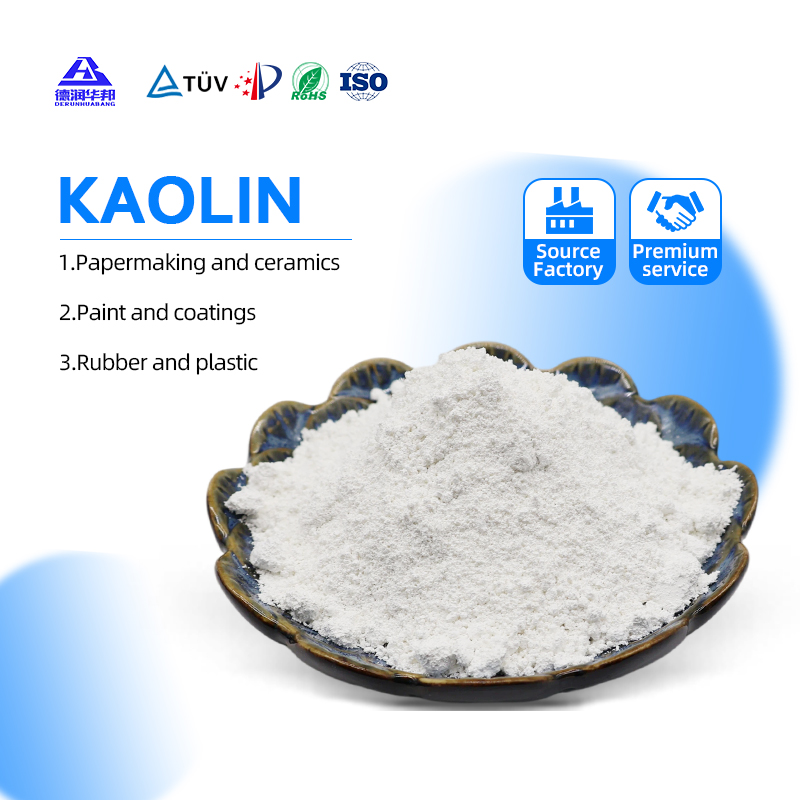
The 33rd APEC Economic Leaders' Meeting is being held in Shenzhen on 18 and 19 November 2026. For kaolin the useful part is the travel that surrounds it. Ceramics producers, paper mills and coatings formulators who would normally test a new grade by courier will be in the same city for a few days, and a clay that takes weeks to evaluate remotely can be judged in a single hands-on session. The constraint is that the conversation has to start from the right question, which for kaolin is not price but source.
The deposit sets the ceiling
Kaolin quality is decided before processing begins. Brightness, iron content and the shape of the particles all come from the deposit, and no amount of washing will turn a dark, iron-rich clay into a paper-coating grade. This is why buyers comparing quotations from several suppliers often find that the material is not really comparable: one plant is working a deposit suited to ceramics, another a deposit suited to paper, and the price difference reflects geology rather than efficiency. The first question to ask is therefore not about price but about the source, and a supplier who can describe its deposit in specifics is usually a supplier worth sampling.
Washed and calcined are different products
Washed kaolin is mechanically refined and dried. It keeps the hydrated structure of the clay, which makes it plastic and workable, and it is the standard material for sanitary ware, tiles, porcelain and as a functional filler in rubber and paint. Calcined kaolin is fired at high temperature, which removes the chemically bound water and leaves an anhydrous, harder, brighter particle. That change brings higher brightness and better opacity, and it takes away plasticity.
The two are not interchangeable. A ceramics body that needs green strength and shaping performance needs the washed grade; a coating that needs opacity and brightness at low loading needs the calcined grade. Buying calcined material to fix a plasticity problem, or washed material to fix a brightness problem, usually ends with a reformulation that costs more than the correct grade would have.
Mapping grades to applications
The table below sets out what each product form is normally bought for and which properties to confirm before ordering.
|
Product form
|
Typical application
|
Verify before ordering
|
|
Washed, ceramics grade
|
Sanitary ware, wall and floor tiles, porcelain
|
Plasticity, green strength, iron content, firing behaviour
|
|
Washed, filler grade
|
Paint extender, rubber, plastics
|
Brightness, particle size distribution, oil absorption
|
|
Calcined
|
Paper coating, paint, refractory, cable compounds
|
Brightness, opacity, residue, loss on ignition
|
|
Metakaolin
|
Concrete, cement blends, specialty binders
|
Reactivity, fineness, consistency between lots
|
Whiteness and residue decide fit
Most kaolin specifications reduce to two numbers plus one behaviour. Brightness sets the ceiling on how white the final product can be, and it is measured on a standard instrument under a stated illuminant, so an unqualified brightness figure is not a specification. Residue on a named sieve tells you what will not disperse, which is critical in paper coating and in thin-wall ceramics where a single coarse particle becomes a visible defect. The behaviour is plasticity, and it cannot be read from a certificate at all; it has to be tested in your own body.
Iron and titanium content deserve a direct question. Both dull brightness after firing, and both are inherited from the deposit, so a supplier that can explain the geology of its source is usually more reliable than one that quotes only a finished brightness value.
Packing, moisture and logistics
Kaolin ships in bags on pallets, jumbo bags or bulk, and moisture is the usual cause of complaint. A clay that arrives damp cakes in storage and feeds unevenly, which shows up as weight variation in the finished piece rather than as an obvious defect. Confirm the packing moisture limit, whether bags are lined, and how the supplier protects pallets for sea freight. Also confirm which port loads the container; inland deposits far from a port add weeks that a quotation rarely mentions.
What to do with the Shenzhen week
Ceramics remains the largest regional outlet, with sanitary ware and tile capacity concentrated in a few manufacturing clusters, while paper coating demand follows mill investment and formulation changes. Both segments are moving toward fewer, more auditable suppliers, and both now ask for consistency evidence rather than a single test report. The leadership meeting does not decide any of that, but it does bring the relevant buyers together, and the questions that come up in that week are consistent: plasticity and firing behaviour from ceramics, brightness stability across shipments from paper.
Neither question can be answered by a price list. That is why a supplier who arrives with trial data, a retained sample and a short specification sheet tends to leave with a more concrete follow-up than one who arrives with a catalogue.
 ×