Kaolin Powder is naturally occurring non-metallic mineral dominated by kaolinite, formed through long-term weathering and transformation of aluminosilicate rocks under natural geological conditions. It features soft texture that feels smooth to touch, fine plate-like particles with ultra-thin lamellar structure, and unique synergistic physical-chemical properties that make it irreplaceable across specialized industrial fields. Core traits include inherent whiteness that avoids discoloring light-toned or transparent end products, excellent plasticity enabling easy shaping in semi-solid systems (such as sealant and adhesive formulations), stable chemical inertness resisting reactions with common industrial reagents like resins, solvents and plasticizers, and strong lamellar bonding that enhances structural stability and anti-settling ability of formulations. These natural properties, combined with customizable processing technologies, allow it to integrate seamlessly into diverse production chains without disrupting core functions of base materials, acting as silent performance enhancer in many industrial processes.
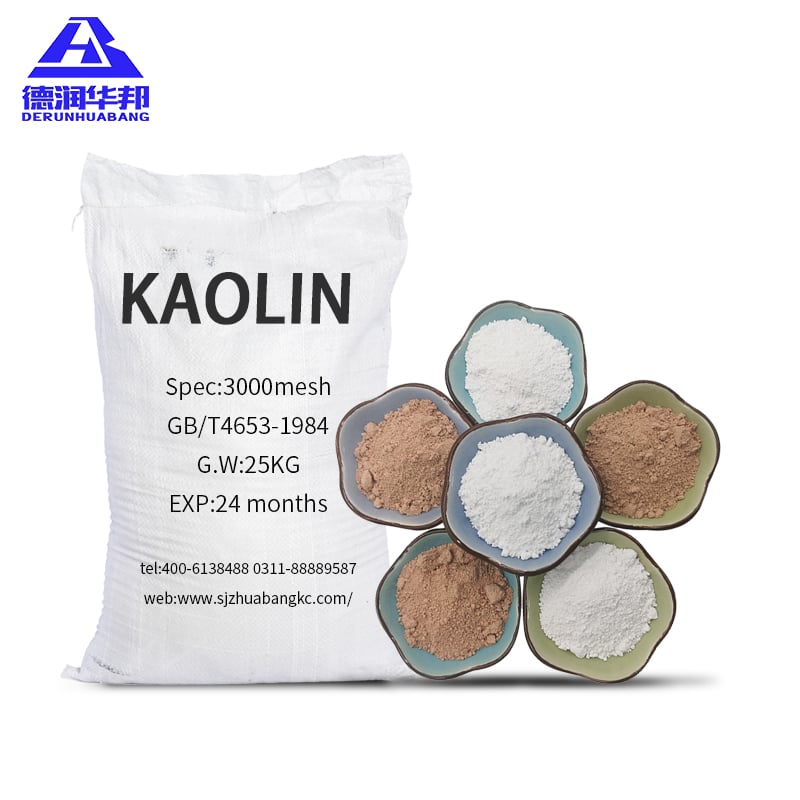
Processing methods of kaolin powder are meticulously tailored to unlock targeted functionalities for different industrial needs. Washing is basic yet critical step: raw ore is first crushed into small fragments, then mixed with water to form uniform slurry. This slurry is then passed through gravity separation equipment to remove heavy impurities, coarse grains and organic contaminants, which not only enhances purity and whiteness but also improves particle size uniformity for color-sensitive applications. Calcining is essential for high-performance scenarios—particles are heated in professional kilns under strictly controlled temperature and atmosphere conditions to eliminate internal moisture and organic matter. This process induces subtle changes in crystal structure, transforming kaolin into metakaolin that boasts significantly boosted hardness, thermal stability and wear resistance. Surface modification is key for compatibility with organic matrices: particles are treated with silane or titanate coupling agents in high-speed mixers, forming a thin functional layer on surface that improves bonding with polymers and resins. This modification ensures uniform dispersion of kaolin powder in composites, avoiding agglomeration and maximizing reinforcing effects. Each processing step is dynamically adjusted based on specific end-use requirements, perfectly bridging natural properties of kaolin with practical industrial demands.
Adhesive and sealant industry relies heavily on kaolin powder to solve key formulation challenges that affect product performance. It precisely adjusts viscosity of adhesive formulations to ideal range—preventing sagging or dripping during vertical application on walls, ceilings or vertical workpieces while maintaining appropriate smoothness for bonding irregular surfaces (such as curved metal parts or porous wood). Fine particle size and strong suspension ability of kaolin powder keep formulations uniform and stable during long-term storage, avoiding sedimentation or stratification that causes uneven bonding strength. Kaolin powder enhances bonding strength through dual mechanisms: its ultra-fine particles penetrate deeply into tiny pores and crevices of substrates—whether porous wood, smooth metal or non-porous plastic—forming tight mechanical interlocks; meanwhile, its surface functional groups (after modification) form weak chemical bonds with substrate surfaces, jointly resisting peeling, shearing and erosion from moisture, oil or chemical reagents. In industrial sealants (used in chemical equipment, pipelines or power facilities), it significantly boosts flexibility and wide-temperature resistance, allowing sealants to adapt to extreme working conditions (from low-temperature cold storage to high-temperature workshops) without cracking or losing elasticity, effectively protecting machinery and structures from leakage and corrosion.
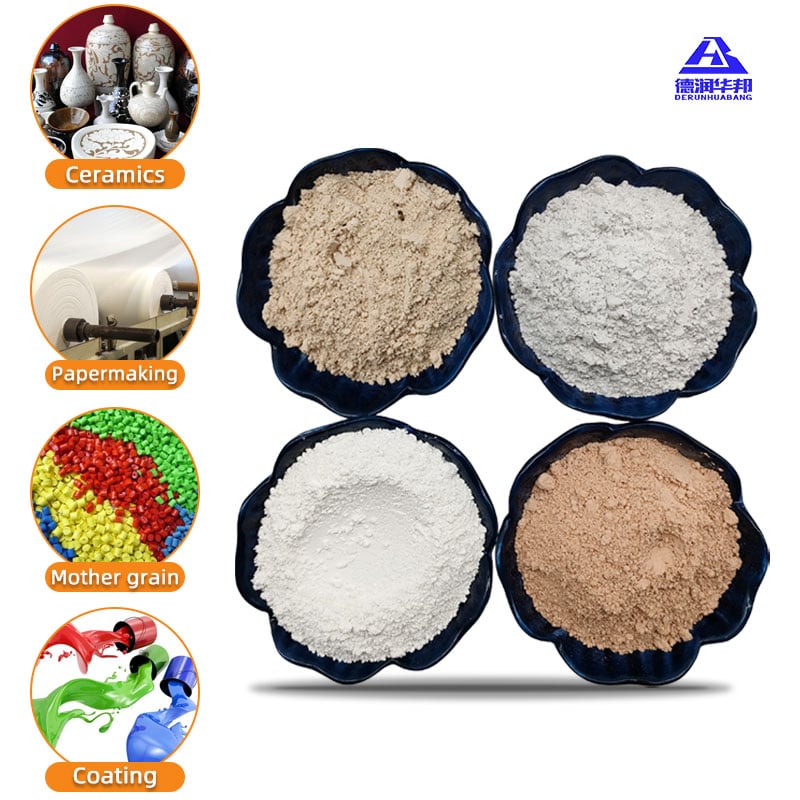
Refractory materials sector values kaolin powder’s exceptional thermal stability and inherent refractory properties more than any other industry. When mixed with alumina, magnesia and other high-temperature resistant minerals in scientific proportions, it forms high-performance refractory blends for manufacturing refractory bricks, castables, ramming mixes and furnace linings—all essential components for high-temperature equipment in metal smelting (such as steel converters), glass production (glass melting furnaces) and cement manufacturing (rotary kilns). These blends, with kaolin powder as core component, can retain stable structural integrity even under extreme heat, forming dense protective barriers that shield furnace bodies and equipment from severe thermal shock (caused by sudden temperature changes) and chemical corrosion (from molten metals or corrosive gases). Kaolin powder’s unique lamellar structure fills tiny gaps between coarse refractory particles, greatly improving density and mechanical strength of refractory products, extending their service life by reducing wear and damage. Additionally, its excellent insulation performance effectively reduces heat loss from high-temperature equipment, lowering energy consumption and improving production efficiency for industrial enterprises.
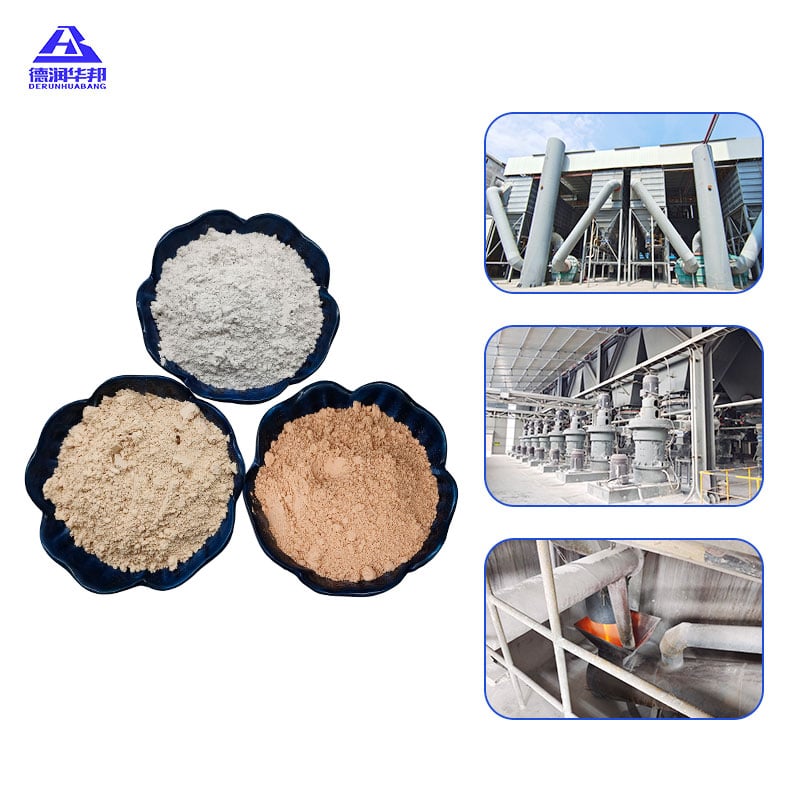
Plastic industry widely uses kaolin powder as cost-effective reinforcement additive to upgrade performance of basic polymers. When added to polypropylene, polyethylene, polyvinyl chloride and other common polymers, it significantly enhances rigidity of plastic products—making them suitable for structural applications like automotive brackets, construction wall panels and industrial equipment casings. It also improves heat resistance of plastics, enabling them to be used in high-temperature environments (such as automotive under-hood parts or near-heat industrial components) without deformation. Moreover, kaolin powder boosts dimensional stability of plastics, preventing warping, shrinking or deformation after molding—critical for precision plastic parts. Surface-modified kaolin powder can disperse evenly in polymer matrices, forming strong interfacial bonds with polymer chains that increase tensile strength and impact resistance of plastics. This modification enables production of lighter, more durable plastic products while maintaining excellent processability—they can still be smoothly extruded, injected or blow-molded using existing equipment without additional adjustments, greatly reducing production costs for enterprises.
Composite materials industry leverages kaolin powder to perfectly balance performance and cost efficiency—a core demand in composite manufacturing. In fiber-reinforced composites (such as glass fiber reinforced plastic, carbon fiber composites), kaolin powder acts as functional filler that not only enhances rigidity, wear resistance and dimensional stability of composites but also effectively reduces overall weight. This weight reduction is particularly critical for applications like industrial machinery moving parts (reducing energy consumption) and consumer goods (improving portability). Kaolin powder can replace part of expensive synthetic fibers (such as carbon fiber) in composite formulations, significantly lowering production costs without compromising structural integrity or mechanical performance. Its plate-like particles can align parallel to composite matrices during processing, forming a "lamellar reinforcement network" that improves load distribution—effectively transferring external forces to fiber components, preventing localized damage (such as fiber breakage or matrix cracking) and extending service life of composite products. It is widely used in manufacturing composite components like wind turbine blades, industrial brackets and high-strength packaging boxes.
Abrasive industry enthusiastically embraces kaolin powder for its controlled hardness, uniform particle size and natural whiteness. It is scientifically incorporated into abrasive formulations to precisely adjust grit texture and abrasion intensity—ensuring consistent abrasion performance while avoiding excessive damage to workpieces (especially soft metals or delicate plastic parts). Calcined kaolin powder, with moderately enhanced hardness, is ideal for mild abrasive applications such as surface polishing of decorative metals (copper, aluminum), plastic casings (electronics, automotive interiors) and optical components. Its inherent natural whiteness prevents staining workpieces during polishing, making it particularly suitable for processing high-aesthetic requirements products (such as decorative metal panels or plastic toys). Additionally, kaolin powder improves bonding strength between abrasive particles and organic/inorganic binders, enhancing durability of abrasive products like sandpapers, polishing pastes and abrasive wheels—preventing particle shedding during use and ensuring stable polishing effect.
 ×
×


