 ×
When a compound must pass a flame test at a processing temperature above 200 °C, the choice of mineral flame retardant narrows quickly. Aluminium hydroxide starts releasing water near 180 °C, inside the window where polypropylene, polyamide and PBT are compounded. Magnesium hydroxide starts near 330 °C. That temperature gap is the entire commercial reason magnesium hydroxide flame retardant grades exist.
Quick answer
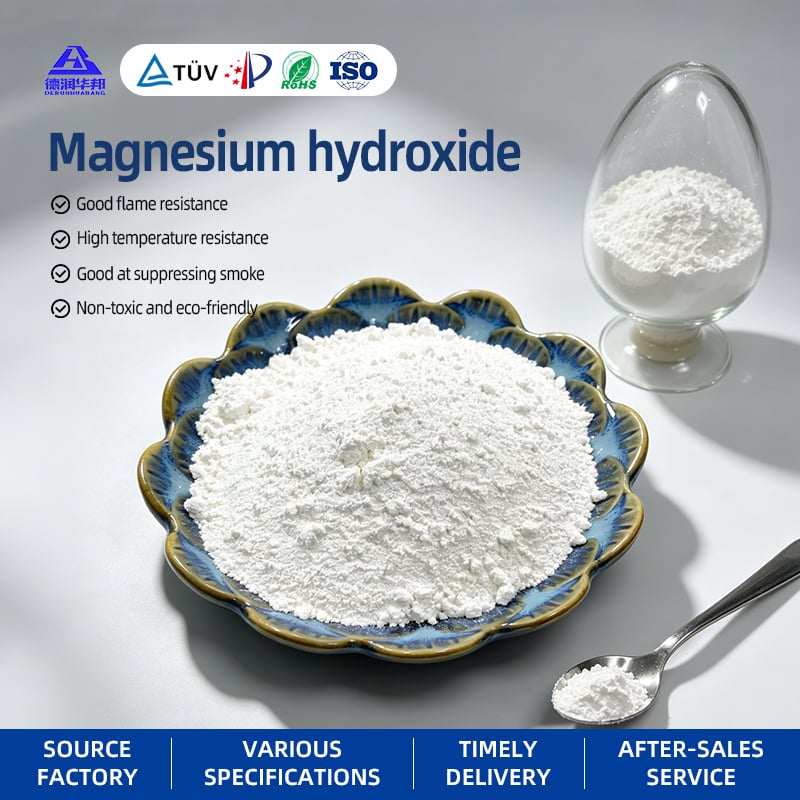
Magnesium hydroxide, written Mg(OH)₂, is a white hexagonal-plate mineral. As a magnesium hydroxide flame retardant it decomposes near 330 °C into magnesium oxide and water vapor, absorbing 1.3–1.4 kJ per gram. Three things happen at once: the substrate cools, the vapor dilutes combustible gas at the flame front, and the oxide residue builds an inorganic layer over the surface.
Two routes supply the market. Brucite ore is milled and classified, giving a platy particle at lower cost. Magnesium-rich brine is precipitated with an alkali, giving tighter particle-size control and lower impurity levels at higher cost. Either way the magnesium hydroxide powder is hydrophilic, so most flame retardant grades carry 1–3% of silane, stearic acid or titanate to make the powder wet out at high loading.
Three things drive grade selection: the processing temperature of the polymer, the loading the formulation tolerates, and the mechanical property that cannot be given up.
Two figures need care. Unfilled polyolefin has a limiting oxygen index near 17–18; a formulated MDH system reaches 28–38 depending on loading, and that is the honest range to quote. A UL 94 rating also belongs to the finished part rather than to the filler: the grade supports the formulation, it does not carry the rating on its own.
Temperature headroom. Aluminium hydroxide dehydrates at 180–220 °C, so in polypropylene, polyamide or PBT compounded at 200–250 °C it decomposes in the barrel. MDH at 330 °C leaves a working window. This is the single reason to specify a magnesium hydroxide flame retardant instead of ATH or any other halogen-free flame retardant.
Smoke chemistry. Being inorganic, it releases no hydrogen halides and no dioxins. In a halogen-free flame retardant system the smoke density is lower than in a halogenated one, and no corrosive acid gas attacks nearby metalwork.
A residue that stays. The magnesium oxide that MDH leaves behind is refractory and remains on the surface, limiting fuel release and suppressing dripping.
A second job in the plant. The material buffers near pH 8.5–9.5 and neutralizes acidic residues that would otherwise corrode screws and barrels.
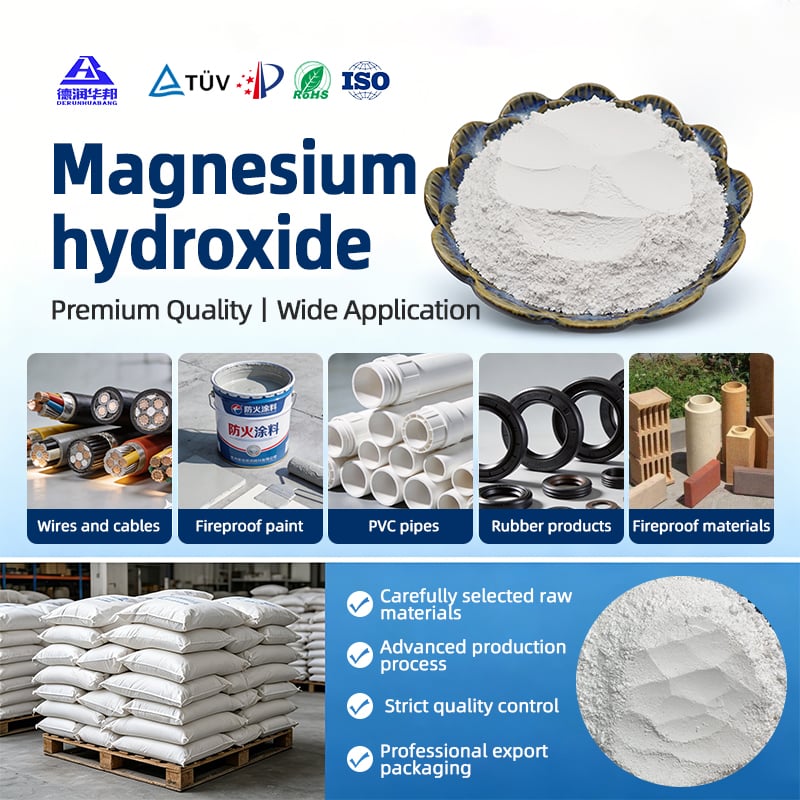
Wire and cable. The largest use: LSZH compound for power, data and rail signaling cable, at 50–65% loading in EVA or LLDPE-based systems.
Engineering plastics. Polypropylene, polyamide and PBT housings, connectors and switchgear, where the processing window rules aluminium hydroxide out.
Rubber. Conveyor belt covers for mining, fire-resistant hose and gaskets, where the flame retardant filler also acts as an acid acceptor.
Construction. Fire-resistant coatings, aluminium composite panel core and cable tray, usually in a high-whiteness grade.
Standard packing for the flame retardant filler is a 25 kg paper-plastic composite bag with a polyethylene liner, or 500 kg and 1,000 kg FIBC with the same liner. Bags can be palletized on request, and each carries grade, batch number, net weight and production date.
The liner is not cosmetic. MDH is slightly soluble and carbonates slowly in humid air, and moisture above 0.5% shows up as voids in cable insulation long after the goods left the warehouse. Store sealed, dry, and off the floor.
Send the polymer, the processing temperature, the LSZH compound or plastic part involved, the flame standard the part must meet and the maximum loading the formulation accepts. We will confirm the grade — treated or untreated, which D50, which whiteness — and the values it will be supplied against. If your processing temperature is low enough for aluminium hydroxide, we will say so rather than sell a grade you do not need.


