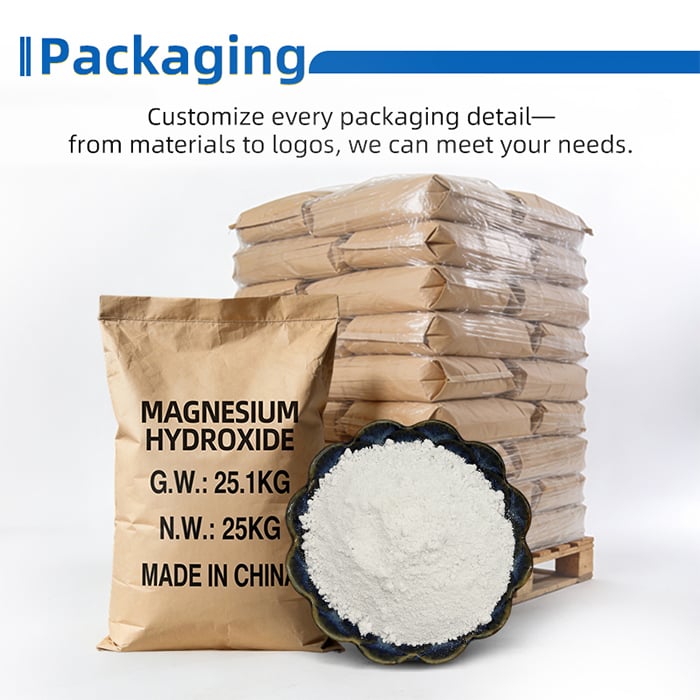
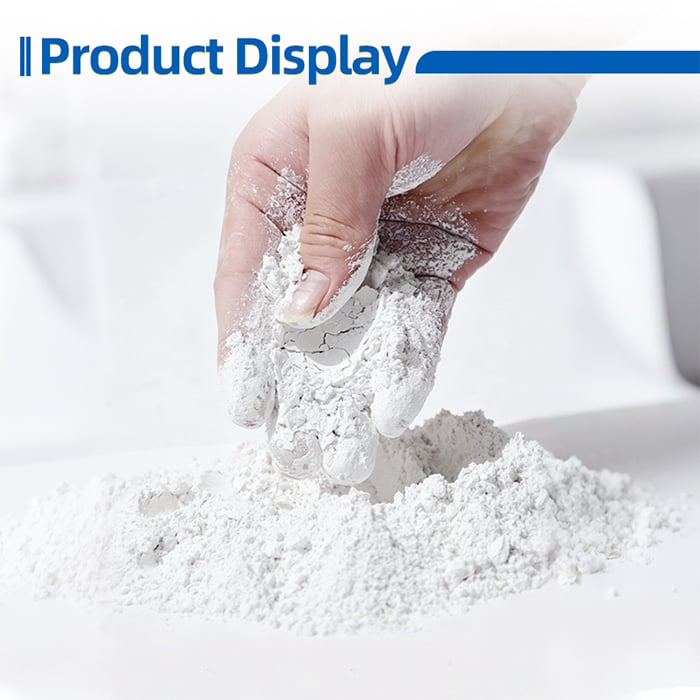
Summary: Manufacturers of cables, rubber goods and engineering plastics are turning to high‑purity magnesium hydroxide as a reliable halogen‑free flame retardant filler to meet rising global fire‑safety and environmental regulations. This mineral‑based additive decomposes at high temperature to release water vapor, suppress smoke generation and slow down flame spread without releasing toxic halogen‑based fumes. Many compounding factories adopt magnesium hydroxide to improve fire performance while maintaining acceptable mechanical properties of finished polymer parts. As market demands for low‑smoke non‑toxic materials keep growing, magnesium hydroxide becomes a preferred functional filler for wire‑and‑cable insulation, modified plastics and rubber components.
Key Benefits of High‑Grade Magnesium Hydroxide
Effective Halogen‑Free Flame Retardancy & Smoke Suppression
Unlike halogen‑containing flame retardants that produce corrosive and poisonous gas during combustion, magnesium hydroxide works through endothermic decomposition. When exposed to fire heat, it breaks down and releases water vapour, which cools the material surface and dilutes flammable pyrolysis gas. Meanwhile, it forms a stable magnesium‑oxide char layer covering the substrate, blocking oxygen supply and restraining further burning. It delivers outstanding smoke‑suppressing performance, greatly reducing dense toxic smoke which is the major hazard in fire accidents. This characteristic makes it highly valued for public‑facility cables and interior polymer products where low‑smoke performance is mandatory.
High Thermal Stability for Polymer Processing
High‑purity magnesium hydroxide features relatively high decomposition starting temperature, making it compatible with common high‑temperature extrusion and granulation processes for engineering plastics and cable compounds. It will not decompose prematurely during normal plastic processing, avoiding bubbling, blistering or surface defects on finished goods. Well‑surface‑treated magnesium hydroxide shows good dispersion inside polyolefin, EVA and rubber matrix. Properly formulated, it can balance flame‑retardant performance and retain part of tensile and impact properties instead of sharply weakening product mechanics.
Environment‑Friendly and Low‑Corrosion Property
Magnesium hydroxide is non‑toxic, non‑irritating and does not generate persistent harmful by‑products. It contains no heavy‑metal ingredients and satisfies many international green material standards for wires, construction‑used plastics and household rubber articles. Its decomposition residue is mild magnesium oxide, which brings low corrosion to processing equipment, compared with some other inorganic flame‑retardant alternatives. For factories focusing on eco‑friendly product certification, this filler helps simplify compliance work for environmental‑safety requirements.
Technical Specifications Overview
Different application scenarios require customized magnesium hydroxide grades. Surface‑untreated powder suits rubber and low‑demand filling systems; surface‑modified grades are designed for polyolefin‑based cable materials and engineering plastics. Key indicators include purity, particle size distribution, moisture content and surface‑treatment agent type. Lower impurity content helps avoid unexpected colour shift or ageing acceleration of polymer products. Finer particle size improves dispersion yet needs formula adjustment to keep material fluidity during extrusion.
Main Application Scenarios
High‑performance magnesium hydroxide is widely deployed across several industrial segments. Wire and cable insulation & sheathing is one of the largest consumption fields, especially for low‑smoke halogen‑free cables used in subway, high‑rise building and data‑centre projects. It is also added into modified polypropylene, polyethylene and EVA plastics for flame‑retardant housing parts, electrical accessory components. In rubber industry, it serves for flame‑resistant rubber hoses, sealing pads and conveyor belts. Certain special‑grade magnesium hydroxide can also be applied for industrial wastewater neutralization treatment.
Customer FAQs
Q: Can magnesium hydroxide fully replace halogen flame retardants in cable compounds?
A: It can achieve halogen‑free low‑smoke fire‑safety requirements, yet normally requires relatively high filling loading. Formulation adjustment is necessary to balance flame‑retardant effect and mechanical performance of cable materials.
Q: Does surface‑treated magnesium hydroxide perform better in plastic granulation?
A: Yes. Surface modification improves compatibility between inorganic powder and polymer matrix, reducing agglomeration and helping maintain finished‑product tensile and elongation performance.
Q: What factors will affect the final flame‑retardant result of magnesium hydroxide?
A: Product purity, particle fineness, surface‑treatment status, filling dosage and matching resin system all exert combined influence on real‑world fire‑resistance output.
Get In Touch for Magnesium Hydroxide Solutions
If you are sourcing qualified halogen‑free magnesium hydroxide for cable, plastic or rubber formula upgrading, our technical team can offer grade selection guidance and sample support. We provide multiple particle‑size and surface‑treated magnesium hydroxide grades to satisfy diverse flame‑retardant filling demands. Contact us today to discuss your project parameters and receive tailored product recommendations for your manufacturing lines.
 ×
×