Rubber granules stand out as flexible and adaptable materials that bridge gap between rubber waste utilization and practical industrial applications. Originating mainly from recycled rubber products, especially discarded tyres, rubber granules inherit rubber’s inherent advantages such as elasticity, wear resistance and sound insulation, while possessing characteristics of small particle size and easy blending with other materials. Beyond discarded tyres, rubber granules can also be derived from recycled rubber seals, hoses and other rubber scraps, expanding source of raw materials and enhancing supply stability. Production of rubber granules involves systematic processes including rubber cleaning, crushing, screening and purification: cleaning removes dirt, oil stains and attached debris from recycled rubber; crushing breaks down rubber into small fragments; screening separates particles by size through multi-layer sieves; purification further eliminates residual impurities to improve product purity. These processes not only remove impurities and adjust particle size to meet diverse application requirements but also ensure consistency of rubber granule performance. Such production mode not only realizes resource reuse of rubber waste but also provides cost-effective materials for multiple industries, driving development of related industrial chains including waste collection, processing and deep application.

Urban landscape construction has become important application field for rubber granules, with their unique properties bringing new possibilities to urban greening and public space renovation. In construction of urban footpaths and park trails, rubber granules are mixed with cement or resin to form non-slip and shock-absorbent pavement surfaces, which are comfortable for pedestrians to walk on and can reduce noise generated by foot traffic, creating quieter and more pleasant urban walking environments. Colored rubber granules, with rich and bright hues ranging from soft pastels to vivid neons, are widely used in design of urban landscape sketches, children’s playgrounds and community green belts. These colored rubber granules not only enhance aesthetic appeal of urban spaces, making public areas more vibrant and attractive, but also have excellent weather resistance—able to resist fading from sunlight, erosion from rain and damage from frost, maintaining stable color and performance even under long-term outdoor exposure. Rubber granule pavements also show strong adaptability to different terrain conditions, being easy to construct on sloping or uneven ground without complex foundation treatment, thus simplifying construction processes of urban landscape projects and reducing overall construction costs.
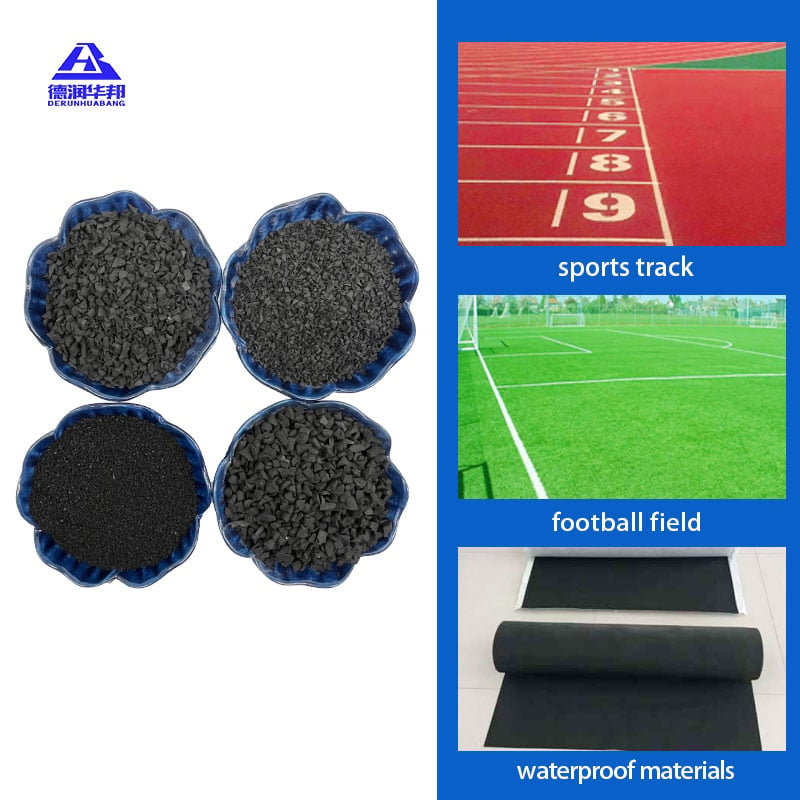
Sports facility enhancement relies heavily on rubber granules, which have become core materials for upgrading and constructing sports venues. In construction of outdoor and indoor sports grounds, rubber granules are used as key components of surface layers and infill materials, directly affecting safety and sports experience of venues. For example, in construction of basketball courts and badminton courts, rubber granules blended with polyurethane materials form elastic surface layers that can effectively reduce impact on sports equipment, reduce friction between equipment and ground, and improve sports experience by providing appropriate bounce and grip. In artificial grass football fields, rubber granules serve as infill materials to fix grass fibers, prevent fibers from flattening due to frequent stamping, maintain surface flatness and provide appropriate buffer force to protect athletes from hard ground impact. EPDM rubber granules, with superior aging resistance, tensile strength and ozone resistance, are widely used in professional sports venues that require high performance and long service life, as they can withstand intensive use and harsh environmental conditions without significant performance degradation. Renovation of old sports facilities also frequently adopts rubber granules to repair worn surfaces—by overlaying or mixing with repair materials, worn areas can be restored to original performance, extending service life of venues without large-scale reconstruction or replacement of entire surfaces.
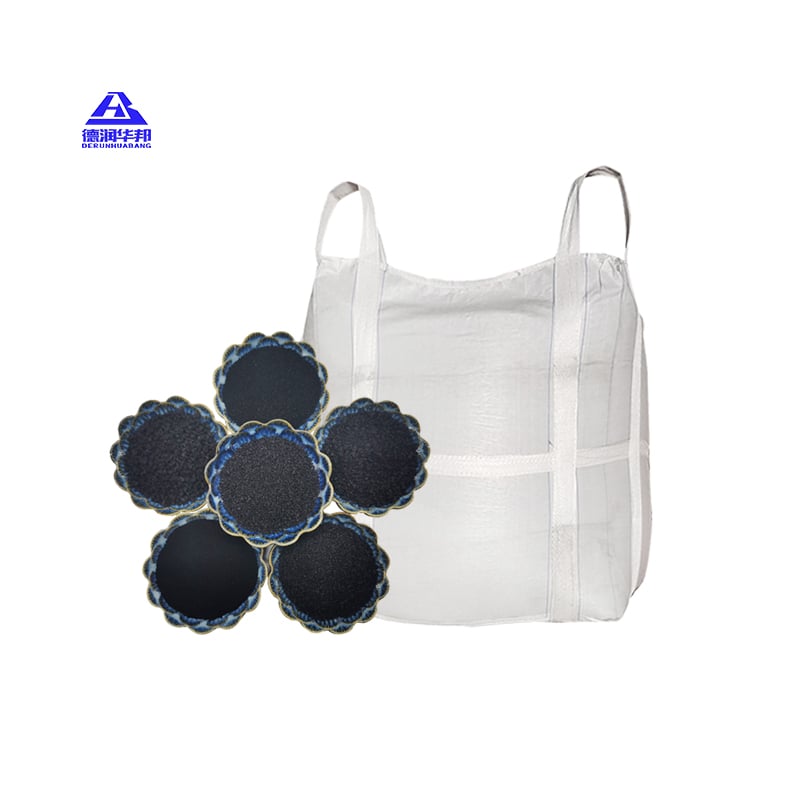
Continuous optimization of rubber granule production technology contributes to improvement of product quality and expansion of application scope. Traditional physical crushing technology is gradually upgraded with addition of intelligent screening systems, which can more accurately control particle size distribution of rubber granules, ensuring that each batch of products meets specific application standards and reducing performance differences between batches. New technologies such as cryogenic crushing further reduce damage to rubber molecular structure during production—by cooling rubber to brittle state at low temperatures, crushing can be achieved with minimal heat generation, thus ensuring that rubber granules retain excellent physical properties such as elasticity and toughness. Surface modification technology of rubber granules, through chemical treatment such as grafting or coating, enhances compatibility and bonding strength between rubber granules and other materials like bitumen, resin and cement, making them more suitable for high-demand application scenarios that require strong adhesion and structural stability. These technological advancements not only promote standardization and refinement of rubber granule production but also lay solid foundation for their wider application in high-end and specialized fields.
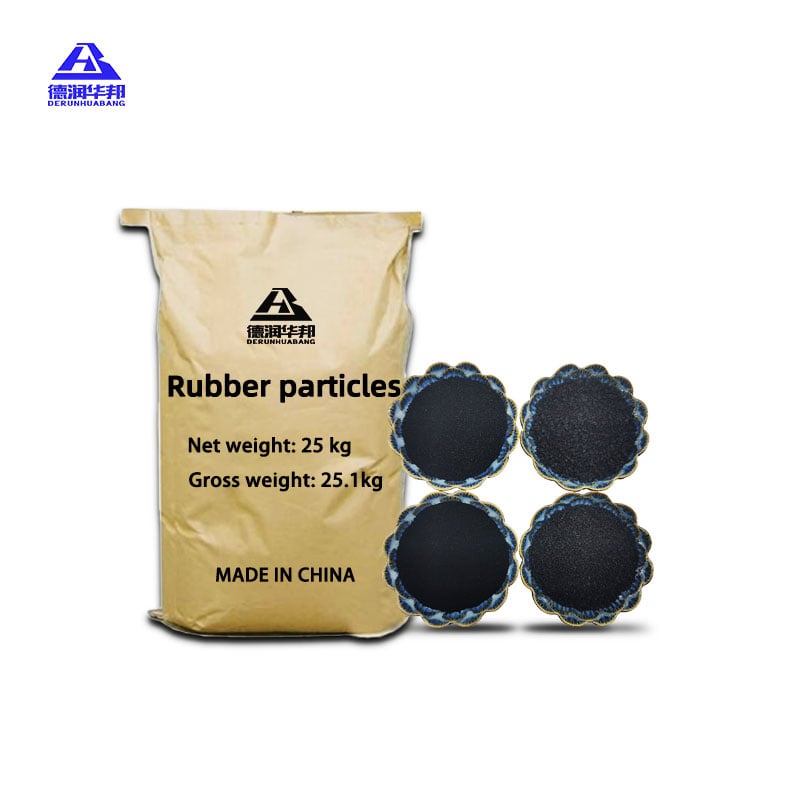
Global rubber granule industry shows obvious regional development characteristics, with different regions focusing on different application fields and having distinct market demands. In North America and Europe, rubber granules are mainly applied in high-end sports facilities and urban landscape projects, with high requirements for product quality, environmental performance and safety standards—products need to pass strict environmental testing and quality certification to enter local markets. In Asia-Pacific region, driven by rapid urbanization, increasing investment in sports infrastructure and continuous expansion of urban public spaces, demand for rubber granules is growing rapidly. Application fields here are constantly expanding from traditional construction to emerging areas such as indoor decoration, industrial noise reduction and commercial pedestrian streets. Market competition in rubber granule industry is mainly reflected in production technology, product quality and price: enterprises with advanced technology can produce high-performance rubber granules to occupy high-end markets, while those with cost advantages are more competitive in mass-market applications. This competition prompts enterprises to increase research and development investment, optimize production processes and improve core competitiveness to gain more market share.
Application of rubber granules also faces some practical problems that need to be solved to promote their healthier development. One of them is control of odor during production and use—some rubber granules may release slight odor due to residual additives or incomplete processing, which affects user experience in enclosed or semi-enclosed spaces. This requires enterprises to optimize production processes, adopt environmentally friendly additives and add deodorization steps to reduce emission of volatile substances. Another problem is improvement of durability of rubber granule products in extreme environments, such as high temperature, low temperature and high humidity: in high-temperature environments, rubber granules may soften and lose elasticity; in low-temperature environments, they may become brittle and crack; high humidity may cause aging acceleration. Solving these problems requires in-depth research on material formula and modification technology, such as adding anti-aging agents or using composite materials to enhance environmental adaptability.
 ×
×


