 ×
×
Against the global shift toward low‑carbon, intelligent, and high‑end industrial transformation, a versatile non‑metallic mineral has become a cornerstone linking traditional sectors and emerging industries. Kaolin, a clay mineral dominated by kaolinite, is evolving from a conventional filler into a critical functional material for papermaking, ceramics, environmental protection, new energy, and advanced manufacturing, providing solid support for high‑quality industrial development. Often called the “universal functional mineral,” kaolin stands far beyond ordinary clay. As a result of deep integration between natural mineralogy and modern materials science, it delivers irreplaceable value in cost reduction, efficiency improvement, emission control, and performance innovation.
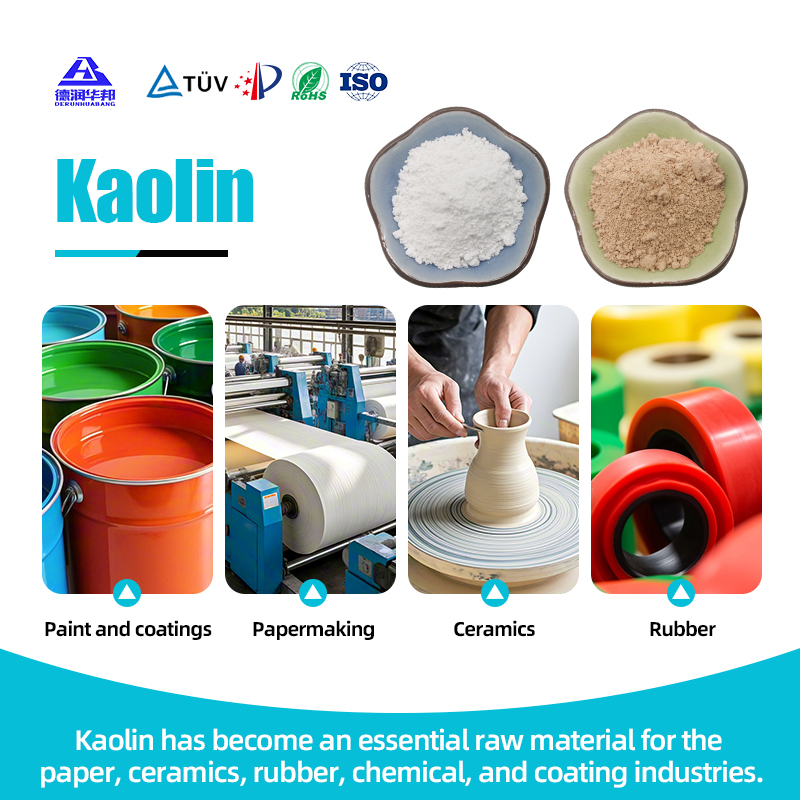
The core strengths of kaolin stem from its stable crystal structure, exceptional processibility, and customizable modification. Composed mainly of high‑purity kaolinite, it features a layered crystalline structure, fine particle size, excellent whiteness, low abrasiveness, strong chemical inertness, and good plasticity. After purification, calcination, delamination, surface modification, and intercalation treatment, it exhibits outstanding hiding power, suspension stability, thermal resistance, barrier performance, and interfacial compatibility. Calcined kaolin maintains stable performance at temperatures above 1,200°C, effectively blocks moisture and gas penetration, reinforces polymers, and enhances coating smoothness and durability.
Produced from natural minerals and processed via closed‑loop dry‑wet integrated, intelligent sorting, and eco‑friendly modification, kaolin features low carbon emissions and high resource efficiency throughout its lifecycle. Water recycling rates exceed 85%, supporting global “dual carbon” goals. From raw ore to functional powders, kaolin offers long service life, recyclability, and high compatibility with downstream systems, helping enterprises cut costs and reduce waste, making it a truly green foundational material.
Beyond its intrinsic performance advantages, kaolin enables full‑scenario industrial solutions with wide adaptability. In traditional industries, it serves as a key raw material for ceramic bodies, paper coatings, paint fillers, and refractory materials, stabilizing production and upgrading product quality. In environmental protection, it acts as a high‑efficiency adsorbent, catalyst carrier, and soil amendment, widely used in wastewater treatment, flue‑gas purification, and contaminated land remediation, with annual demand growth exceeding 8%.
On the new energy track, modified and calcined kaolin is widely used in lithium‑ion battery separator coatings, electrode additives, and solid‑state electrolyte composites. Its high thermal stability, controllable porosity, and low cost make it a preferred alternative to alumina in high‑safety separators, with demand surging over 60% annually. In daily chemicals, agriculture, and medicine, it is widely used in cosmetics, toothpaste, feed additives, pharmaceutical excipients, and medical carriers, expanding its application boundaries continuously. Its weather resistance, corrosion stability, and chemical inertness suit harsh indoor/outdoor and high/low‑temperature conditions, establishing it as a cross‑sector universal functional foundation.
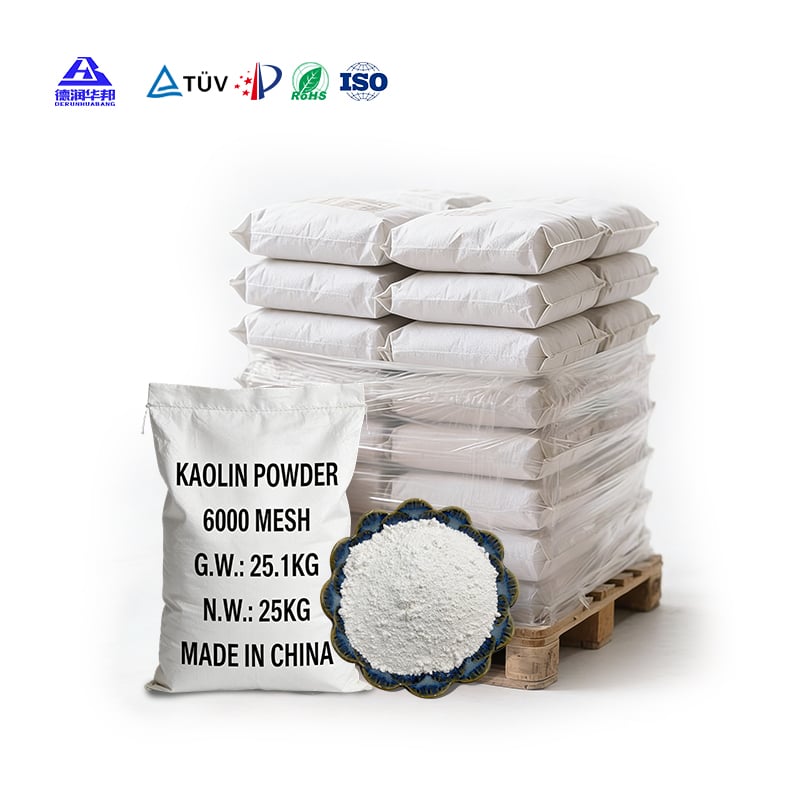
The global kaolin industry is entering a golden era of technological innovation and market expansion. Breakthroughs in ultra‑fine processing, calcination engineering, surface functionalization, and nanocompositing have shifted products from general‑purpose to customized grades, precisely meeting high‑end demands in environmental protection, new energy, electronics, and precision manufacturing, with the share of high‑value‑added products rising rapidly. Processing technologies are becoming more intelligent: AI‑driven ore blending, hyperspectral sorting, and continuous calcination have lifted sorting accuracy above 92%, reduced batch variation below 1.6%, cut overall energy consumption by 19.2%, and reduced carbon emissions by 32.5%.
As a major global player in kaolin resources, with proven reserves of nearly 3.5 billion tons and major production areas including Guangxi, Jiangxi, and Inner Mongolia, China has built a complete industrial chain covering mining, intensive processing, and end applications. Its products are exported worldwide, and high‑end functional kaolin is rapidly replacing imports.
Driven by global green development and industrial upgrading, the strategic value of kaolin has become increasingly prominent. It aligns perfectly with carbon neutrality, circular economy, and high‑end manufacturing targets, supporting both traditional industry transformation and emerging sector growth. The global market surpassed USD 6.7 billion in 2025, and China’s market exceeded RMB 9.2 billion. High‑end functional kaolin is projected to reach a market scale of RMB 95 billion by 2030.
From an industrial “basic filler” to an environmental “protector” and a new energy “key auxiliary material,” kaolin is breaking application limits and proving that foundational minerals can both sustain efficient industrial operations and lead green innovation. No longer a niche mineral, kaolin has become a core foundational material for building a green, intelligent, and high‑value modern industrial system, driving the global economy toward a sustainable future.


