As of May 2026, the global **high-performance ceramsite** market is experiencing steady and robust growth, driven by surging demand for lightweight, thermal-insulating and eco-friendly functional mineral materials across construction, infrastructure, horticulture, and water treatment sectors. Latest industry data shows a **5.6% year-on-year increase** in global market volume during the first quarter of 2026, with projections indicating the overall market size will exceed **$5.2 billion by 2032**, fueled by the upgrading of modern prefabricated building systems and the accelerated penetration of circular economy production technologies.
The **modern construction and infrastructure industry** remains the largest end-user market, accounting for over **52% of total global demand**, where high-strength ceramsite is highly valued for its **excellent porous internal structure, high strength-to-weight ratio, fire resistance and superior thermal insulation**. It is widely used in **lightweight aggregate concrete, precast structural panels, and high-rise building components**, which can effectively reduce the structural dead load, improve seismic performance and enhance energy efficiency, reducing the overall lifecycle cost of architectural projects. The continuous upgrading of urbanization in **East Asia, Southeast Asia and the Middle East** has accelerated market penetration, especially in the field of large-span bridges and energy-saving building envelopes.
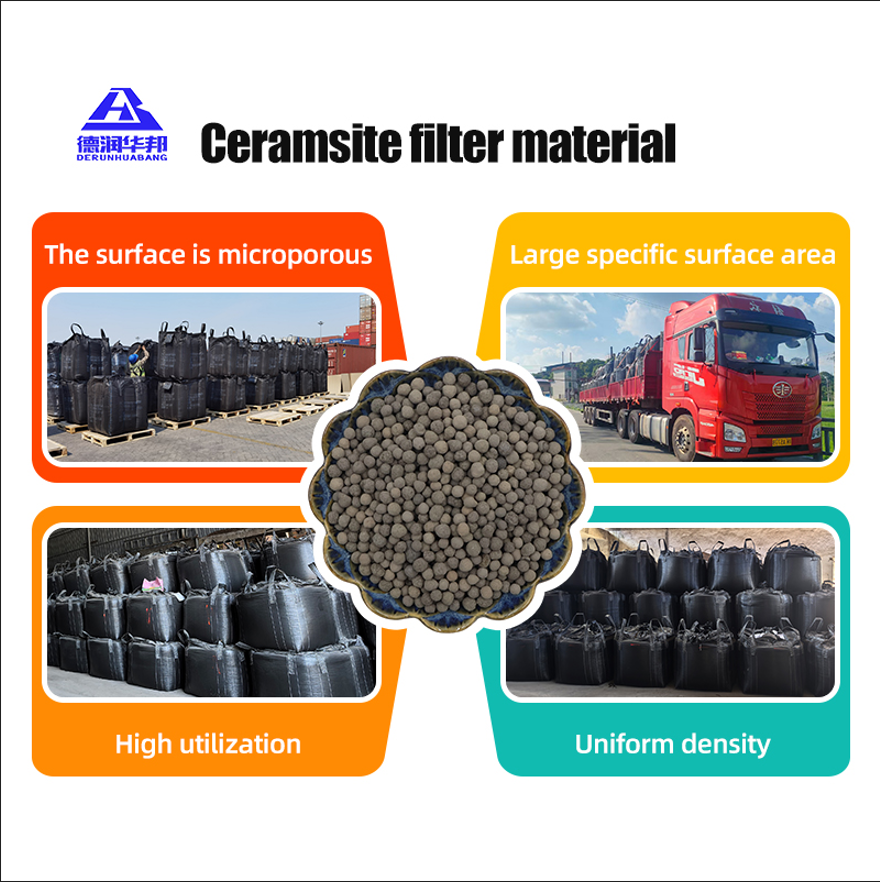
In the **horticulture, landscaping and water filtration industry**, more practitioners are integrating specialized ceramsite into **hydroponic systems, vertical roof greening and advanced wastewater treatment plants** thanks to its **excellent water retention, neutral pH and microbial carrier properties**. It can significantly improve the aeration and drainage of growing media while acting as an effective filtration medium to remove pollutants, which perfectly meets the production requirements of smart agriculture and sponge city construction, and is certified to comply with relevant global ecological safety and environmental standards.
In emerging high-value fields, the application scale of functional modified ceramsite is expanding rapidly. In the energy industry, high-strength specialized ceramsite is used as **a high-efficiency proppant for shale oil and gas extraction**, which can withstand high-pressure environments and improve extraction rates. In the field of environmental protection, refined **sludge-based ecological ceramsite** is used as **a sustainable material for artificial wetlands and bio-filtration systems** due to its good biocompatibility, durability and effective utilization of solid waste.
Technological innovation is continuously reshaping the industry's product system. A new generation of **ultra-lightweight spherical shale ceramsite** has entered the market, featuring **bulk density below 400kg/m³, water absorption rate under 5%, and optimized surface vitrification**, which can better meet the high-precision requirements of high-end prefabricated manufacturing. These innovative products have begun to gain large-scale adoption in **high-value segmented fields**, including **high-speed railway sound barriers, ultra-lightweight insulation mortar, and specialized aerospace thermal protection materials**, where uniformity, strength and low thermal conductivity are core requirements.
Sustainability is the core endogenous driving force for market growth. Unlike traditional aggregates that rely on massive mountain quarrying, high-performance ceramsite is increasingly produced through **industrial solid waste recycling (such as fly ash and sewage sludge)** and clean energy rotary kiln systems, with optimized waste heat recovery in the firing process. Currently, over **78% of the industry's leading production enterprises** have implemented **circular economy management, high-efficiency dust removal technology, and intelligent kiln control systems**, which greatly reduces the carbon footprint of the production process. Most mainstream products have obtained **ISO 14001 environmental management certification, LEED green building contribution certification and various ecological safety certifications**, further consolidating their competitive advantage in the green building material market.
The maturity of the global supply system has improved significantly in recent years. Mainstream head enterprises have expanded vertical integration from raw material sourcing to deep processing and specialized application technical services, and built regional production and distribution hubs in major demand markets such as China, Northern Europe and the Gulf region, which has effectively shortened the supply cycle. However, the industry still faces some challenges, including **fluctuating energy costs for high-temperature kilns, increasingly strict carbon emission limit standards in Europe and North America, and regional logistics constraints for bulk aggregate products**. In response, leading enterprises are increasing investment in **electric-heated intelligent rotary kilns, solid waste resource utilization R&D, and digital warehouse management systems**, to stabilize product quality and reduce comprehensive operating costs.
Industry analysts pointed out that **in-depth collaborative innovation between ceramic material researchers, civil engineering institutions and urban planning brands** will be the key to opening up new growth space for the industry. **High-strength ceramsite proppants for unconventional energy, bio-active ceramsite for ecological restoration, and ultra-lightweight aggregate for carbon-neutral buildings** are opening up emerging application scenarios for the industry, covering clean energy, environmental governance and green manufacturing fields.
With its **carbon-neutral attributes, multifunctional performance and wide application prospects**, the high-performance ceramsite market will maintain sustained growth in the future, becoming an increasingly important cost-effective green functional mineral material in the global transformation to sustainable construction and high-end ecological intelligence.