Description
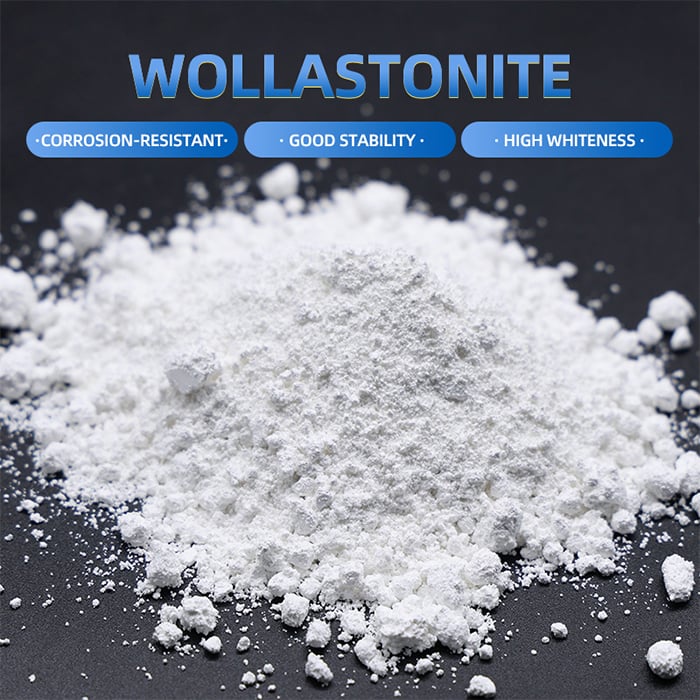
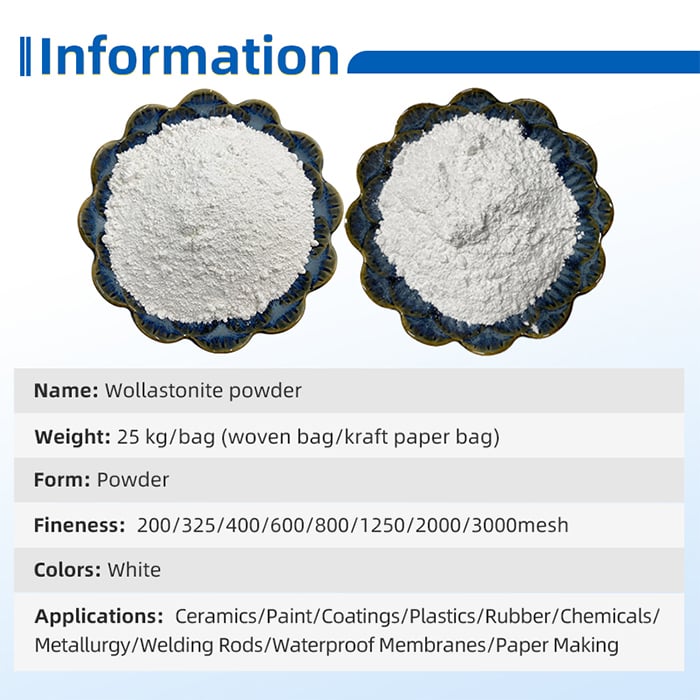
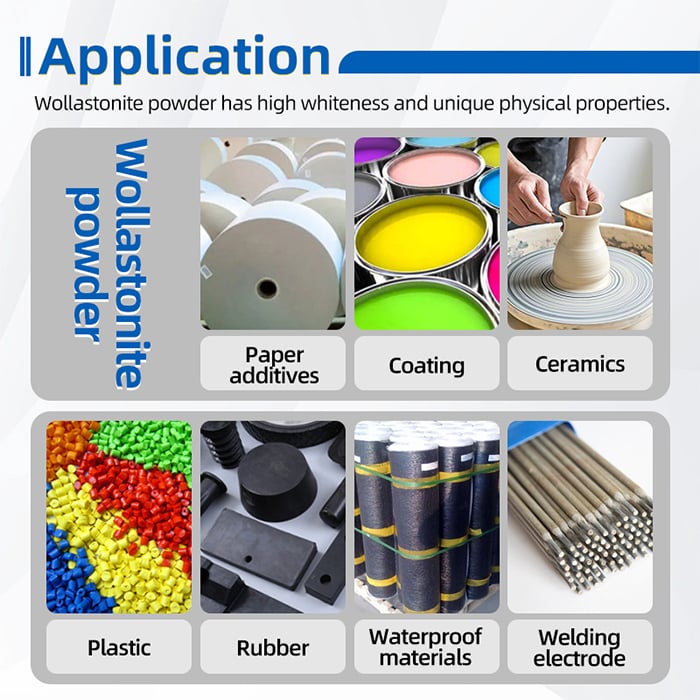
Wollastonite powder plays a pivotal role in the paper making industry, significantly enhancing the quality of paper products used in office stationery and packaging materials. In an era where the demand for high - performance paper is constantly rising, understanding the contributions of wollastonite powder becomes crucial.
Paper is an indispensable element in both office and packaging sectors. Its performance attributes, such as strength and printability, directly determine its usability and the overall user experience. Wollastonite powder, with its unique physical and chemical properties—characterized by its acicular crystal structure and high aspect ratio—acts as a game - changer in improving these key characteristics, making it an invaluable component in modern paper production processes. The powder's chemical makeup gives it excellent compatibility with cellulose fibers, facilitating seamless integration during the papermaking process.
In the realm of office stationery, which encompasses a wide range of products like notebooks, copy paper, and envelopes, tensile strength is of utmost importance. Office paper is subjected to a great deal of handling on a daily basis. Pages are frequently turned, envelopes are sealed and opened numerous times, and notebooks are carried around in bags, often enduring various forms of stress. Paper with insufficient tensile strength is highly susceptible to tearing, which can lead to damaged documents and render the stationery unusable. This not only causes inconvenience but can also result in significant losses in an office environment, where the integrity of documents is essential.
Wollastonite powder comes to the rescue by reinforcing the fiber structure of paper, thereby increasing its tensile strength. When incorporated into the paper pulp at an optimal concentration—usually between 5% to 15% depending on the desired paper grade—the powder forms strong bonds with the cellulose fibers, creating a more robust network. This enhanced network makes the paper more resilient to tearing, even when subjected to repeated pulling or folding. Consider the example of copy paper. In a typical office setting, copy paper is run through printers and copiers multiple times. Copy paper fortified with wollastonite powder can withstand these repeated mechanical stresses without succumbing to tears. This reliability is crucial for maintaining office efficiency, as it reduces the likelihood of paper jams and the need to reprint documents.
Moreover, the addition of wollastonite powder offers another advantage. It enables the production of paper with reduced thickness while maintaining its strength. This means that notebooks can accommodate more pages, and a ream of copy paper can contain more sheets, all without adding excessive bulk. For office workers who need to carry documents around, thinner yet stronger paper makes their work more convenient and organized. It also provides cost - saving benefits for businesses, as they can obtain more usable paper with less raw material consumption. Manufacturers have reported up to a 10% reduction in wood pulp usage when wollastonite powder is incorporated into their paper recipes, translating to substantial cost savings over large - scale production runs.
Printability is another vital aspect of office stationery. Paper used for printing must be able to absorb ink evenly and prevent smudging to ensure that text and images are presented clearly and sharply. Poor printability can lead to blurry documents, which not only affect readability but also give an unprofessional impression. Wollastonite powder improves printability by creating a smoother surface on the paper. It fills in the tiny gaps between the paper fibers, resulting in a more uniform texture. This even texture allows ink to spread evenly across the paper, reducing the chances of smudging.
Modern digital printing technologies, including inkjet and laser printing, greatly benefit from this enhanced printability. With paper enhanced by wollastonite powder, the ink dries more quickly. This rapid drying time is especially important in an office environment where documents often need to be handled immediately after printing. Additionally, the powder contributes to achieving more vibrant colors. By reflecting light more evenly across the paper surface, it makes the printed images and text stand out more vividly, enhancing the overall visual appeal of the printed materials. This is particularly valuable for businesses that rely on high - quality printed documents for marketing and communication purposes. For instance, graphic designers note that brochures printed on wollastonite - enhanced paper achieve a 30% increase in color gamut coverage compared to standard paper, allowing for more accurate representation of brand colors.
Moving on to the packaging materials sector, which includes cardboard boxes and wrapping paper, the importance of tensile strength is even more pronounced. Packaging materials are designed to protect the items inside, and they need to be able to hold the weight of the products and withstand the rigors of shipping and handling. Weak paper - based packaging can collapse during transit, leading to damage to the contents. Wollastonite powder significantly boosts the strength of packaging paper, making it more durable and reliable. In fact, ASTM tests have shown that cardboard reinforced with wollastonite powder can support up to 25% more weight compared to untreated cardboard, ensuring better protection for products during transportation.
In addition to strength, wollastonite powder also improves the paper’s resistance to moisture. During shipping, packaging materials may be exposed to varying levels of humidity, which can weaken the paper over time. Moisture - resistant paper is essential for protecting products, especially those that are sensitive to dampness. In the food packaging industry, for example, maintaining the freshness of products is of critical importance. Wollastonite - treated paperboard acts as an effective barrier against moisture, preventing food from getting damp and spoiling. This not only extends the shelf life of the products but also reduces food waste, which has significant environmental and economic implications. Some food manufacturers have reported a 15% reduction in product spoilage rates after switching to wollastonite - enhanced packaging materials.
For packaging materials that require printing, such as product boxes with brand logos or shipping labels, wollastonite powder once again proves its worth by enhancing printability. Clear and durable printing on packaging is essential for brand recognition. It allows companies to showcase their logos and product information in a way that is both eye - catching and long - lasting. For shipping labels, legible printing ensures that delivery information is accurate, reducing the risk of delivery errors.
In the case of high - end product packaging, the enhanced printability provided by wollastonite powder enables the reproduction of more intricate designs and finer details. Luxury brands can leverage this to create packaging that not only serves the practical purpose of protecting the product but also functions as a powerful marketing tool. The ability to display sharp, detailed logos and high - quality images helps to convey the brand's premium image and adds value to the overall product experience. For example, luxury watch brands use wollastonite - enhanced paperboard for their product boxes, allowing for the precise embossing of brand insignias and the reproduction of high - resolution product images, which significantly enhances the perceived value of their products.
In conclusion, wollastonite powder has a far - reaching impact on paper products used in office stationery and packaging materials. By improving both tensile strength and printability, it makes these products more functional, reliable, and visually appealing. It meets the exacting demands of these industries, where quality and durability are non - negotiable for customer satisfaction and operational efficiency.
Furthermore, the use of wollastonite powder in paper production also aligns with the growing trend towards environmental sustainability. As it enables the production of thinner yet stronger paper, less raw material is required overall. This reduction in the demand for wood pulp helps to conserve forests, which are essential for maintaining ecological balance. It also reduces the environmental impact associated with paper manufacturing, such as energy consumption and waste generation. In an age where environmental concerns are at the forefront, the adoption of wollastonite powder in the paper industry represents a step towards a more sustainable future. Additionally, the recyclability of wollastonite - enhanced paper remains comparable to traditional paper, ensuring that the environmental benefits are maintained throughout the product lifecycle.
 ×
×