





Driven by the global carbon neutrality drive, iterative upgrading of eco-friendly new materials, and booming demand for pollution abatement and high-end manufacturing, sepiolite fiber—a rare natural one-dimensional fibrous hydrated magnesium silicate mineral—has become a core foundational non-metallic functional raw material covering environmental remediation, construction materials, new energy, fine chemicals, national defense and military industry, as well as agriculture and livestock health sectors, earning the reputation of “Mineral Platinum”. Featuring inherent advantages such as natural non-toxicity, asbestos-free composition, low radioactivity and recyclability, alongside breakthroughs in domestic intelligent purification and modification technologies, sepiolite fiber has evolved from low-end ordinary fillers into high-value strategic functional materials. Equipped with five core functions including adsorption and purification, thermal insulation and flame retardancy, rheology and thickening, catalytic carrier performance and electromagnetic shielding, it delivers irreplaceable green solutions for the low-carbon transition of global industries, pollution control and localized production of high-end materials, and consistently generates dual industrial and ecological benefits.
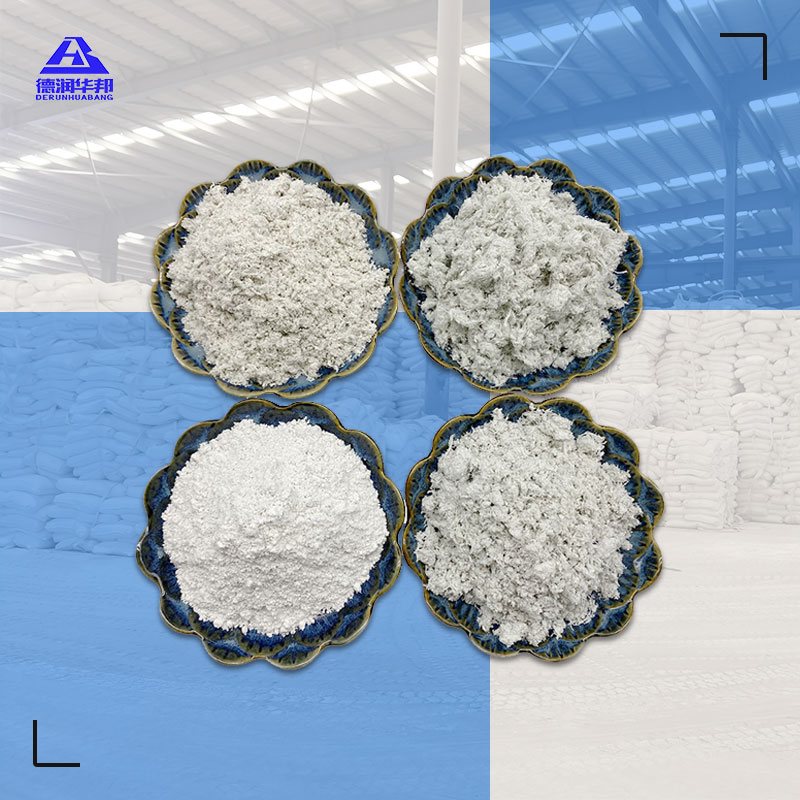
The core competitiveness of sepiolite fiber lies in its distinctive microcrystalline structure, inherent physicochemical properties and refined deep processing grading system. As a typical one-dimensional nanofibrous mineral, its raw crystals form interwoven micron-scale filament bundles with interconnected nano tubular micropore channels inside. Raw ore boasts a maximum specific surface area of 420 m²/g, boasting highly developed pore structures and abundant polar negative charges on the surface, which grant it three fundamental natural strengths: super adsorption capacity, ion exchange capacity and colloidal rheological property. The industry classifies products into two major categories based on crystal morphology: α long-fiber sepiolite with intact fiber bundles and strong tensile toughness, mainly used for thermal insulation sealing, fire-resistant composite materials and electromagnetic shielding substrates; β ultra-fine short-fiber sepiolite with outstanding dispersibility and richer micropores, widely adopted in adsorption purification, coating rheological additives, soil remediation and feed mycotoxin adsorbent carriers.
Chemically speaking, qualified refined sepiolite fiber contains ultra-low impurities, with heavy metal indicators (lead, mercury, arsenic, cadmium) fully complying with EU REACH green standards. It is neutral to weakly alkaline, resistant to acid and alkali corrosion, and stable across a wide temperature range without releasing toxic fumes under high temperatures, distinguishing it from asbestos and ordinary clay minerals that pose health risks. Through five modification processes including purification, acid activation, ion exchange, organic coating and high-temperature calcination, key indicators such as specific surface area, pore size, oil absorption value, colloidal viscosity and surface polarity can be precisely regulated to develop customized series products including high-purity refined powder, organically modified sepiolite, lithium-based rheological sepiolite, special sepiolite for catalytic carriers and military-grade shielding sepiolite, catering to differentiated working conditions across various industries. These comprehensive performance advantages form unique barriers that set sepiolite fiber apart from similar clay minerals such as bentonite, diatomite and attapulgite.
The mainstream mature production process for sepiolite fiber in China adopts a wet purification and composite modification production line for raw ore. The whole workflow covers eight core procedures: raw ore crushing and pulping, hydraulic grading and impurity removal, centrifugal purification, filter press dewatering, low-temperature drying, ultrafine fiber dissociation, surface activation modification and granulation packaging. The process delivers high thermal efficiency and thorough impurity removal, capable of purifying low-grade ore with a grade of around 20% to over 95% purity, lifting adsorption performance by more than five times compared with raw ore. Enterprises can select dry or wet fiber dissociation routes based on downstream demands: wet dissociation modified products feature complete fiber integrity and superior dispersibility with extremely low dust pollution, fully meeting modern environmental production specifications; dry dissociation products enjoy lower production costs and fit the low-end basic filling market. Leading domestic production bases have fully deployed supporting environmental protection systems including waste heat recovery, cyclic wastewater purification and closed dust collection. Energy consumption and pollutant emissions across the whole mining and deep processing chain have reached internationally advanced levels. Meanwhile, sepiolite fiber supports resource recycling: sepiolite saturated with adsorbed pollutants can be reused after high-temperature desorption and regeneration; waste composite materials and filter media can be simply activated and reused in soil remediation and industrial decolorization. This closed-loop circular model aligns deeply with the global circular economy and dual-carbon development goals. Leveraging independent R&D technologies covering purification, fiber dissociation and surface modification, domestic manufacturers can customize products with differentiated particle sizes, fiber lengths and surface functional groups to realize flexible customized production for multi-scenario industrial applications.
With full-spectrum eco-friendly performance and a complete product matrix, sepiolite fiber has formed a full-coverage application system spanning traditional industrial upgrading and emerging growth tracks, delivering exclusive green solutions for multiple industries.
Environmental governance represents the largest incremental downstream track for sepiolite fiber. Relying on ultra-strong microporous adsorption capacity, high-purity modified sepiolite can efficiently adsorb formaldehyde, nitrogen oxides and volatile organic waste gas with a formaldehyde removal rate exceeding 93%, widely applied in indoor purification filter materials, industrial waste gas treatment adsorption towers and anti-haze special filter media. In water treatment, it effectively captures heavy metal ions and organic pollutants, serving as a decolorant for sewage decontamination and oil refining. In soil remediation, it immobilizes heavy metals in farmland and slowly releases nutrients to improve soil fertility, acting as a slow-release carrier for pesticides to drastically reduce pollution risks from fertilizer and pesticide runoff, making it a core mineral material for farmland ecological restoration. In agriculture and livestock health, modified sepiolite fiber is a mainstream green feed mycotoxin adsorbent with an aflatoxin adsorption rate above 99%. It simultaneously releases essential trace elements including magnesium, calcium and zinc for livestock, cuts ammonia emissions from breeding, and is non-toxic and residue-free for natural degradation with manure, emerging as a mainstream eco-friendly additive for the global feed industry.
The construction and building materials sector stands as the traditional core market for sepiolite fiber. Long-fiber sepiolite delivers excellent thermal insulation, sound insulation, flame retardancy and electrical insulation, used for fireproof thermal insulation boards, wall sound insulation fillers, fire-resistant sealing gaskets and interior & exterior wall antibacterial purification coatings. Coatings blended with sepiolite fiber achieve self-cleaning, anti-aging and long-term formaldehyde removal effects, replacing traditional chemical additives and drastically lowering VOC emissions of coatings. It also acts as the core reinforcing fiber for asbestos-free fire-resistant composite materials, completely eliminating carcinogenic risks of asbestos products and becoming an essential functional filler for prefabricated green buildings.
Fine chemicals, papermaking, rubber and plastic industries maintain stable consumption of sepiolite products. In coatings, printing inks and color masterbatch sectors, organically modified sepiolite works as an efficient rheological anti-settling agent to boost pigment suspension stability, prevent stratification and sedimentation, and improve coating flatness. In papermaking, it is added to deodorant paper, liquid filter paper and special non-wood pulp to enhance air permeability, adsorption and filtration performance of paper products. In rubber and plastic filling systems, ultra-fine sepiolite fiber improves wear resistance, anti-aging performance and dimensional stability of finished products, while endowing rubber and plastic materials with certain flame retardant and anti-static properties and cutting the dosage of chemical additives.
New energy and high-end new material tracks have unlocked brand-new growth space. The natural one-dimensional tubular microporous structure of sepiolite fits the development of energy storage materials. It can be used as an electrode conductive carrier for lithium-ion batteries and a solid-state hydrogen storage adsorption substrate to build stable ion transport channels, reduce internal battery resistance and extend the charge-discharge cycle life of power and energy storage batteries. In photocatalysis, sepiolite serves as a carrier loaded with bismuth and titanium-based photocatalytic materials to greatly improve pollutant degradation efficiency and significantly prolong cycle service life. Supported by modified fiber conductive shielding technology, special electromagnetic shielding sepiolite has been developed for anti-static electronic packaging, base station electromagnetic protection and shielding shells of precision instruments, tapping into anti-static and explosion-proof engineering tracks of the electronic information industry.
High-precision fields including national defense & military industry, aerospace and biomedicine have become high value-added growth drivers for the industry. High-purity impurity-free long-fiber sepiolite is applied to high-temperature resistant thermal insulation components of aircraft and fire-resistant sealing materials for military use. In biomedicine, it acts as a drug slow-release carrier and medical adsorption filter material, passing medical safety tests thanks to its natural inertness and non-toxicity. Special industrial applications have expanded to precision polishing carriers, catalyst carriers, food decolorization filtration and other high-end scenarios, continuously broadening the application boundaries of high-end mineral materials.
The global sepiolite fiber industry has entered a new cycle featuring refined deep processing, high-end transformation and green low-carbon development. Continuous breakthroughs in core technologies such as purification and activation, ultra-fine fiber dissociation, organic surface coating and composite functional modification have driven product iteration from low-grade crude ore fillers to environmental purification materials, new energy carriers and military shielding special materials, forming a complete product matrix covering general filling, mid-end purification and high-end functional special materials that fully meet strict indicators of the whole industrial chain of construction, environmental protection, new energy, electronics and military industry. Intelligent manufacturing equipment including AI fiber morphology intelligent detection systems, fully automatic closed fiber dissociation production lines and online environmental monitoring devices have been widely deployed in leading industrial parks, lifting overall comprehensive production efficiency by over 45% and controlling batch performance deviation of products within 2%, greatly boosting stability and consistency of mass supply.
China is a major global power in sepiolite fiber resources and deep processing manufacturing. The world’s total proven sepiolite reserves stand at approximately 80 million tons, while China’s proven reserves reach 26 million tons, accounting for 32.5% of global reserves. Among them, Xiangtan in Hunan Province is China’s core resource production base with proven reserves exceeding 20 million tons, making up 80% of China’s total reserves and 25% of global reserves, hailed as “China’s Capital of Sepiolite”. It hosts the national only engineering technology research center for sepiolite functional materials, China’s first automatic high-purity purification production line with 95% purity, and a sepiolite industrial research institute, taking the lead in formulating national industrial standards for sepiolite mineral materials. A complete local industrial chain integrating mining, purification deep processing, R&D testing, logistics foreign trade and technical services has taken shape. China’s deep processing capacity for sepiolite fiber keeps expanding, and high value-added special products including purification-grade, new energy carrier and military shielding sepiolite are accelerating import substitution. Domestic sepiolite fiber products are exported in bulk to Southeast Asia, Europe, the Americas, the Middle East and other global markets, occupying a core position in international green mineral raw material trade.
Driven by three major dividends: global green low-carbon transition, rigid demand for environmental governance and booming new energy industries, the strategic value of sepiolite fiber keeps climbing. As a natural low-carbon foundational mineral material supporting multiple pillar industries including environmental remediation, green construction, energy storage electronics and national defense & military industry, sepiolite fiber leverages unique strengths of zero-carbon natural raw materials, low-energy processing and recyclability to fill gaps left by traditional high-pollution and high-energy chemical materials. Authoritative market research institutions released positive industry forecasts: the global sepiolite fiber market size exceeded USD 12.6 billion in 2024, maintaining an annual compound growth rate of around 5.2%, and is projected to surpass USD 18.2 billion by 2031. As the world’s largest production and consumption market, China benefits from policy boosts of new energy vehicles, energy storage power stations, air & soil pollution control and green buildings. The domestic sepiolite fiber industry market size is expected to exceed RMB 320 billion by 2030, among which the output and sales proportion of high value-added special functional sepiolite products will rise above 60%, becoming the core growth engine of industrial profits.
From low-value crude mine raw materials to the “purification cornerstone” of environmental protection, “energy storage carrier” of new energy tracks, “fire-resistant framework” of green buildings, “shielding barrier” of electronic industry and “safe adsorption carrier” for agriculture and livestock, sepiolite fiber continuously breaks the traditional application boundaries of non-metallic minerals and deeply penetrates high-precision emerging industries, completing industrial transformation from basic filling raw materials to multi-functional low-carbon strategic new materials. Looking ahead, with continuous iteration of cutting-edge technologies such as mineral purification modification, nanocomposite and functional compounding, coupled with sustained expansion of downstream markets including photovoltaic energy storage, aerospace, soil remediation and indoor air treatment, sepiolite fiber will further unlock its resource value. Relying on core advantages of natural origin, low carbon footprint and multi-functionality, it will deliver stable and long-term mineral material support for the green upgrading and sustainable low-carbon development of global manufacturing industries, accompanying all sectors toward a more eco-friendly, efficient and low-carbon industrial future

