

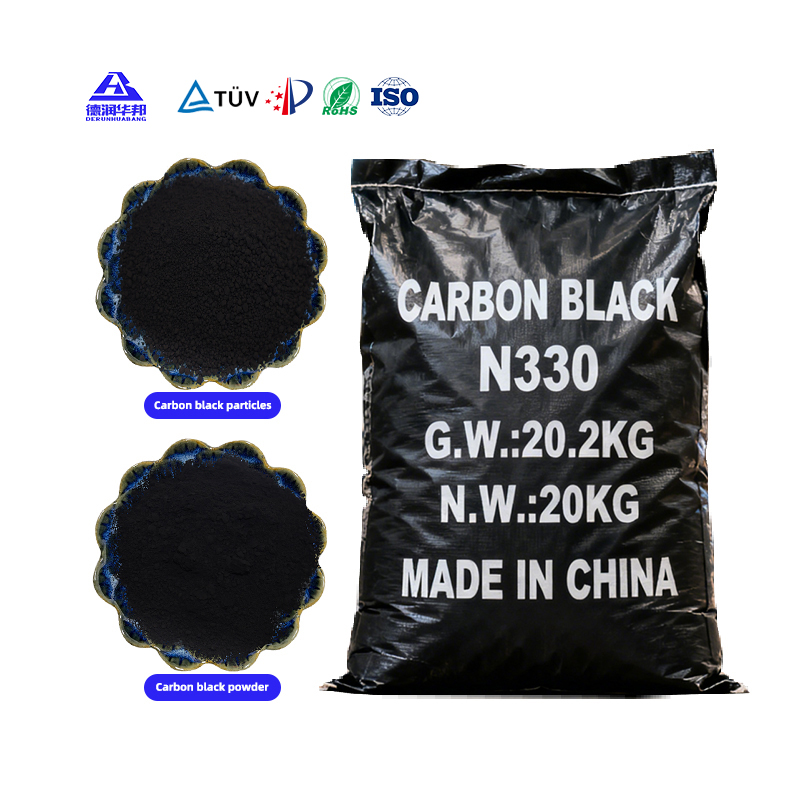
Against the backdrop of global carbon neutrality initiatives, industrial upgrading and the booming development of new energy industries, carbon black, an indispensable nano functional chemical material, has firmly established itself as a core raw material spanning traditional manufacturing and cutting-edge emerging sectors. Classified as one of the world’s fundamental fine chemical products, carbon black is a fine black amorphous carbon powder generated by the incomplete combustion or thermal cracking of hydrocarbons such as heavy oil, natural gas and coal tar under precisely controlled production conditions. Composed predominantly of elemental carbon with trace amounts of oxygen, hydrogen and sulfur, it has evolved from a common industrial filler into a high-value strategic functional material that delivers reinforcement, coloration, electrical conductivity and ultraviolet resistance. Hailed as the "Industrial Black Gold", carbon black integrates exceptional physical and chemical properties, eco-friendly production technologies and customizable functional performance. Combined with modern deep processing and intelligent manufacturing, it creates tremendous value in product performance enhancement, energy conservation, emission reduction and resource intensive utilization, standing as an irreplaceable core component for building a diversified, low-carbon and high-efficiency global industrial system.
The core competitiveness of carbon black originates from its unique microscopic structure, superior inherent properties and diversified graded specifications formed by refined processing. As a typical nanomaterial with particle sizes ranging from 10 nanometers to 500 nanometers, carbon black particles tend to aggregate into branched three-dimensional clusters, which endows it with a large specific surface area and adjustable structural characteristics. Industry practitioners classify carbon black into multiple categories based on application scenarios and performance indicators. Rubber-grade carbon black accounts for approximately 90% of total consumption and is further divided into hard carbon black and soft carbon black. Hard carbon black features particle sizes between 15 nm and 45 nm and forms stable chemical bonds with rubber molecules, dramatically boosting tensile strength, tear resistance and wear resistance. Soft carbon black offers moderate reinforcing effects and excellent flexibility, ideal for rubber products requiring soft texture. Beyond rubber applications, specialty carbon black covers conductive carbon black and pigment carbon black. Conductive carbon black boasts a specific surface area exceeding 1,000 m²/g, capable of forming continuous conductive networks in polymers to achieve anti-static and conductive effects. Pigment carbon black, with fine particle sizes of 10 nm to 30 nm, delivers outstanding tinting strength and blackness, meeting strict color requirements for high-end coatings and inks.
In terms of chemical traits, qualified carbon black products feature low ash content (below 0.5%) and low volatile content, with pH values ranging from neutral to weakly alkaline, ensuring excellent compatibility with various rubber, plastic and resin systems. It also possesses prominent weather resistance, ultraviolet absorption capability and chemical inertness, remaining stable when exposed to acids, alkalis and harsh outdoor environments. Key performance parameters including BET specific surface area and DBP oil absorption value can be precisely adjusted through technological control to cater to differentiated industrial demands. These comprehensive advantages lay a solid foundation for its wide-ranging applications across numerous industries.
The mainstream production of carbon black adopts the oil furnace method, a mature technology characterized by high thermal efficiency, flexible parameter adjustment and relatively low energy consumption. The entire production process consists of raw material atomization, high-temperature cracking, flue gas collection, particle separation, granulation and post-treatment. Manufacturers can choose dry granulation or wet granulation according to product positioning; wet granulation products have higher structural strength, better dispersion and lower dust pollution, complying with modern environmental production standards. Advanced waste heat recovery and flue gas purification systems are widely deployed in domestic production lines, enabling efficient recycling of industrial waste heat and effective control of pollutant emissions. Currently, the overall energy utilization rate of China’s carbon black industry has reached a leading global level. Moreover, carbon black supports recycling and secondary utilization. Waste rubber and plastic containing carbon black can be processed to extract regenerated carbon black, which can be reused after simple modification. This circular development model aligns closely with the global circular economy philosophy and dual-carbon goals. Customized products with tailored particle sizes, structural degrees and surface properties can be developed for clients, realizing differentiated production for multi-scenario industrial applications.
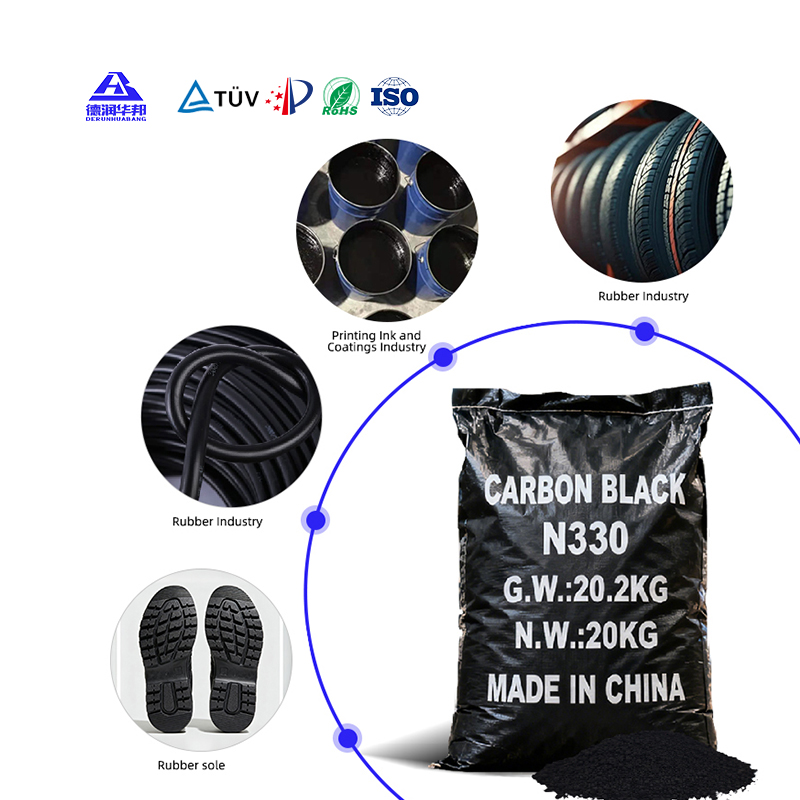
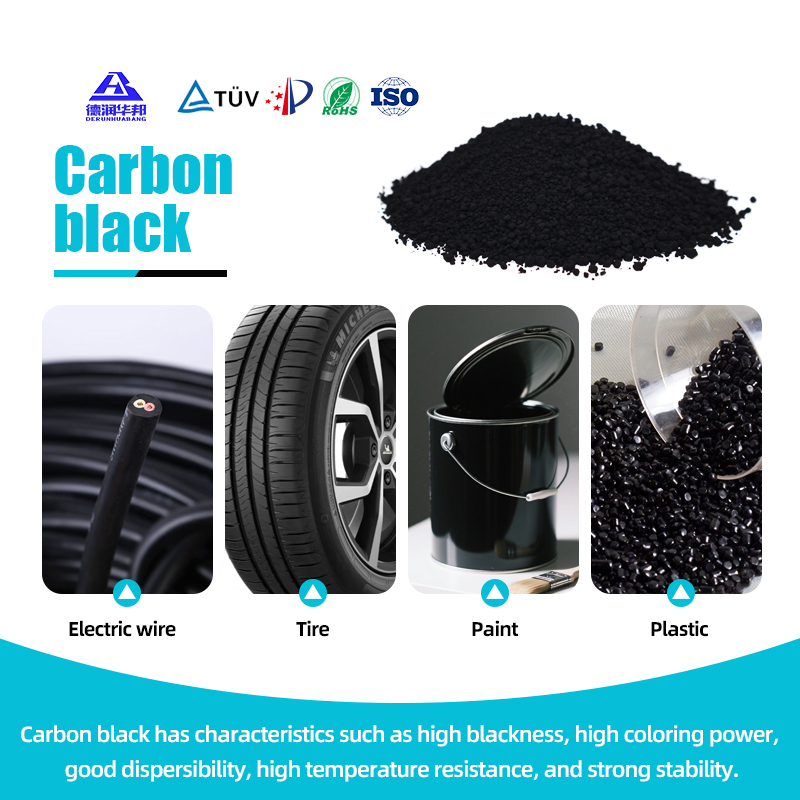
Benefiting from its full-spectrum superior performance and rich product lines, carbon black provides targeted high-performance solutions for traditional industries and emerging new energy sectors. The rubber industry remains its largest downstream market. As an essential reinforcing agent and filler for tires and industrial rubber products, carbon black greatly improves the durability and safety of rubber materials. Hard carbon black is mainly applied to tire treads to enhance wear resistance and anti-skid performance, while soft carbon black is widely used in tire casings, hoses, sealing parts and conveyor belts, extending the service life of rubber products significantly.
In the coating, ink and plastic industry, pigment carbon black acts as a premium colorant. Its pure black tone, stable color fastness and strong covering power make it the preferred material for architectural coatings, industrial anti-corrosion coatings, printing inks and plastic color masterbatches. It also endows plastic products with anti-aging and anti-ultraviolet capabilities, effectively slowing down material aging caused by long-term sunlight exposure. In the field of electronic information and anti-static engineering, conductive carbon black is a core functional filler. It is added to conductive plastics, anti-static rubber, electronic packaging trays and conductive coatings to build stable conductive pathways, which can eliminate static electricity hazards and ensure the safe operation of electronic equipment and explosion-proof industrial facilities.
The rapid rise of the new energy industry has opened up a brand-new growth track for carbon black. High-purity conductive carbon black serves as a key conductive additive for lithium-ion batteries. It forms an efficient conductive network inside electrodes, reducing internal resistance, improving charging and discharging efficiency and extending the cycle life of power batteries and energy storage batteries, becoming an indispensable material for new energy vehicles and energy storage systems. In addition, carbon black is also applied in leather processing, dry cell manufacturing, cable materials and agricultural shading materials, demonstrating remarkable industrial adaptability and market expansion potential.
Driven by continuous technological innovation and robust market demand, the global carbon black industry has entered a new phase of refined production, high-end transformation and sustainable development. Breakthroughs in core technologies such as surface modification, ultra-fine grading, high-purity purification and functional compounding have promoted product iteration from conventional rubber carbon black to mid-grade pigment carbon black and high-end functional specialty carbon black. A complete product matrix covering general-purpose and customized items has taken shape, fully satisfying the stringent requirements of tires, new energy batteries, high-end coatings and electronic manufacturing industries. Intelligent manufacturing equipment including AI particle detection systems, automated granulation lines and intelligent environmental protection monitoring devices has been extensively adopted across the industry. These upgrades raise overall production efficiency by more than 40% and reduce product batch deviation rate to below 2%, greatly enhancing product quality consistency and production capacity stability.
China is a major powerhouse in global carbon black production and processing, ranking first worldwide in terms of output capacity. The country’s proven comprehensive production capacity reaches 8.68 million tons, accounting for 46.2% of the global total. Major production bases are distributed across Shandong, Shanxi, Henan, Jiangsu and other regions abundant in coal tar and heavy oil resources. China has built a complete industrial chain covering raw material supply, independent research and development, intelligent production, quality inspection, customized delivery and after-sales technical services. At present, domestic high-end products such as battery-grade conductive carbon black and high-purity pigment carbon black are accelerating the substitution of low value-added products. Leading enterprises continue to expand their global layout, and Chinese carbon black products are exported to Asia, Europe, America, Africa and other regions, occupying a pivotal position in the international market.
Propelled by the dual trends of global green low-carbon development and the vigorous expansion of the new energy sector, the strategic value of carbon black keeps rising. As a foundational nano chemical material supporting multiple pillar industries, it adheres to the development concepts of energy conservation, emission reduction and resource recycling, delivering reliable material support for the transformation and upgrading of traditional industries and the rapid growth of emerging industries. Authoritative market research institutions have released positive outlooks for the industry: the global carbon black market size stood at 28 billion US dollars in 2024, and it is projected to maintain an annual compound growth rate of around 4.5%, exceeding 40 billion US dollars by 2031. As the world’s largest production and consumption market, China’s carbon black market scale maintains steady growth. Driven by new energy vehicles and energy storage industries, the market size is expected to exceed 75 billion RMB by 2030. Meanwhile, the proportion of high value-added specialty carbon black products will climb above 58%, becoming the primary driving force for industrial profit growth.
From a simple industrial filler to rubber’s "reinforcement backbone", coatings’ "color core", electronic products’ "static guard" and new energy batteries’ "conductive booster", carbon black is constantly breaking traditional application boundaries and achieving in-depth penetration into emerging fields. It has transformed from a basic bulk chemical into a multi-functional core material underpinning the modern industrial system. Looking ahead, with the continuous advancement of purification and modification technologies and the continuous expansion of application scenarios in new energy vehicles, energy storage, photovoltaics and high-end electronics, carbon black will further unlock its development potential. This time-honored nano material will continue to deliver stable and powerful momentum for the high-quality, sustainable and low-carbon development of global industries, accompanying all sectors toward a greener, smarter and more prosperous industrial future.