 ×
×
Wollastonite Powder is a calcium silicate mineral primarily composed of CaSiO₃, possessing properties such as acicular crystal structure, high aspect ratio, and chemical inertness. The main component of wollastonite is calcium metasilicate with a unique needle-like or fibrous crystalline structure, while also containing small amounts of impurities such as iron oxide, aluminum oxide, and magnesium oxide. Wollastonite Powder's unique physical and chemical properties have made it an indispensable material in various industries worldwide, with applications spanning ceramics, plastics, coatings, and advanced manufacturing.
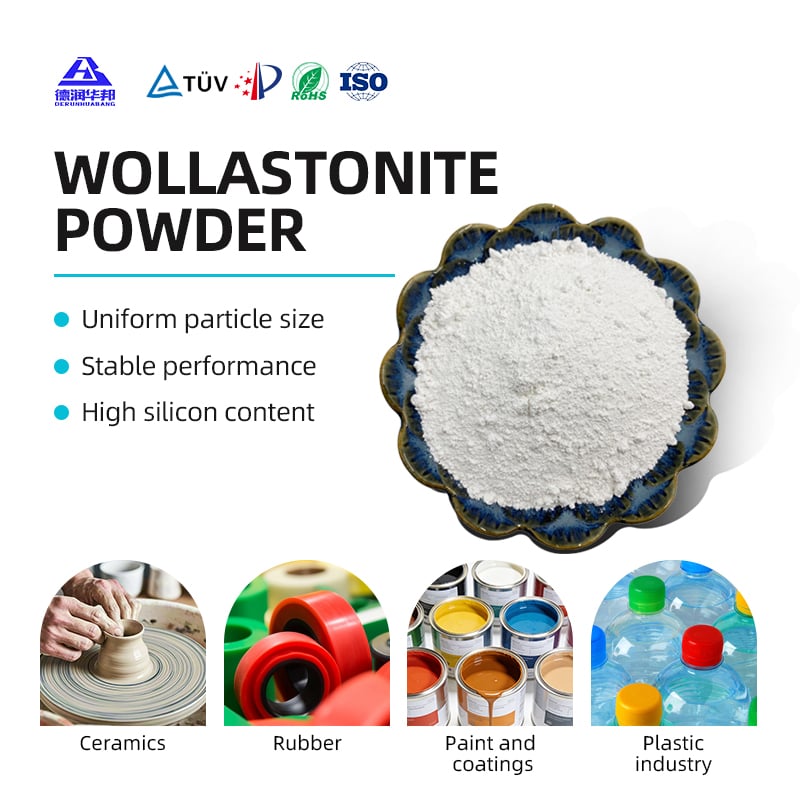
The main component of wollastonite is formed through contact metamorphism or regional metamorphism of calcareous sediments. During geological processes, limestone or dolomite interacts with silica-rich fluids under high temperature and pressure conditions. Over millions of years, calcium carbonate reacts with silicon dioxide to form calcium silicate through metamorphic recrystallization. During this process, wollastonite develops its characteristic needle-like or fibrous crystal habit, with individual crystals often radiating in fan-shaped or bush-like aggregates, thus laying the foundation for wollastonite's unique properties.
Today, high-quality wollastonite deposits are distributed globally. Major producing areas include China, the United States, India, Finland, and Canada. In China, the major producing region is Shangrao County, Jiangxi Province, known for high-purity deposits with excellent acicular structure. These deposits differ in crystal morphology and processing methods (classified as needle-shaped wollastonite and ordinary wollastonite powder), but they all retain the core characteristics of wollastonite—excellent aspect ratio, chemical stability, and reinforcing capability derived from the unique acicular crystal structure.
The superior performance of wollastonite stems from the unique crystal structure and chemical composition of calcium silicate.
Acicular Crystal Structure: Wollastonite forms needle-like or fibrous crystals with high aspect ratios (length-to-diameter ratios of 8:1 to 20:1), providing exceptional reinforcing properties and dimensional stability in composite materials.
High Aspect Ratio: Premium needle-shaped grades achieve aspect ratios of 12-15:1 (325 mesh) and 8-13:1 (1250 mesh), offering superior mechanical reinforcement compared to granular fillers.
Chemical Inertness: Wollastonite is chemically stable, resistant to acids and alkalis, non-toxic, and environmentally friendly. It does not readily react with most substances, ensuring safety and reliability in various applications including food contact and medical products.
Low Moisture and Thermal Expansion: Wollastonite has low moisture absorption and minimal thermal expansion, providing dimensional stability in high-temperature applications and reducing defects in ceramic and plastic products.
High Brightness and Whiteness: Premium grades achieve whiteness levels of 86°, making them suitable for applications where appearance is critical, such as ceramic glazes and white plastics.
High Silica Content: With SiO₂ content of approximately 50.9%, wollastonite provides excellent fluxing properties in ceramics and contributes to mechanical strength in composites.
Low Dielectric Constant: Suitable for electrical and electronic applications requiring insulation and signal stability.
These properties work synergistically, making wollastonite a widely used material. It can be used as a reinforcing filler, fluxing agent, functional additive, or asbestos replacement to meet the diverse functional needs of various industries.
Wollastonite has wide applications and is deeply integrated into all sectors of the national economy, playing an irreplaceable role in manufacturing, construction, and advanced materials.
3. The Wide Range of Uses of Wollastonite
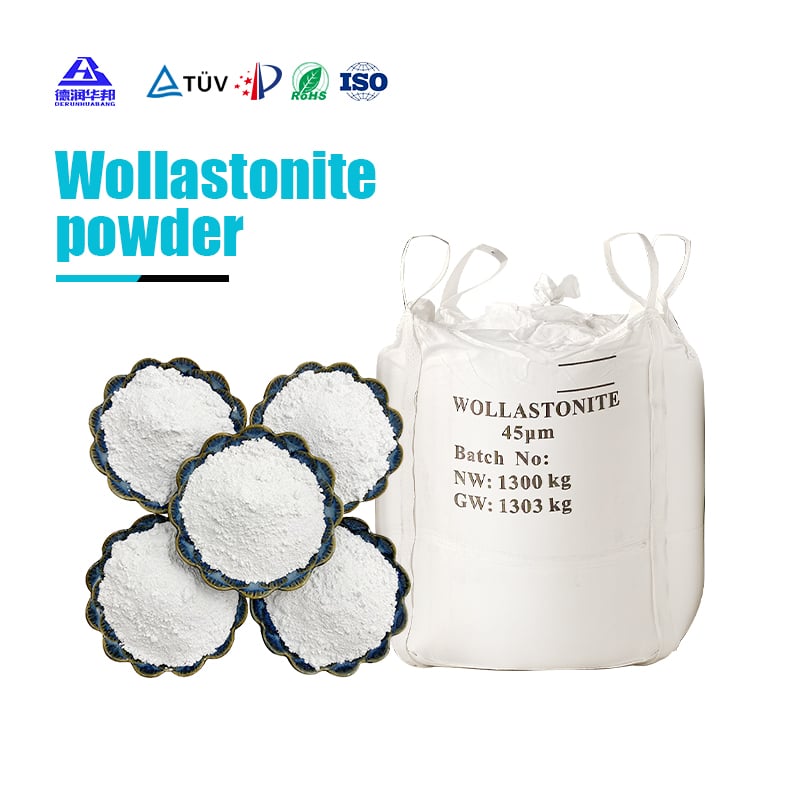
3.1 Ceramic Industry (Core Applications)
Wollastonite's excellent fluxing properties, low thermal expansion, and acicular structure make it an ideal ceramic raw material:
Ceramic Bodies and Glazes: Used in wall tiles, floor tiles, and sanitary ware to reduce firing temperature, improve sintering density, and enhance mechanical strength. The needle-shaped particles improve green strength and reduce drying defects.
Ceramic Glazes: 325 mesh needle-shaped wollostanite (900 yuan/ton plus 400 yuan freight) provides excellent suspension properties and surface finish in glaze formulations, with bright white appearance (86° whiteness).
Refractory Materials: High-purity grades are used in refractory linings and kiln furniture where thermal shock resistance and dimensional stability are critical.
Technical Ceramics: Specialized grades for electronic ceramics, insulators, and advanced ceramic components requiring precise thermal expansion control.
3.2 Plastics and Rubber
Wollastonite's strong reinforcing effects, dimensional stability, and chemical inertness make it a high-quality polymer additive:
Thermoplastic Reinforcement: Needle-shaped wollastonite significantly improves tensile strength, flexural modulus, and heat deflection temperature in polypropylene, nylon, and other engineering plastics. The high aspect ratio provides efficient stress transfer and crack resistance.
Automotive Components: Used in interior and exterior plastic parts, under-hood applications, and structural components where dimensional stability and heat resistance are required.
Rubber Compounding: Enhances mechanical properties, tear resistance, and processing characteristics in tires, hoses, belts, and molded rubber goods.
Asbestos Replacement: Provides safe, non-carcinogenic reinforcement in friction materials, construction products, and industrial applications formerly using asbestos.
3.3 Coatings and Paints
With its core advantages of reinforcement, durability, and chemical resistance, it has significant value in the coatings field:
Industrial Coatings: Acts as a functional filler improving scrub resistance, weatherability, and barrier properties in architectural and industrial paints. The acicular particles reinforce the paint film and reduce cracking.
Powder Coatings: Provides flow control, edge coverage, and mechanical reinforcement in environmentally friendly powder coating systems.
Marine and Protective Coatings: Enhances corrosion resistance and durability in harsh environments.
Friction Materials: Used in brake linings and clutch facings where thermal stability and friction characteristics are critical.
Due to its strong bonding properties and dimensional stability, it is widely used in construction applications:
Autoclaved Aerated Concrete (AAC): Improves strength, reduces density, and enhances thermal insulation properties in lightweight concrete blocks and panels.
Cement and Concrete: Acts as a mineral admixture improving workability, reducing shrinkage, and enhancing long-term durability.
Wallboard and Panels: Reinforces fiber-cement products, improving impact resistance and dimensional stability.
Soil Amendment: Used as a soil conditioner to improve structure, drainage, and nutrient availability in agricultural applications.
3.5 Other Industries
Metallurgy: Used as a flux in steelmaking and foundry applications to improve slag fluidity and metal quality.
Agriculture: Serves as a carrier for pesticides and fertilizers, and as a soil amendment to correct calcium deficiencies and improve soil structure.
Environmental Applications: Used in wastewater treatment for pH adjustment and heavy metal immobilization.
4. How to Choose High-Quality Wollastonite?
Wollastonite quality varies greatly. Its performance depends on key indicators such as crystal morphology, particle size, and purity. The following aspects should be considered when selecting wollastonite:
Crystal Morphology: Needle-shaped (acicular) wollastonite (900-1300 yuan/ton from manufacturer, plus 400 yuan freight) provides superior reinforcement with high aspect ratios (12-15:1 for 325 mesh, 8-13:1 for 1250 mesh). Ordinary wollastonite powder offers cost-effective solutions for less demanding applications.
Particle Size and Fineness: 325 mesh (44 microns) is standard for ceramic glazes and general applications. 1250 mesh (10 microns) provides ultrafine reinforcement for premium plastics and coatings. Finer grades offer larger surface area and better dispersion but at higher cost (1700 yuan/ton delivered for 1250 mesh).
Aspect Ratio: Higher length-to-diameter ratios (L/D) provide better mechanical reinforcement. Premium needle-shaped grades achieve 12-15:1, while standard grades offer 8-13:1. Specify aspect ratio requirements based on application needs.
Whiteness and Brightness: Standard grades offer 86° whiteness, suitable for most industrial applications. Higher whiteness grades are available for premium ceramics and white plastics where appearance is critical.
Chemical Composition: Verify CaSiO₃ content (typically >90% for high-purity grades) and SiO₂ content (~50.9%). Lower iron and manganese content improves whiteness and color stability.
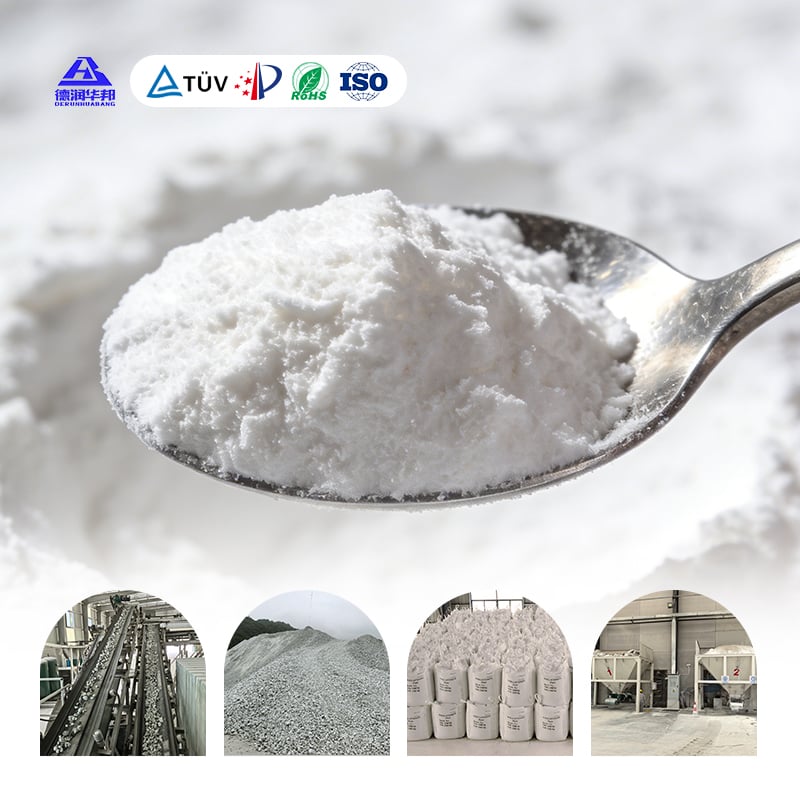
Processing Quality: Products processed using advanced crushing, grinding (Raymond mill or vertical mill), air classification, and dust collection systems are preferred. Vertical mills offer better sealing and lower energy consumption than traditional Raymond mills.
Source and Logistics: Major Chinese production is in Shangrao County, Jiangxi Province. Factory direct pricing (950 yuan/ton including pallet) plus freight costs should be calculated for total delivered cost. Warehouse pricing includes additional handling and storage fees.
Compliance Certification: Select suppliers with ISO9001 or other system certifications; ceramic-grade products must meet industry standards; plastic and rubber grades should comply with relevant material specifications; exported products must meet RoHS, REACH, and international standards.
5. Comparison of Wollastonite with Other Similar Materials
Wollastonite, fiberglass, talc, and calcium carbonate each have their own strengths and applications: Fiberglass offers extremely high reinforcement but is more difficult to process and poses handling hazards, while wollastonite provides safer, easier-to-process reinforcement with excellent dimensional stability; Talc offers good lubricity and is more suitable for applications where softness is paramount, but it lacks the high aspect ratio, thermal stability, and mechanical reinforcement of wollastonite; Calcium carbonate provides cost-effective filling and is widely used as a volume extender, but wollastonite offers superior reinforcement, lower thermal expansion, and better chemical resistance in demanding applications. Material selection depends on specific needs; in applications requiring high aspect ratio reinforcement, dimensional stability, thermal resistance, and chemical inertness, wollastonite's advantages are unparalleled.
Conclusion: Wollastonite — A Natural Solution for Modern Development
From supporting ceramic manufacturing and plastic reinforcement to enhancing construction materials and environmental applications, from improving coating durability to providing safe asbestos alternatives, wollastonite, with its natural geological origin and multifunctional properties, has become an indispensable material in modern society.
As a professional supplier with abundant mineral resources from Jiangxi Province and advanced processing technology (crushing, Raymond milling, vertical milling, air classification), we can provide customized solutions for ceramics, plastics, coatings, construction, and other fields. Our products have passed rigorous quality inspections and international compliance certifications, ensuring reliability and stability.
Whether you need needle-shaped wollastonite for ceramic glazes, high aspect ratio grades for plastic reinforcement, ultrafine powder for premium coatings, or specialized grades for construction applications, our team is dedicated to providing you with personalized service and free samples to help you find the most suitable wollastonite product. We sincerely look forward to cooperating with you to create a stronger, more durable, and sustainable future!


