Sepiolite fiber is a natural magnesium silicate built as bundles of needles, each carrying a channel through its core. That channel is the reason the material is bought: it gives 200–300 m²/g of surface area, thixotropic thickening without swelling, and a structure that holds up in service to about 350 °C. This page explains the structure, how the ore becomes a saleable fiber, and where the material actually earns its place.
Quick answer
- Sepiolite is a fibrous magnesium silicate with zeolite-like channels; surface area runs 200–300 m²/g.
- Processing is mostly purification, not chemistry: dispersion, classification, and drying that stays mild.
- It thickens without swelling, which is the practical difference from bentonite.
Product Overview
The crystal is a ribbon of talc-like layers inverted at the edges, stacked so that adjacent ribbons enclose channels roughly 0.37 by 1.06 nm wide, filled with zeolitic water. Ideal formula: Mg4Si6O15(OH)2·6H2O. Those channels accept small polar molecules and exchange water reversibly, which is what separates sepiolite from a plain talc or a smectite.
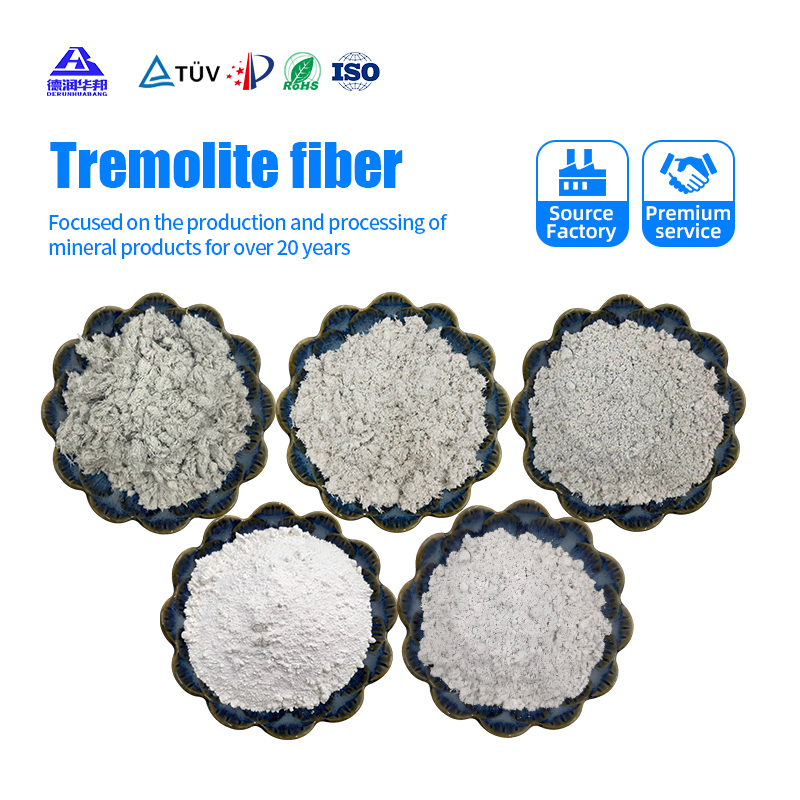
In powder form the fiber appears as bundles under one micrometer across, with individual needles at 20–50 nm. Length runs from 0.05 to 3 mm depending on grading, so aspect ratio is set by how the bundles are opened rather than by the deposit alone. Hardness is 2–2.5 on Mohs, true density 2.0–2.3 g/cm³, and water uptake reaches 150–200% of the fiber's own weight.
Four grades are traded, and they are not interchangeable. Fiber grade keeps length for reinforcement. Rheology grade is milled and classified for thixotropy in paints and sealants. Adsorbent grade is often acid-activated to push surface area toward 400 m²/g. High-white grade is selected for whiteness above 85%.
Two lookalikes cause most specification errors. Attapulgite is a related fibrous clay mineral with lower surface area and a different channel; it is not a drop-in. Bentonite thickens by swelling, which changes viscosity, volume and sag behavior in ways a sepiolite system does not.
Raw Materials and Manufacturing Process
Sepiolite ore comes from sedimentary beds, usually associated with magnesite, dolomite and opal. It is mined open-cast and stockpiled by whiteness and fiber length before processing, because blending at this stage is cheaper than correcting later. The steps that follow decide the grade:
- Crushing and soaking. Water plus mechanical shear opens the bundles; fiber length in the finished sepiolite powder is largely set here.
- Purification. Hydrocyclones and centrifuges remove quartz, calcite and smectite; this step, not the mine, decides grit and whiteness.
- Acid activation, optional. Hydrochloric acid leaches carbonate and part of the magnesium, raising surface area for absorbent grades, at some cost to fiber strength.
- Drying, 200–300 °C. This is where most quality is lost. Above roughly 400 °C the coordinated water leaves, the channels fold, and the surface area you paid for disappears.
- Milling and air classification. The top cut and the fines level are set here; mesh alone does not describe a fibrous product.
- Surface treatment. Silane or quaternary ammonium makes the fiber compatible with polymers and solvent-borne coatings.
Core Advantages
- Thickening without swelling. Yield value and sag resistance rise while volume stays put, which matters in sealants, putties and vertical coatings.
- Electrolyte tolerance. Sepiolite keeps working in salt-saturated and cement-contaminated systems where bentonite flocculates and loses viscosity.
- A clean thermal story, in three numbers. Zeolitic water leaves at about 110 °C and returns on cooling; the fiber is structurally stable in service to roughly 350 °C; melting is near 1650 °C.
- Adsorption built into the sepiolite structure. The channels and the external surface hold oils, ammonia and metal ions, which is why the same mineral serves as a rheology modifier and as an absorbent.
- Reinforcement from morphology. Needles bridge microcracks; typical loadings are 0.5–3% in mortars and coatings, where the fiber also reduces shrinkage cracking.
- A dust discipline that travels with the product. Sepiolite is not asbestos, but it is a respirable fibrous mineral: SDS, extraction and PPE belong in the delivery documents, not in a footnote.
Applications
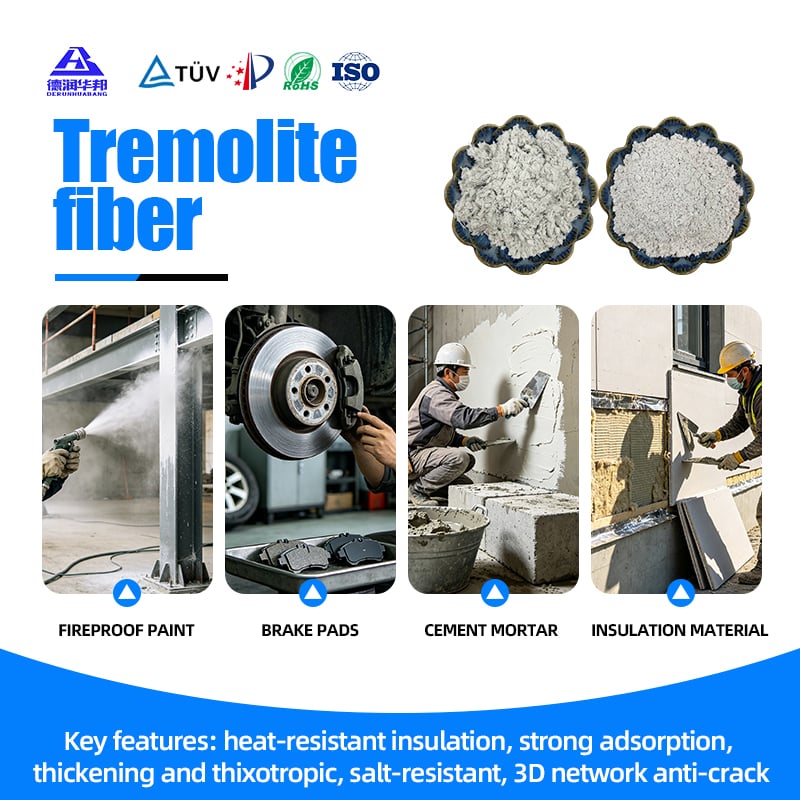
- Paints, putties and sealants: anti-settling, anti-sag and sag control at 0.5–2%.
- Adhesives: thixotropy that survives pumping and does not bleed.
- Drilling fluids: sepiolite viscosity in saline and cement-contaminated muds.
- Friction materials: an asbestos-free fiber for brake pads and linings, blended with aramid or glass.
- Construction: dry-mix mortars, fireproof board, thermal and acoustic panels.
- Polymer compounds: PA, PP and rubber, with coupling for interfacial bonding.
- Absorbents: cat litter, oil and chemical spill, ammonia control.
- Carrier work: feed, fertilizer and pesticide anti-caking.
Send Your Specification
Tell us the system you are building (water-borne, solvent-borne or polymer), the surface area and whiteness you need, and the fiber length you can accept. We will recommend a sepiolite fiber grade, send a 1 kg sample, and back it with BET, oil absorption, sieve residue and fiber length distribution so your lab can confirm the fit before you commit to a container.
 ×


